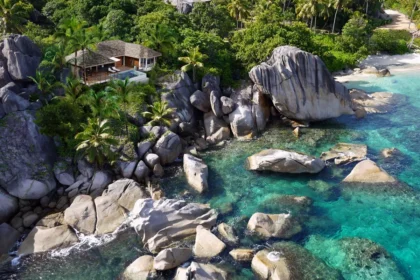
For most travelers, April, May, October, and November are the best months to visit Seychelles. They sit around the changeovers between the two trade-wind patterns, when winds are generally lighter, the sea is often calmer, and warm beach weather remains the norm. April and May are the stronger choice for a calm-water trip; October and November suit travelers willing to accept a rising chance of rain for favorable conditions in and around the water.
Seychelles is warm year-round. The decision is not between cold and reliably hot months, but between calmer transition periods, the drier but windier southeast-trade season, and the humid, rainier months under northwest winds. Weather on Indian Ocean islands is never guaranteed, particularly when wind direction can affect individual coastlines.
The best time to visit Seychelles is April, May, October, or November
April and May make the most balanced beach holiday. Northwest winds are easing, temperatures remain warm, and the sea is generally at its most accommodating for swimming, snorkeling, and diving. April is the standout for particularly calm, warm conditions, while May begins the shift toward the relatively drier southeast-trade period.
October and November are a persuasive second option. Winds ease around the seasonal changeover, and conditions in and around the water can be excellent. The compromise is rain: showers become more likely as November approaches, while heat and humidity increase as northwest winds return.
Both windows avoid the concentrated summer demand of July and August and the holiday pressure around late December and early January. For the broadest mix of beach time, water activities, and manageable demand, these are the months we would prioritize.
Seychelles weather follows trade winds, not a simple dry season
Seychelles has a tropical climate, with warmth and humidity throughout the year. Temperatures generally remain between the mid-70s and around 90°F, and the Indian Ocean stays warm enough for swimming in every season. For planning, wind direction and strength matter more than a neat wet-season versus dry-season divide.
Northwest trade winds broadly shape the hotter, more humid part of the year from late in the year through March. December through February brings the greatest rain risk, with January and February particularly wet. Rain often arrives in short, heavy tropical showers rather than as uninterrupted all-day rain, but it can still disrupt a beach-first itinerary.
Southeast trade winds become established from around May and dominate through the middle of the year. They bring relatively drier, cooler-feeling conditions alongside stronger breezes. Clearer days can come with a livelier sea, particularly on exposed coasts.
April and October sit closest to the principal changeovers. Winds can drop during these periods, creating the calmer conditions that make Seychelles especially appealing for time in the water. Seasonal patterns help with planning, not with predicting a particular week.
| Travel window | Weather and rainfall | Wind and sea | Demand and pricing | Best for |
|---|---|---|---|---|
| April to May | Warm, with rainfall easing from the wetter early-year months | Generally calmer around the wind changeover; breezes can build in May | Often softer demand than the July and August peak | Beach time, swimming, snorkeling, and diving |
| June to September | Relatively dry, with July and August among the driest months | Southeast winds bring breezier conditions and potentially choppier seas | Higher demand, especially in July and August | Sailing and travelers who prioritize drier outdoor days |
| October to November | Warm, with rain risk increasing as November progresses | Winds ease around the transition, often improving sea conditions | Generally less pressure than the summer peak | Diving, snorkeling, and a warm beach break |
| December to March | Hotter, more humid, and wetter, especially in January and February | Northwest-wind period, with conditions varying by coast | Holiday pressure in late December and early January | Travelers with fixed dates or a particular wildlife interest |
April and May are the calm-water choice
For the strongest all-purpose Seychelles trip, we would choose April or early May. With winds around their seasonal changeover, this period combines warm conditions with less breeze than the middle of the southeast-trade season. Calmer seas make it easier to build beach days, swimming, snorkeling, and diving into the same itinerary.
April is the standout. It is usually the calmest and warmest of the recommended months, with relatively little wind and a strong chance of the still-water conditions many travelers picture when planning Seychelles. Humidity remains part of the climate, and tropical showers can still occur.
May retains much of the appeal while moving toward the relatively dry southeast-trade period. It is a sound option for later spring dates, though the breeze may become more noticeable as the month progresses.
Hotel demand can also be softer than during the July and August peak. That can improve availability and, depending on the property and dates, rates. We would treat that as a useful booking advantage rather than expect a fixed destination-wide discount.
For help matching the coast to the beach day you want, see the best beaches in Seychelles.
June to September are drier, cooler, and windier
June through September suits travelers who value relatively dry weather and dependable outdoor days more than calm water. Southeast trade winds bring lower rainfall, cooler-feeling conditions, and stronger breezes. July and August are typically among the driest months of the year.
The trade-off is straightforward: exposed coasts can be breezy and the sea more agitated. Sailing benefits from stronger wind, but a trip centered on floating, snorkeling from shore, or long swims has less certainty than it does during the calmer transition periods.
July and August also bring greater visitor pressure. Accommodation availability narrows and rates can rise, so travelers set on these months should book well ahead. Individual beaches can still feel quiet, but the hotel market is less forgiving.
Coastline matters during this period. Southern and southeastern shores can feel more exposed to the prevailing wind and sea conditions, while another side of the same island may be more comfortable. Match the hotel’s coast to the experience you want rather than choosing by island name alone. Use where to stay in Seychelles to make that call.
October and November restore the balance between sun and sea
For travelers who miss the April to May window, October and November are the better alternative. Southeast winds ease around the seasonal transition, bringing a stronger chance of calmer water before the hotter, more humid northwest-wind period settles in.
October is the more dependable pick. It combines warm conditions with relatively light winds and can be excellent for swimming, snorkeling, and diving. It also overlaps with the beginning of hawksbill turtle nesting season in Seychelles. That creates an additional wildlife interest, not a guarantee of seeing a turtle on any particular beach.
November remains viable, particularly for travelers who value time in the water above the lowest possible rain risk. Heat and humidity rise, showers become more likely, and coastal conditions begin to shift with the returning northwest winds.
This period can also bring more accommodation choice than the July and August peak. For a resort-led trip, see the best resorts in Seychelles.
December to February are the least reliable for a beach-first trip
If dates are flexible, we would avoid December through February for a trip built primarily around predictable beach and outdoor conditions. The northwest-wind period brings higher humidity and the main rainy season, with January and February among the wettest months.
Seychelles does not become unsuitable. Tropical showers can be brief and intense, with sunshine between them, and the islands remain warm. Still, the greater rain risk works against the kind of beach-first itinerary that depends on reliable outdoor conditions every day.
Late December and early January add another drawback. Holiday demand can tighten hotel and flight availability and raise prices. Travel then because the calendar requires it, or because a greener, more humid tropical setting is part of the appeal, not because it is the strongest weather window.
March is the wildlife-minded alternative
March is the less obvious option for travelers who care about wildlife as much as beach conditions. It falls within the broader hawksbill nesting and hatchling period, while rainfall begins to move away from the wettest part of January and February.
It is not yet a substitute for April. Conditions remain hot and humid, rain is still part of the equation, and the calmer transition-season balance is not as dependable. Travelers seeking the cleanest combination of beach weather and stiller water should wait a little longer.
Prices, seaweed, and booking pressure can change the best island base
Seasonal price differences in Seychelles are real, but they should be read directionally. April and May can bring softer hotel demand before the main summer period, while October and November can offer more choice after it. July and August are busier, and late December and early January can also be expensive because of holiday travel.
Seaweed is another reason not to treat Seychelles as one uniform beach destination. During the southeast-trade period, particularly from May through October, naturally occurring seaweed can wash onto some southern coasts of Mahé and Praslin. Stronger winds can also make exposed stretches less appealing for swimming.
This does not make an entire island a poor choice. Conditions vary from beach to beach, and a clearer coast is usually available elsewhere. If the beach is central to the trip, confirm current conditions with the property shortly before arrival rather than choosing a resort from a seasonal rule alone.
The practical conclusion is simple: choose April or May for the broadest chance of calm water, June through September for drier and breezier conditions, and October as the strongest second transition-season option. Then choose the coast as carefully as the month.
Considered and excluded
A Maldives comparison: Useful for choosing between two Indian Ocean destinations, but it does not answer the narrower question of when Seychelles works best.
A full island-by-island calendar: Wind and seaweed can affect individual coasts, yet a detailed Mahé, Praslin, and La Digue breakdown would imply more precision than a broad seasonal guide can support.
Exact seasonal savings: Demand changes across the year, but hotel and flight pricing varies too much by property, dates, and booking timing for a credible destination-wide percentage claim.