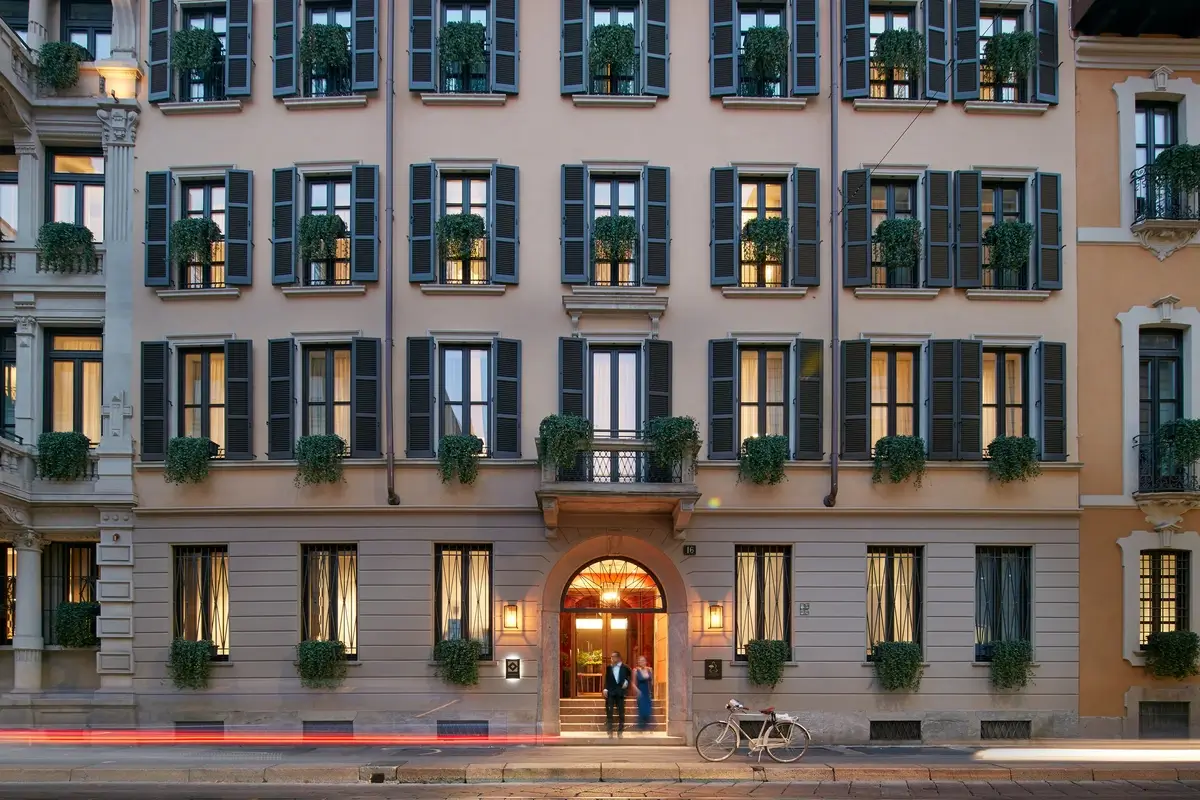
Mandarin Oriental, Milan is the hotel we’d choose for a city stay built around La Scala, the fashion district, and a considered dinner at Seta. Set within four interconnected 18th-century palazzos, it combines contemporary Milanese interiors with two historic courtyards, a substantial spa, and a heated indoor pool. Its discreet Via Andegari address makes central Milan remarkably accessible on foot, while the restaurants and wellness facilities provide good reasons to return between outings.
The accommodation requires more attention than the hotel’s relatively uniform design might suggest. Room layouts and outlooks vary across the historic buildings, and moving into a larger category does not always mean gaining a separate living room. We’d choose according to the space and configuration needed rather than assuming every suite represents the same kind of upgrade.
At a glance
- Hotel
- Mandarin Oriental, Milan
- Address
- Via Andegari 9, 20121 Milan, Italy
- City
- Milan
- Country
- Italy
- Phone
- +39 02 8731 8888
- [email protected]
- Website
- Official website
- Setting
- City, fashion district. On Via Andegari near Teatro alla Scala, the hotel is a few minutes’ walk from Via Montenapoleone, the Duomo, and Milan’s historic center.
- Style and atmosphere
- Four interconnected 18th-century buildings conceal a composed modern hotel with two courtyards and interiors by Antonio Citterio Patricia Viel. Oak floors, bespoke Italian furnishings, a muted palette, and subtle Asian details create a residential rather than ostentatious atmosphere.
- Best suited to
- Design-conscious couples, luxury shoppers, opera and art visitors, business travelers, and food-focused guests who want a compact, walkable Milan base.
- Accommodation
- 104 accommodations: 68 guestrooms and 36 suites and junior suites, many overlooking historic streets or inner courtyards. The 305 sq m three-bedroom Grand Presidential Suite combines the Presidential and Fornasetti suites, with original Fornasetti furnishings, a kitchen, and a steam room.
- Standout facilities
- Two-Michelin-starred Seta by Antonio Guida; Mandarin Garden and planted courtyards; 900 sq m spa; indoor swimming pool; fitness center; six treatment rooms; hair and beauty salon.
Via Andegari, between La Scala and the fashion district
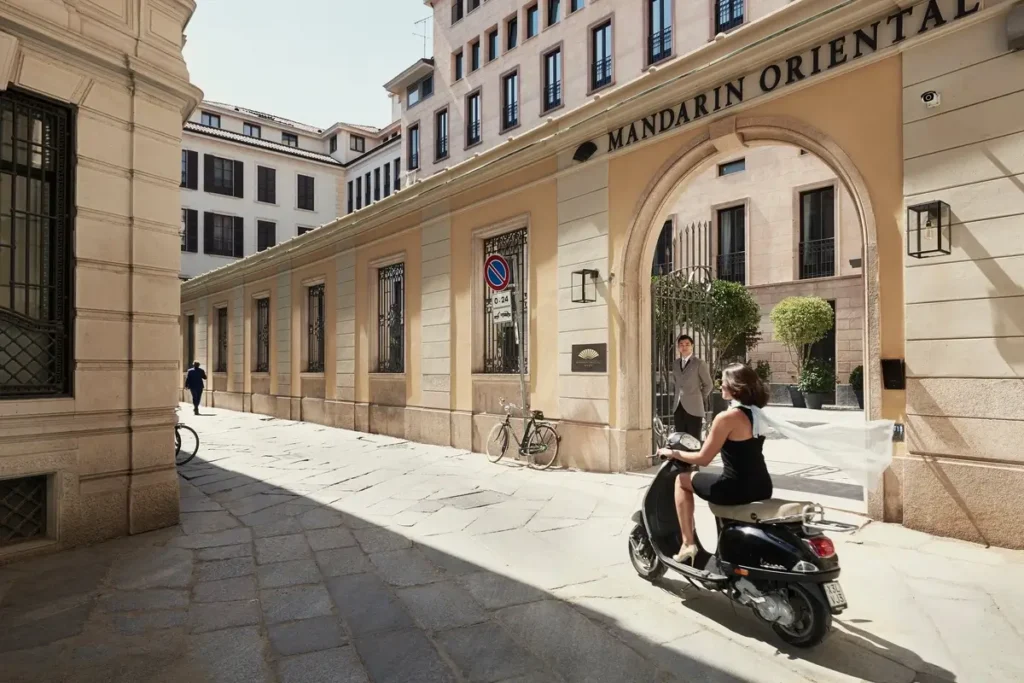
Mandarin Oriental occupies Via Andegari 9, a discreet street close to Teatro alla Scala and the Quadrilatero della Moda. Via Montenapoleone and Via della Spiga are approximately three minutes away on foot, making the hotel particularly useful for travelers combining Milan’s luxury shopping streets with cultural plans in the historic center.
La Scala is close enough for an opera evening without arranging transport afterward. The Duomo and Galleria Vittorio Emanuele II are also within walking distance, while Sforza Castle and Santa Maria delle Grazie are accessible on longer walks through central Milan. We’d favor this address for a short city break where shopping, museums, restaurants, and theater are the principal activities. For broader planning, see Calanova’s Milan guide.
The four interconnected palazzos give the hotel a more residential character than a conventional grand property on a major boulevard. The interiors, designed by Antonio Citterio Patricia Viel, combine oak floors, bespoke Italian furniture, contemporary artwork, and subtle Asian references. The two internal courtyards also provide spaces for dining and relaxing away from the surrounding shopping streets.
We’d choose this location for access rather than seclusion. It places much of central Milan within reach, but the surrounding neighborhood remains an active part of the city.
Location
Rooms: choose the layout before the category
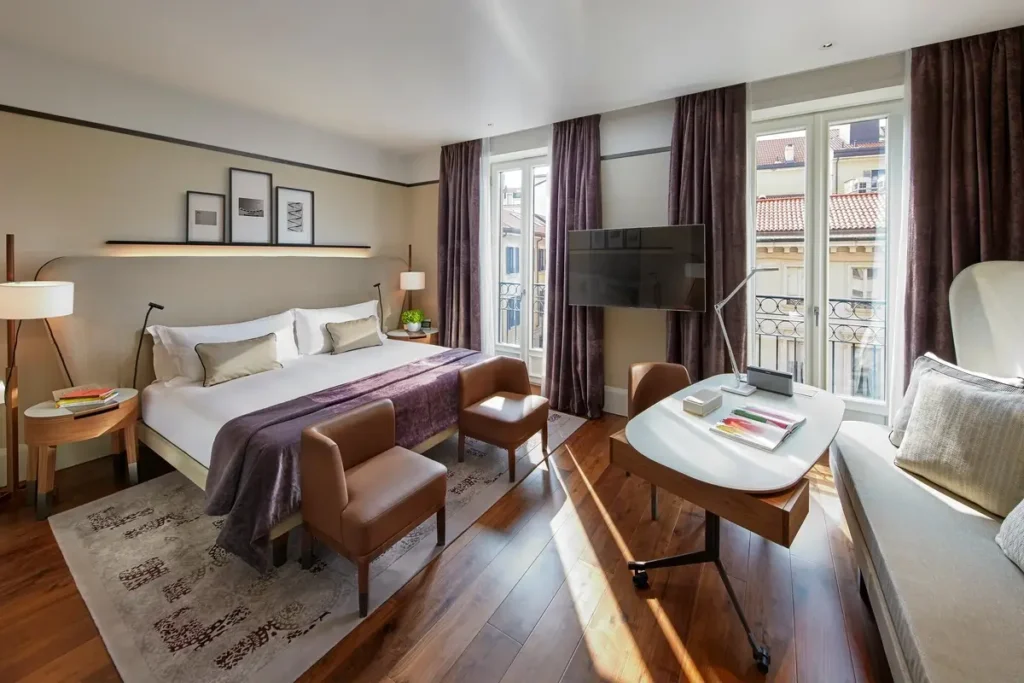
The historic buildings create considerable variation in accommodation, making the exact floor plan and outlook relevant to the booking. The 38-square-meter Superior Room offers a city-street or courtyard view, with contemporary Italian furnishings, wooden floors, and a marble bathroom. It is a reasonable starting point for a short stay when most of the day will be spent exploring Milan.
We’d generally favor the 40-square-meter Deluxe Room for a couple seeking a comfortable central base. It adds slightly more space, with custom-made furnishings, large windows, and city or courtyard views. Individual layouts differ, and some upper-floor rooms look toward the Duomo’s spires. That outlook is not standard across the category, so it should be treated as a specific request rather than an expected feature.
The 45-square-meter Mandarin Room adds a sofa and movable desk or dining table, but its individual configurations deserve attention. Some rooms have a small terrace, while others include steps leading to the bathroom. We’d consider it when a particular layout or outdoor feature is available, not simply for the additional floor area. Guests requiring step-free movement within the room should establish the precise configuration.
The distinction becomes more important in the suite categories. At 55 square meters, the Deluxe Junior Suite offers a generous lounge area alongside its bedroom and marble bathroom. It provides additional space for relaxing or working, but the hotel describes it as a bedroom with a larger living area rather than explicitly guaranteeing a separate living room.
The 60-square-meter Milano Suite emphasizes a different quality. Its oak paneling, wooden floors, and bespoke furnishings draw on the character of a traditional Milanese residence, with a lounge area and views toward the city or internal courtyard. We’d choose it for its particular interior design rather than assume that five additional square meters create a substantially different layout from the Deluxe Junior Suite.
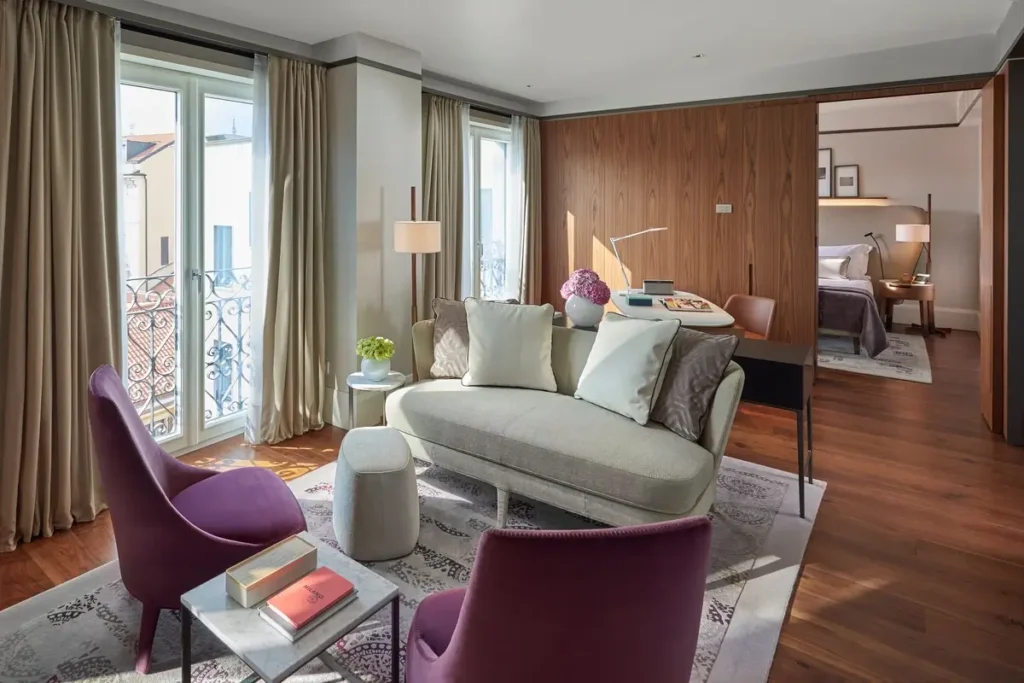
For genuine separation, the 67-square-meter Deluxe Suite is the more persuasive upgrade. It has an explicitly separate living area alongside the master bedroom and a substantial marble bathroom. We’d favor this category for a longer stay when guests need somewhere to work, relax, or entertain without using the bedroom for every activity.
The 78-square-meter Deluxe Terrace Suite offers a different reason to upgrade: a private terrace overlooking the inner courtyard, alongside a separate living area and spacious bedroom. It is the category we’d consider when private outdoor space will be used during the stay. The terrace provides something that extra interior floor area alone cannot deliver, particularly for travelers planning slower mornings or time at the hotel between city plans.
Families and friends traveling together have a more practical alternative to a large one-bedroom suite. The 80-square-meter Family Room combines two connecting rooms, each with its own substantial marble bathroom. We’d consider this arrangement when separate sleeping rooms and bathrooms matter more than a single expansive living area.
Outlooks vary between the streets and internal courtyards, and independent guest accounts differ on room noise. One reviewer reported traffic disturbance from a lower-floor street-facing room, while another described good sound insulation. Neither establishes a consistent problem across the property. Light sleepers should pay attention to the actual room orientation and floor rather than assume every courtyard-facing room is silent or every street-facing room is noisy.
Seta is the restaurant we’d plan around
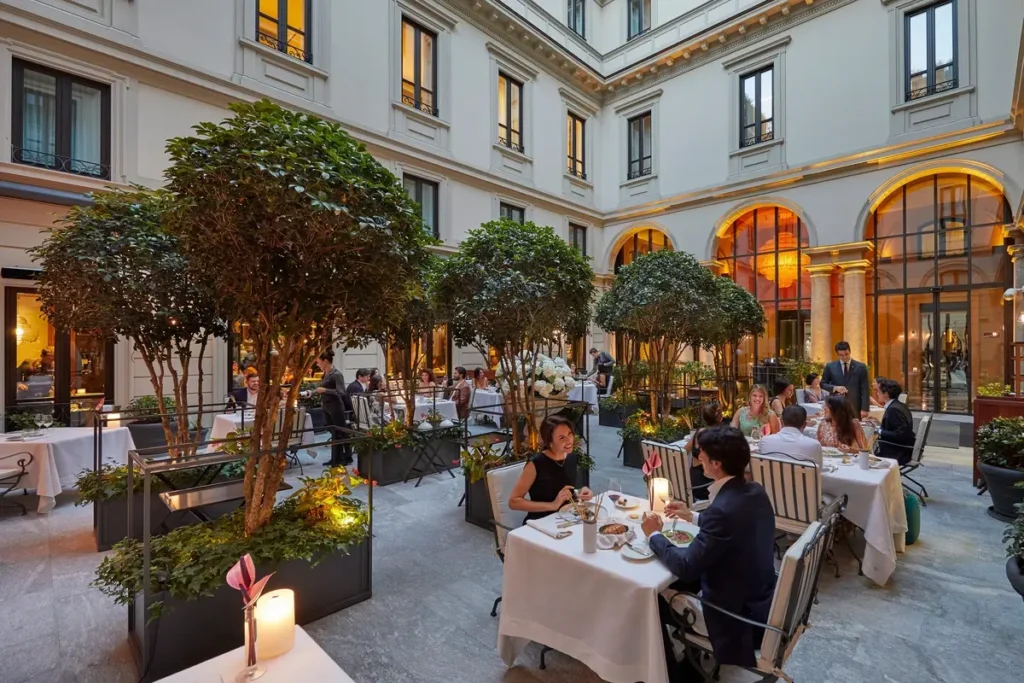
Seta by Antonio Guida gives Mandarin Oriental a genuine destination-dining advantage. Awarded two Michelin stars, it serves contemporary Italian cuisine built around traditional ingredients and creative technique. The restaurant occupies the hotel’s second courtyard, with large windows connecting the dining room to the outdoor setting and an open kitchen offering a view of the preparation.
We’d make Seta a deliberate reservation during a food-focused Milan visit rather than treat it as a convenient hotel restaurant. It is particularly appealing for a special dinner following an afternoon in the city, although its schedule needs attention when combining dining with theater plans. Seta currently serves lunch and dinner Tuesday through Saturday and closes on Sunday and Monday.
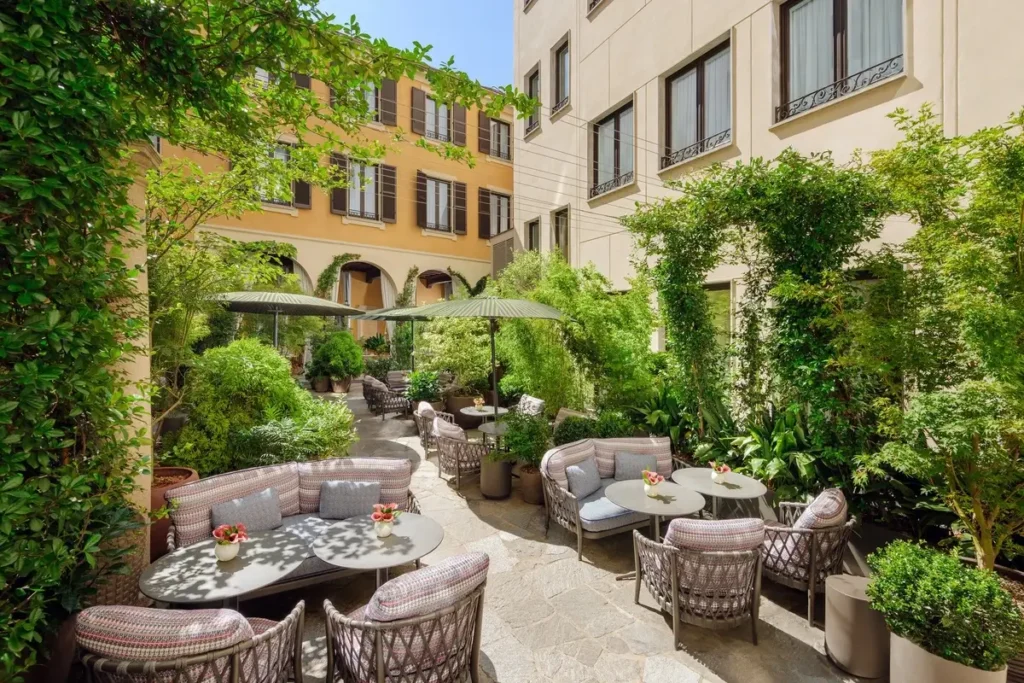
Mandarin Garden provides a different experience. Its planted courtyard, contemporary Italian menu, and cocktail program make it the more flexible option for breakfast, lunch, dinner, or aperitivo. The menu includes Milanese dishes, lighter meals, and food intended for sharing, with the bar becoming more prominent in the evening.
We’d choose Mandarin Garden for a relaxed meal or an aperitivo before heading out, reserving Seta for an evening organized around the food itself. Their different roles give the hotel more dining range than a conventional city property with a single restaurant, without reducing the incentive to explore Milan’s wider dining scene.
A substantial spa and heated indoor pool
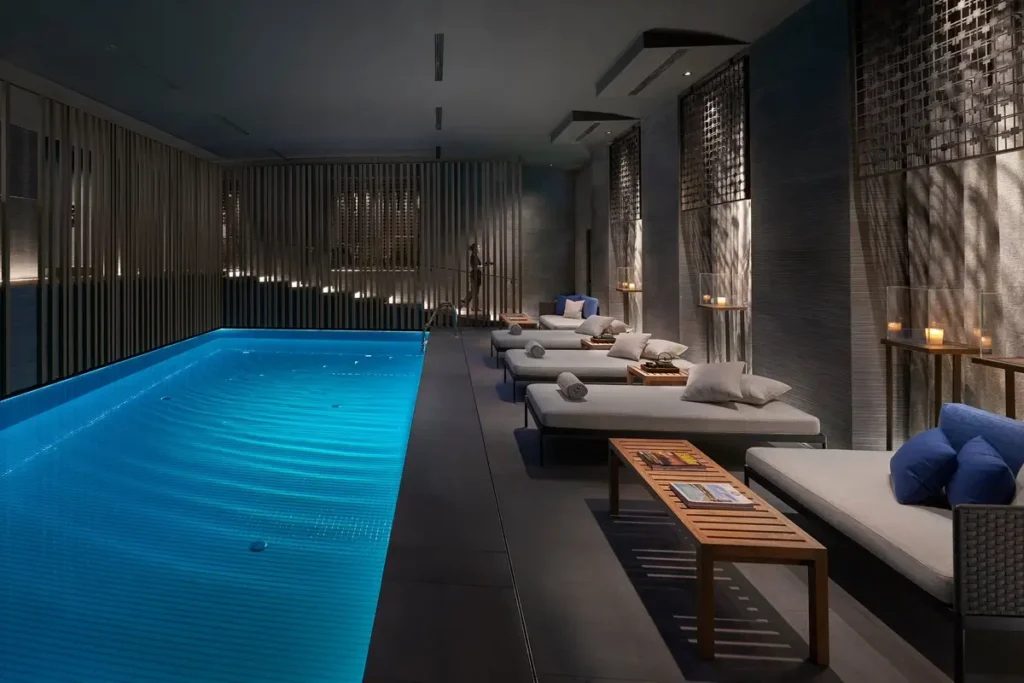
The wellness facilities strengthen the case for spending time at Mandarin Oriental between shopping, sightseeing, and dining. The 900-square-meter spa includes six treatment rooms, a dedicated Spa Suite, beauty studio, hair salon, and a heated indoor swimming pool. Sauna and steam facilities provide additional ways to unwind after a day in the city.
The pool is particularly useful for guests who want swimming to remain part of a city stay. It offers an indoor alternative to Milan’s streets and museums, with enough substance to justify setting aside time for wellness rather than treating the spa as a minor hotel amenity.
The fitness center is equipped with Technogym machines and operates around the clock. Personal training and individual yoga sessions can also be arranged. We’d prioritize the pool and spa when choosing this hotel for wellness, but the current fitness provision should not be dismissed solely because individual reviewers have described the gym as compact.
The hotel’s published operating hours distinguish the pool, spa, and fitness center, so guests planning early exercise or evening swimming should account for those differences. The pool currently opens from 7:30 a.m. to 10 p.m., while the fitness center is available 24 hours. The spa operates on a separate treatment schedule.
Who should choose Mandarin Oriental, Milan?
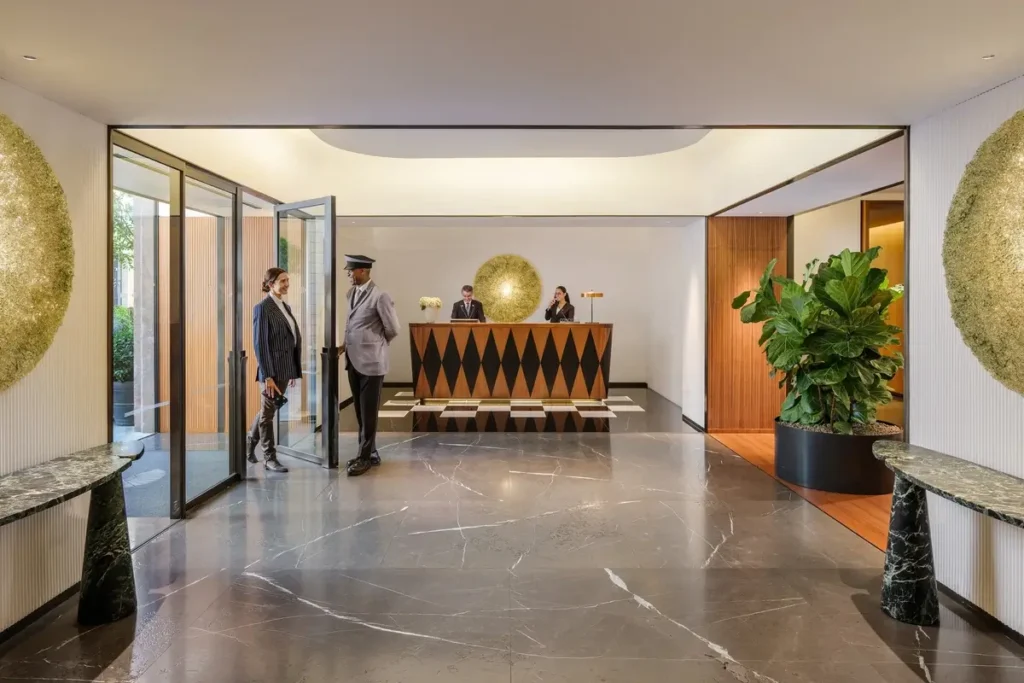
We’d book Mandarin Oriental for a Milan visit centered on La Scala, the fashion district, and the historic city’s principal attractions. The four-palazzo setting and contemporary interiors give it a distinctive Milanese identity, while Seta and the spa offer meaningful reasons to spend part of the trip at the hotel.
The Deluxe Room is our preferred starting point for a short stay. We’d move to the Deluxe Suite when separate living space will genuinely improve the experience, or the Deluxe Terrace Suite when private outdoor space is worth prioritizing. The Milano Suite makes sense for travelers drawn to its residential design, while families should examine the dedicated connecting-room configuration.
We’d look elsewhere for a secluded hotel or a stay that depends on expansive grounds. Mandarin Oriental’s advantages are more specific: a discreet central address, considered Italian design, destination dining, and substantial wellness facilities. For travelers planning to make use of that combination, it is a strong choice in Milan.
Things to know: Some Mandarin Rooms include steps leading to the bathroom, while others have a small terrace. These features are configuration-specific. Seta currently closes on Sundays and Mondays, an important detail when arranging a restaurant reservation around an opera or theater visit.