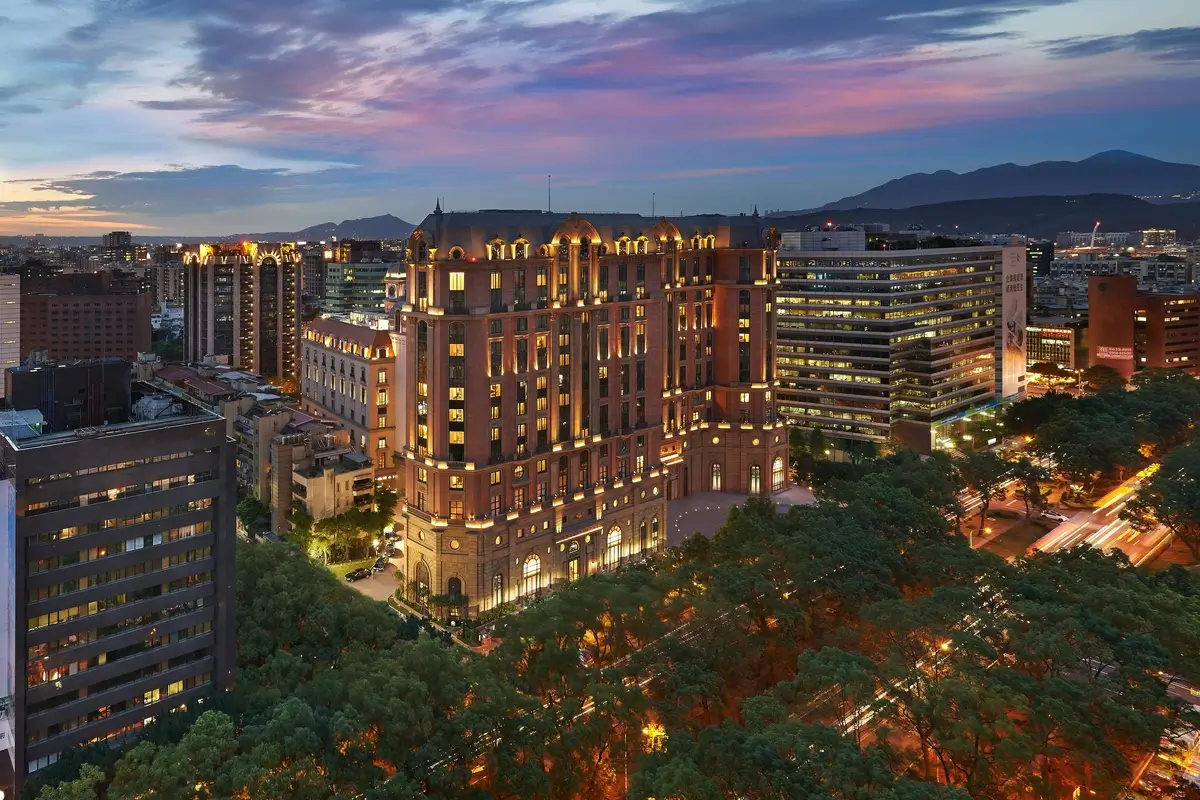
Mandarin Oriental, Taipei is the hotel we’d choose for a city stay where generous accommodation, formal interiors, and substantial wellness facilities matter more than immediate access to Taipei’s sightseeing districts. Its 55-square-meter Deluxe Rooms are unusually spacious for an entry-level city category, while the outdoor pool, two-level spa, and Michelin-starred Ya Ge give guests good reasons to spend time at the property. We’d favor it for couples planning a slower Taipei visit, business travelers working around Songshan, and families requiring connecting accommodation.
The trade-off is location. This is an established business-district address rather than a hotel beside Taipei’s principal tourist attractions. The nearest MRT stations are approximately ten minutes away on foot, making the property less convenient for travelers who intend to spend almost every hour exploring the city. We’d choose it when the room and hotel facilities are substantial parts of the trip, not simply as a place to sleep.
At a glance
- Hotel
- Mandarin Oriental, Taipei
- Address
- No. 158 Dunhua North Road, Songshan District, Taipei 10548, Taiwan
- City
- Taipei
- Country
- Taiwan
- Phone
- +886 2 2715 6888
- [email protected]
- Website
- Official website
- Setting
- City, Songshan district. On the tree-lined Dunhua North Road in Taipei's established business district, the hotel is near Taipei Arena and the metro, with Songshan Airport a short drive away.
- Style and atmosphere
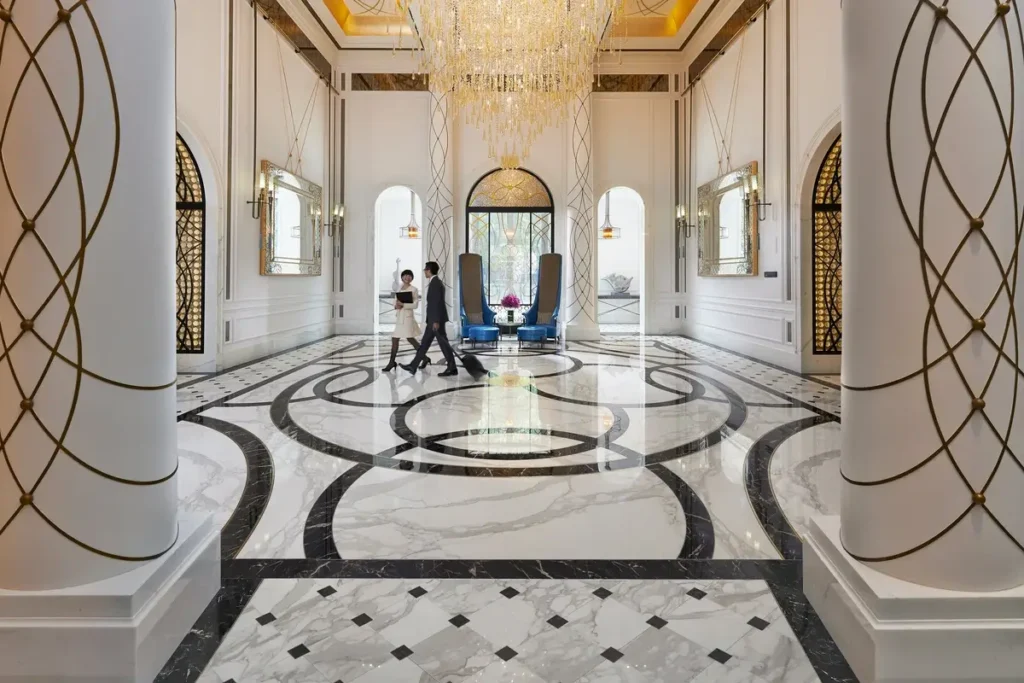
- A grand European-inspired property with an imposing pale stone facade, chandeliers, rich wood and a large art collection. Spacious, classically styled rooms and formal public spaces make the atmosphere opulent and traditional rather than minimalist.
- Best suited to
- Couples, families, business guests, spa travelers and visitors seeking generous accommodations outside the busiest tourist core.
- Accommodation
- 303 rooms and suites: 256 rooms and 47 suites, with entry-level Deluxe Rooms starting at 55 sq m. The top-floor Presidential Suite includes a fireplace, private gym, steam shower, kitchen and dining for eight.
- Standout facilities
- Ya Ge Cantonese restaurant; Bencotto Italian restaurant; M.O. Bar; Jade Lounge afternoon tea; 20-meter outdoor pool; two-level spa with treatment suites and heat-and-water experiences; fitness and wellness center; grand event ballrooms.
Songshan: a grand hotel away from the busiest visitor districts
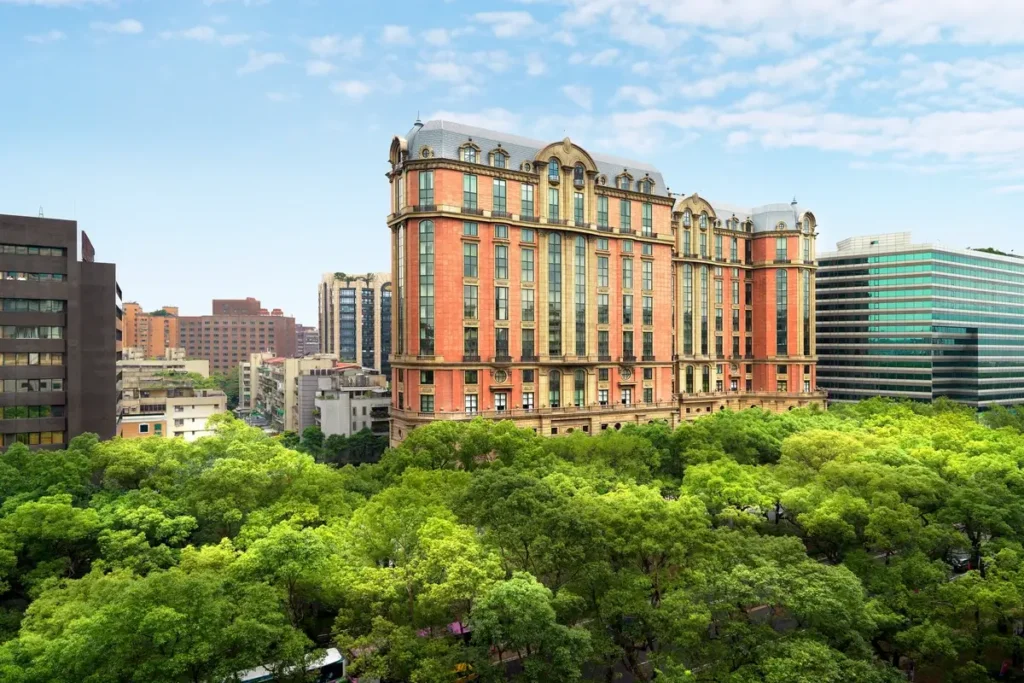
Mandarin Oriental occupies 158 Dunhua North Road in Songshan, a tree-lined part of Taipei’s established business district. Taipei Arena and Songshan Airport are nearby, while the surrounding neighborhood is more closely associated with offices, shopping, and local restaurants than the city’s principal sightseeing circuit.
The hotel estimates a ten-minute walk to both Taipei Arena and Nanjing Fuxing MRT stations. These provide useful access to the wider transport network, but the walk is worth considering during Taipei’s hot, humid summers or periods of heavy rain. We’d favor taxis for some journeys, particularly when returning after a full day of sightseeing.
Xinyi, Taipei 101, and the surrounding commercial district are approximately 10–15 minutes away by car under the hotel’s published estimates, although traffic can materially change journey times. Other attractions, including the National Palace Museum and historic districts farther across the city, require more planning.
We’d choose Songshan for a stay that combines city outings with time at the hotel rather than for an itinerary dominated by walking between tourist attractions. Travelers prioritizing immediate MRT access or the atmosphere of Taipei’s busiest visitor districts have good reasons to consider another neighborhood. For broader destination planning, see Calanova’s Taipei guide.
Location
Rooms: a generous Deluxe or a more substantial living area?
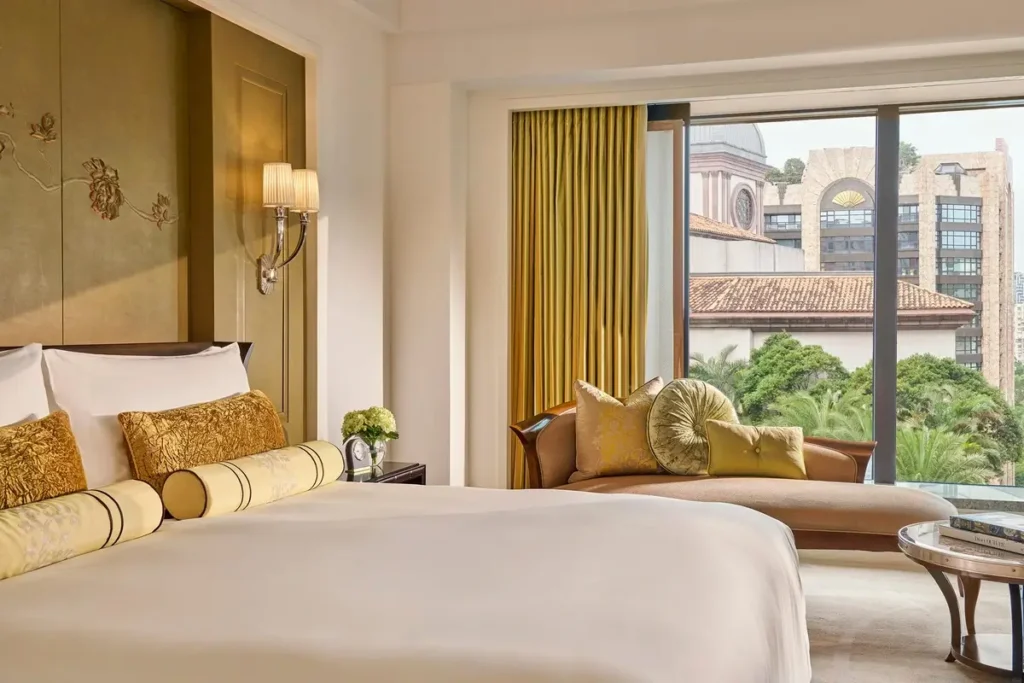
Accommodation is one of Mandarin Oriental Taipei’s clearest advantages. The 55-square-meter Deluxe Room is our preferred starting point for a short stay, offering considerably more space than many entry-level rooms in major cities. It includes floor-to-ceiling windows, a walk-in wardrobe, a work desk, and a marble bathroom with a separate bathtub and rainforest shower.
King and twin configurations are available, with views toward the city, interior courtyard, or landscaped gardens. We’d favor this category for a couple who wants room to unpack and relax without moving into a suite. Its generous dimensions are useful in their own right, particularly when part of the day will be spent indoors.
The interiors establish the hotel’s character. Dark wood, marble, classical references, and layered fabrics create a more formal atmosphere than the pale, minimalist design found at many contemporary city hotels. We’d choose Mandarin Oriental for that traditional grand-hotel style rather than expect a particularly experimental or understated approach to accommodation.
For additional space, the 70-square-meter Mandarin Room provides a more expansive layout, with a king bed, walk-in wardrobe, guest powder room, and substantial marble bathroom. It retains the hotel’s classically inspired design, with dark wood furniture and atmospheric lighting. We’d consider it when the additional floor area is useful, but not simply because it carries a higher room designation.
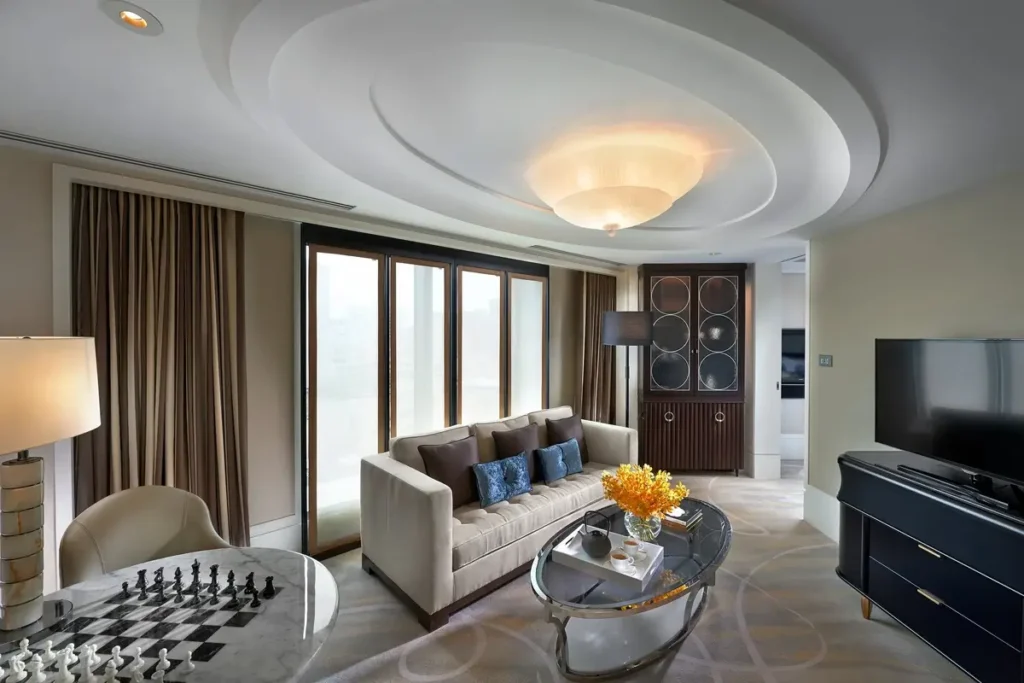
The equally sized Mandarin Premier Room offers a more meaningful distinction for guests who want somewhere to work or relax beyond the immediate sleeping area. It has an adjoining living area with a sofa, alongside a king or twin bedroom, work desk, and marble bathroom. We’d favor this category over the standard Mandarin Room when the sitting area will genuinely be used during a longer stay. Its layout should still be distinguished from a larger suite with a fully independent living room.
Club Deluxe is a different kind of upgrade. At 55 square meters, it retains the basic floor area of the standard Deluxe Room, with similar bedroom and bathroom facilities. The additional value comes from access to the sixth-floor Oriental Lounge rather than more space within the accommodation.
The Oriental Lounge provides breakfast, afternoon tea, evening wine and hors d’oeuvres, and refreshments throughout the day. Eligible guests also receive dedicated check-in and checkout, limited garment pressing, and access to a meeting room for up to one hour per day, subject to availability. The lounge currently operates from 7 a.m. to 9 p.m.
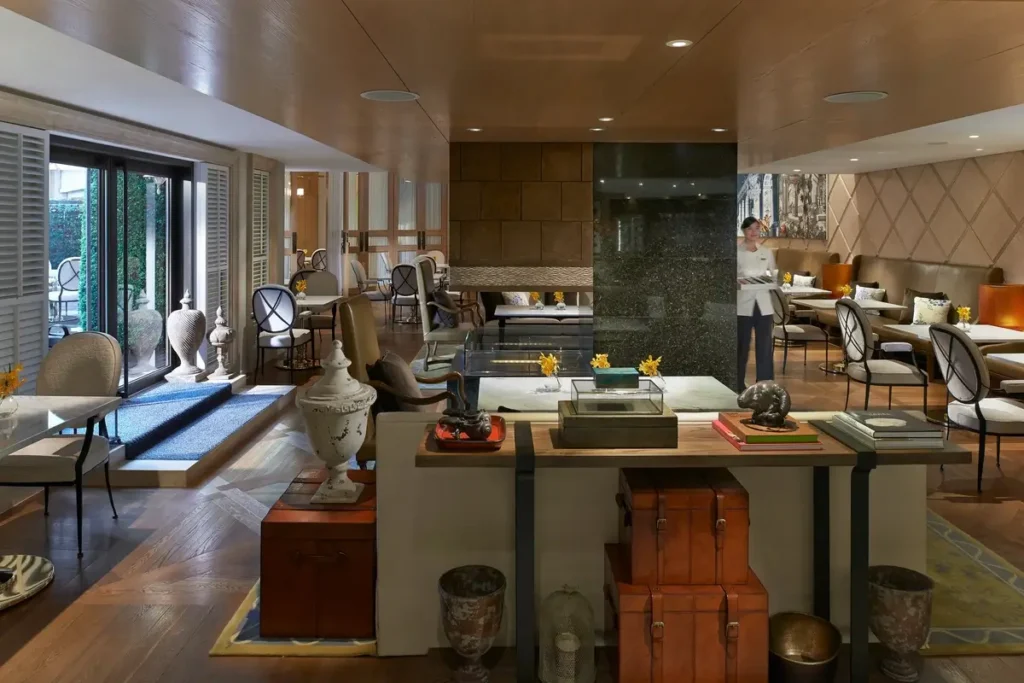
We’d choose Club Deluxe for travelers who expect to use those services regularly, particularly on a business stay or a slower weekend. Guests who spend their days exploring Taipei and return late in the evening will have less reason to prioritize the lounge. The decision should be about the benefits rather than an assumed improvement in room size or view.
Families have a more practical option than moving into a large one-bedroom suite. The 110-square-meter Family Deluxe Room combines a connecting Deluxe King Room and Deluxe Twin Room, providing two sleeping areas and separate marble bathrooms. We’d favor this category for parents traveling with children who need their own beds, or for friends sharing accommodation without sacrificing privacy.
Larger connecting suite configurations are also offered, but the Family Deluxe is the clearest starting point when two conventional bedrooms are the priority. We’d select the accommodation according to bedding and connecting-door requirements rather than pay for additional living space that may see little use.
Ya Ge is the restaurant we’d prioritize
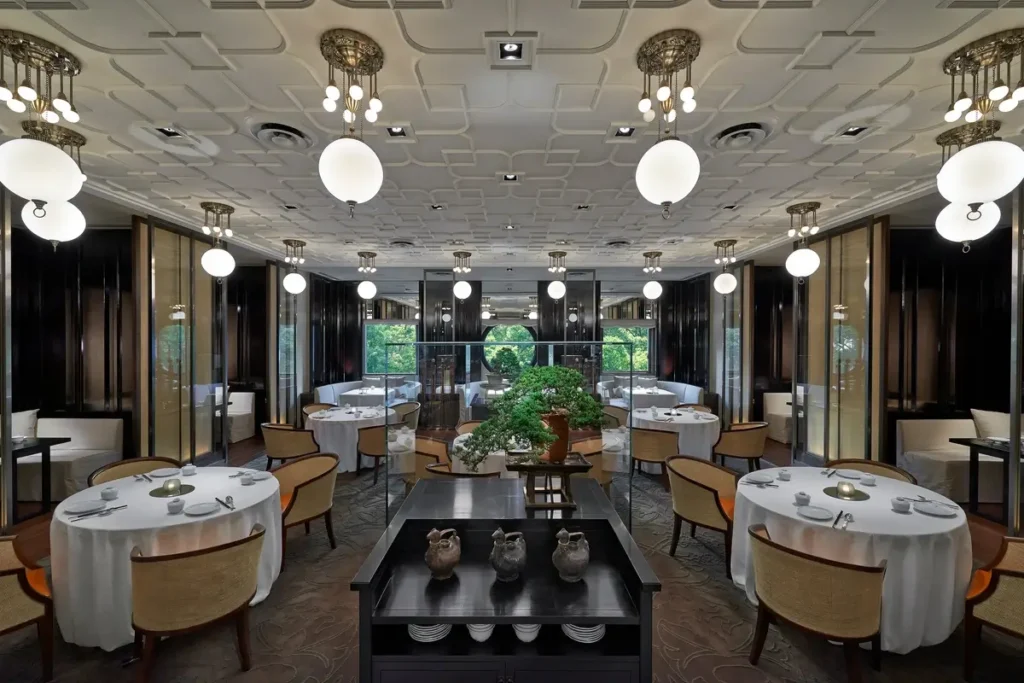
Dining is another reason to consider Mandarin Oriental Taipei for a stay that includes time at the hotel. The restaurant collection covers Cantonese and Italian cooking, breakfast, afternoon tea, and evening cocktails, with venues serving distinct purposes rather than a single all-day dining format.
Ya Ge is the restaurant we’d prioritize for a dedicated meal. Holding one Michelin star in the 2026 Taiwan guide, it specializes in Cantonese cuisine, with a particular emphasis on traditional cooking techniques and contemporary presentation. We’d consider it for a deliberate lunch or dinner rather than simply as a convenient restaurant within the hotel.
Bencotto offers a different proposition, serving contemporary Italian cooking in a more informal setting than Ya Ge. It provides another reason to dine on property during a longer visit, although we’d make room in the itinerary for Taipei’s wider restaurant scene rather than organize every meal around the hotel.
Café Un Deux Trois is the principal breakfast venue, offering a buffet with international and Asian choices. Independent accounts have highlighted Taiwanese specialties among the breakfast selection, alongside familiar Western dishes. We’d consider it for a substantial start to the day, particularly before meetings or sightseeing. Its current published restaurant service covers breakfast and lunch, rather than a full dinner program.
The Jade Lounge is the hotel’s setting for afternoon tea, with pastries, light meals, and a more traditional lounge atmosphere. M.O. Bar serves a different purpose, focusing on cocktails and evening drinks. We’d use these venues selectively, with Ya Ge the strongest reason to make a dining reservation in advance.
There are also age restrictions worth noting for families. The Jade Lounge welcomes children aged 12 and older, while M.O. Bar is restricted to guests aged 18 and over. Those rules matter when planning afternoon tea or an evening at the hotel with children.
An outdoor pool and a substantial wellness program
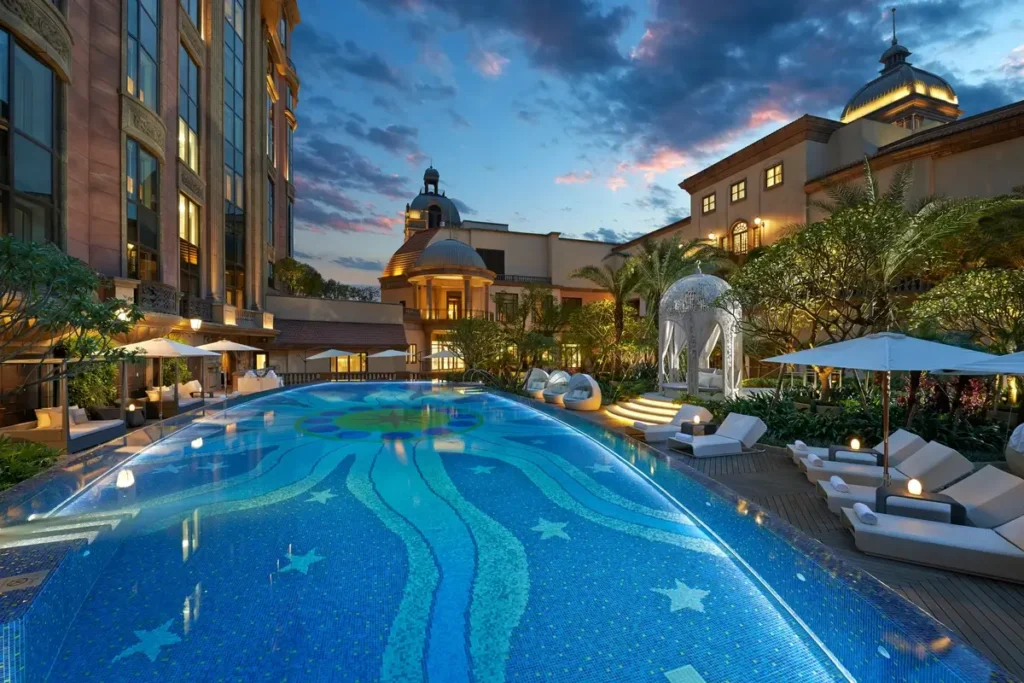
The sixth-floor heated outdoor swimming pool is one of Mandarin Oriental Taipei’s most appealing leisure facilities. Set among landscaped planting and outdoor seating, it offers a place to swim or relax between city outings. We’d make time for it during a longer stay, particularly when a slower afternoon at the hotel is part of the plan.
The pool is better understood as a leisure facility than as the principal reason to book a hotel for intensive lap training. Its advantage lies in providing an outdoor alternative to Taipei’s commercial streets and sightseeing schedule. Guests can spend time beside the water without leaving the property, which strengthens the case for choosing Mandarin Oriental over a more functional business hotel.
The spa extends across two levels and offers treatment suites, relaxation areas, and separate heat-and-water experiences. Sauna, steam, and other thermal facilities provide a different wellness experience from the outdoor swimming pool. We’d consider a treatment during a longer visit, particularly when the itinerary leaves enough time to enjoy the surrounding facilities.
The fitness center operates around the clock and includes Technogym cardiovascular and strength-training equipment. Yoga, personal training, and specialist wellness sessions provide additional options, making the facilities useful for travelers maintaining an exercise routine during a Taipei stay.
The operating schedules are worth distinguishing. The outdoor swimming pool currently opens from 7 a.m. to 8 p.m., while the spa operates from 10 a.m. to 9 p.m. The fitness center remains open 24 hours. Spa treatments and access to selected thermal facilities have separate booking arrangements, so they should not be assumed to be included with every room reservation.
We’d choose the hotel for the breadth of these facilities rather than for a single standout wellness attraction. The outdoor pool, fitness center, and spa provide enough variety to make spending part of the day at Mandarin Oriental worthwhile.
Who should choose Mandarin Oriental, Taipei?
We’d book Mandarin Oriental Taipei for travelers who appreciate formal grand-hotel interiors, unusually spacious standard rooms, and a stay that leaves time for dining and wellness. The Deluxe Room is our preferred starting point for a couple who wants generous accommodation without requiring a suite. The Mandarin Premier Room becomes more compelling when an adjoining sitting area will be used, while Club Deluxe makes sense for guests who expect to take advantage of Oriental Lounge privileges.
Families should consider the connecting Family Deluxe Room when separate bedrooms and bathrooms are essential. The outdoor pool and wider wellness facilities strengthen the case for a stay with children, while Ya Ge offers a worthwhile dining experience for travelers interested in Cantonese cuisine.
We’d look elsewhere when the priority is immediate access to the MRT, a central sightseeing neighborhood, or contemporary minimalist design. Guests who expect to leave early each morning and return only to sleep will have less reason to pay for the hotel’s extensive facilities. Mandarin Oriental’s strongest proposition is the combination of space, formal atmosphere, dining, and wellness, particularly when the accommodation itself is an important part of the trip.
Things to know: M.O. Bar admits guests aged 18 and older, while The Jade Lounge welcomes children from age 12. Families should account for these restrictions when planning afternoon tea or evening drinks at the hotel.