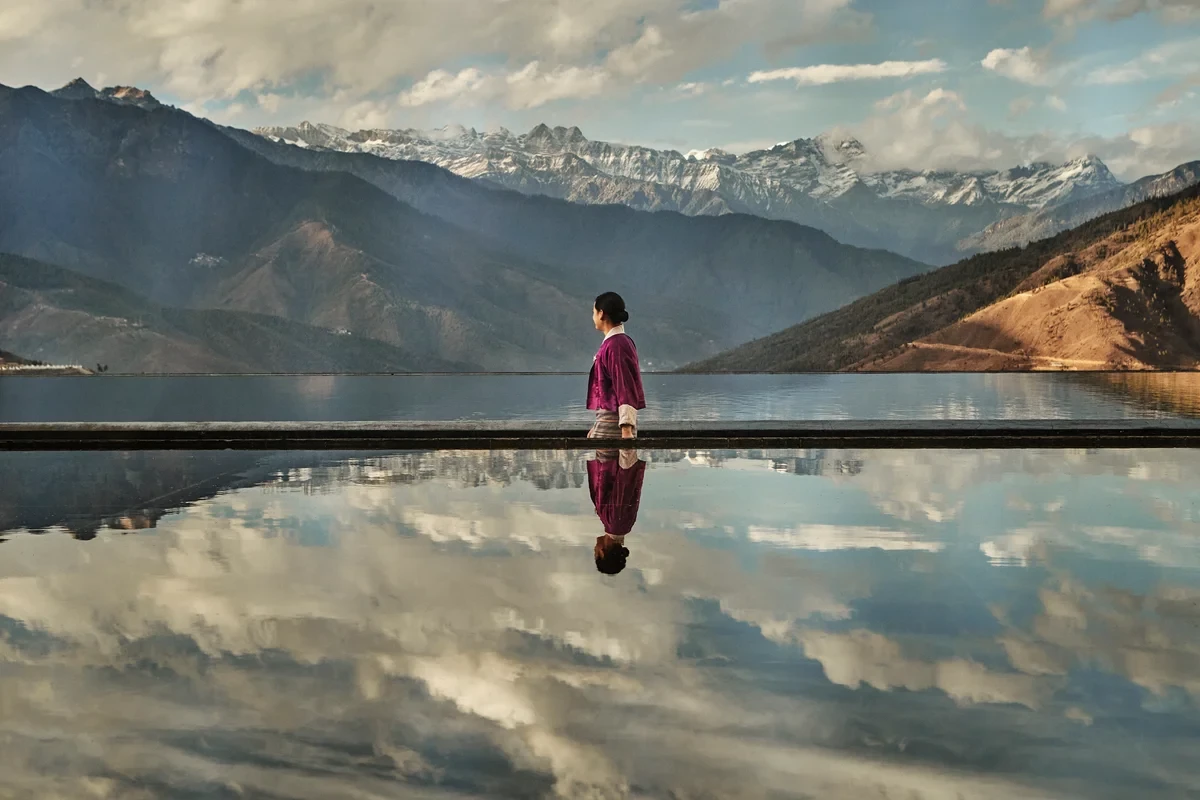
Six Senses Bhutan is a collection of five lodges in Thimphu, Punakha, Gangtey, Bumthang, and Paro, not one resort spread across a single estate. Each has its own landscape and sense of place. The useful question is which valley belongs in the itinerary, not whether to stay at every lodge.
We would choose the collection for a Bhutan journey in which accommodation is part of the experience: mountain views, Bhutanese-inspired design, wellness, and access to cultural and outdoor activities. A stay at one lodge works for a trip centered on a single area; several lodges offer a broader view of the country, with road travel between them as the price of that variety.
Design links the properties through timber, broad windows, and references to traditional Bhutanese architecture. Room outlooks, facilities, and the character of each stay are not interchangeable.
At a glance
- Hotel
- Six Senses Bhutan
- Address
- Reference location and map pin: Six Senses Thimphu, Chunimeding, Babesa, Chang Gewog, Thimphu 11001, Bhutan. The collection spans five separate lodges.
- City
- Thimphu (reference lodge); Paro; Punakha; Gangtey; Bumthang
- Country
- Bhutan
- Phone
- +975 2 350 773
- [email protected]
- Website
- Official website
- Setting
- Himalayan valleys; forested mountains; rural and hilltop lodge locations
- Style and atmosphere
- Contemporary lodges drawing on Bhutanese architecture and local materials; quiet, contemplative atmosphere
- Best suited to
- Cultural travelers; hikers; couples; wellness travelers; travelers planning a multi-lodge journey
- Accommodation
- 82 suites and villas across five lodges: Thimphu, Punakha, Paro, Gangtey and Bumthang.
- Standout facilities
- At Thimphu: Six Senses Spa, hot stone baths, indoor pool, sauna, yoga studio, Prayer and Meditation Pavilion, and Alchemy Bar. Facilities differ by lodge.
Five valleys, five distinct settings
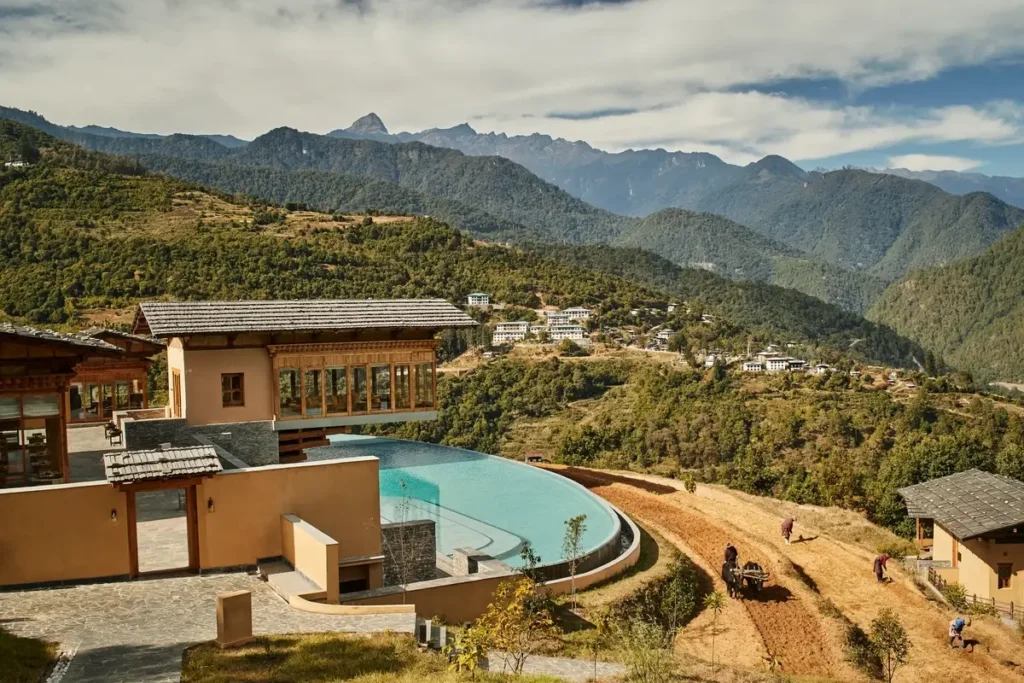
Spread across western and central Bhutan, the lodges offer different bases rather than a prescribed circuit. The distinction between them is geographical as much as architectural.
Thimphu is the capital-facing choice. The lodge sits above the city, with views across the valley and access to Thimphu’s cultural sights. It suits travelers who want an introduction to the country while retaining a hilltop setting away from the center.
Punakha is warmer, greener, and lower in elevation than the other valleys. Rice terraces and a more subtropical landscape give it a softer, more rural character. It particularly suits travelers who want time outdoors and a contrast with Bhutan’s higher mountain settings.
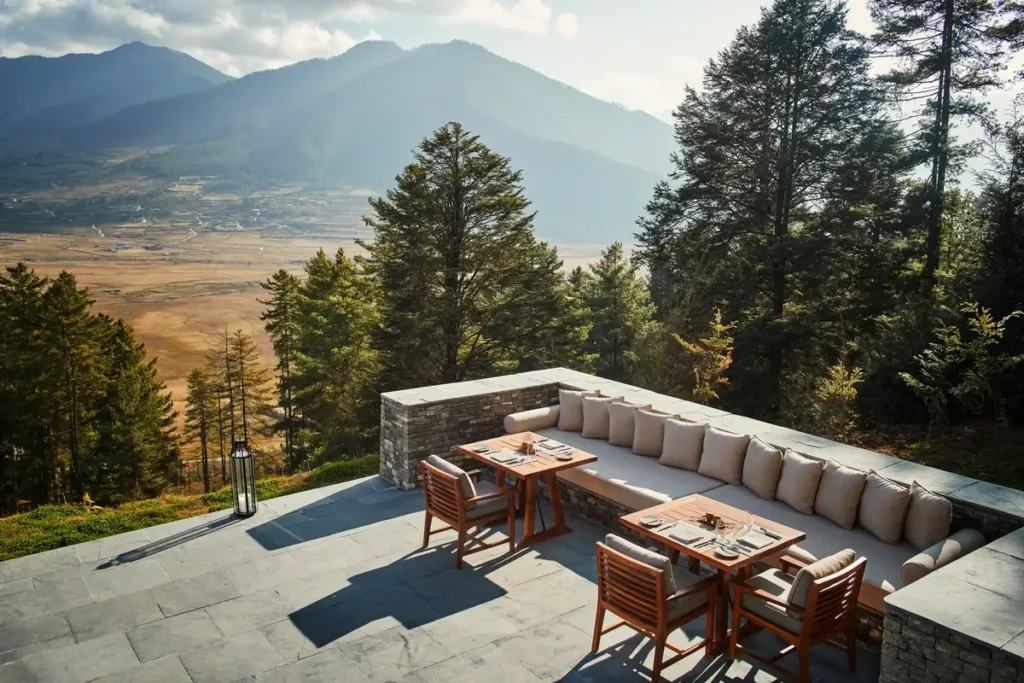
Gangtey looks across the open Phobjikha Valley, a broad grassland known for wintering black-necked cranes. Choose this lodge for hiking, birdlife, and a landscape-led stay where the surroundings matter more than access to urban sights.
Bumthang brings a forested setting, with pine woodland replacing the more open valley panoramas of the western lodges. Its intimate scale and distinctive suite design make it appealing to travelers seeking a quieter, more enclosed experience.
Paro is the practical choice for Tiger’s Nest and the Paro Valley. Its mountainside position makes it a logical base for travelers placing the monastery hike at the center of their visit.
Thimphu, Punakha, and Paro can form a focused first trip; Gangtey and Bumthang add different landscapes for travelers with more time. Changing lodges involves winding road journeys, so each added stop should earn its place in the itinerary.
Rooms: shared design, distinct lodge character
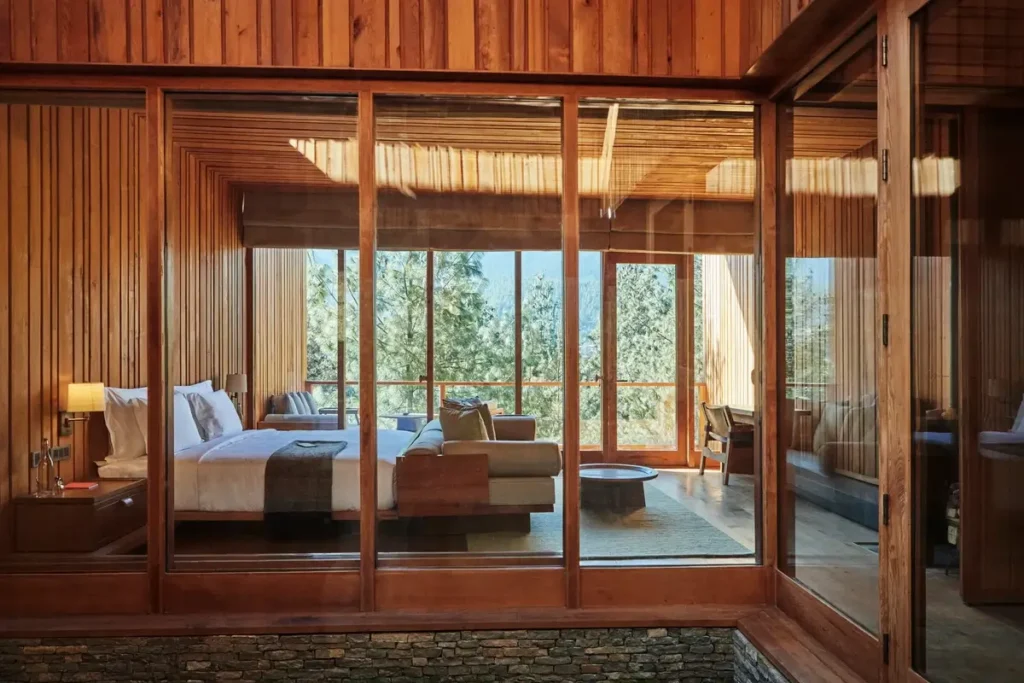
The accommodation has a common design language rather than a standardized floor plan. Natural wood, broad windows, Bhutanese references, deep seating, and large baths recur, while some rooms feature wood-burning stoves. The distinction to examine is the specific lodge and room category, not simply the Six Senses name.
At Thimphu, suites combine sleeping and living areas in an open-plan arrangement, with terraces overlooking the valley. The outlook is a significant part of the appeal, rather than proximity to the capital’s streets or the conveniences of a conventional city hotel.
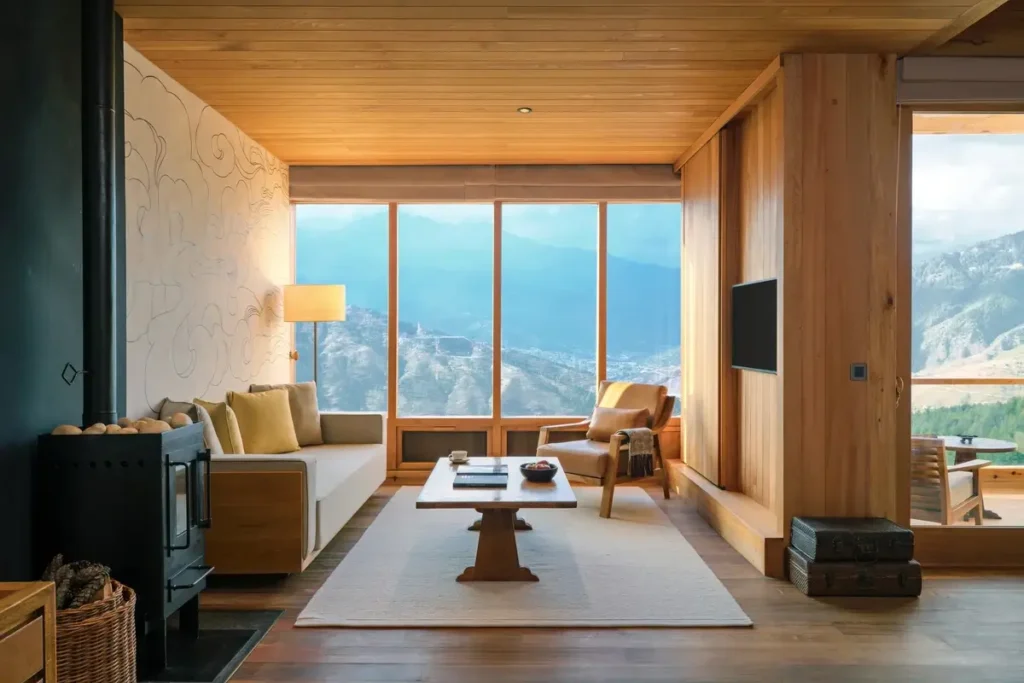
Bumthang departs from that approach. Its suites are arranged around private glass-walled courtyards, drawing attention inward as much as toward the surrounding forest. It is a different expression of the collection’s Bhutanese-inspired design rather than a smaller version of the same room.
At Paro, outlook can depend on category and position. Some accommodations open toward the valley, while others sit closer to the pine forest, where trees can limit panoramic views. If the landscape is the reason to book, confirm the specific category, orientation, and expected outlook rather than assuming every villa has an unobstructed panorama.
Families should pay particular attention to sleeping arrangements. A one-bedroom suite should not automatically be treated as comfortable accommodation for three guests. Confirm the actual bedding, layout, and privacy available to everyone sharing the room before booking.
Dining: varied menus, details to confirm
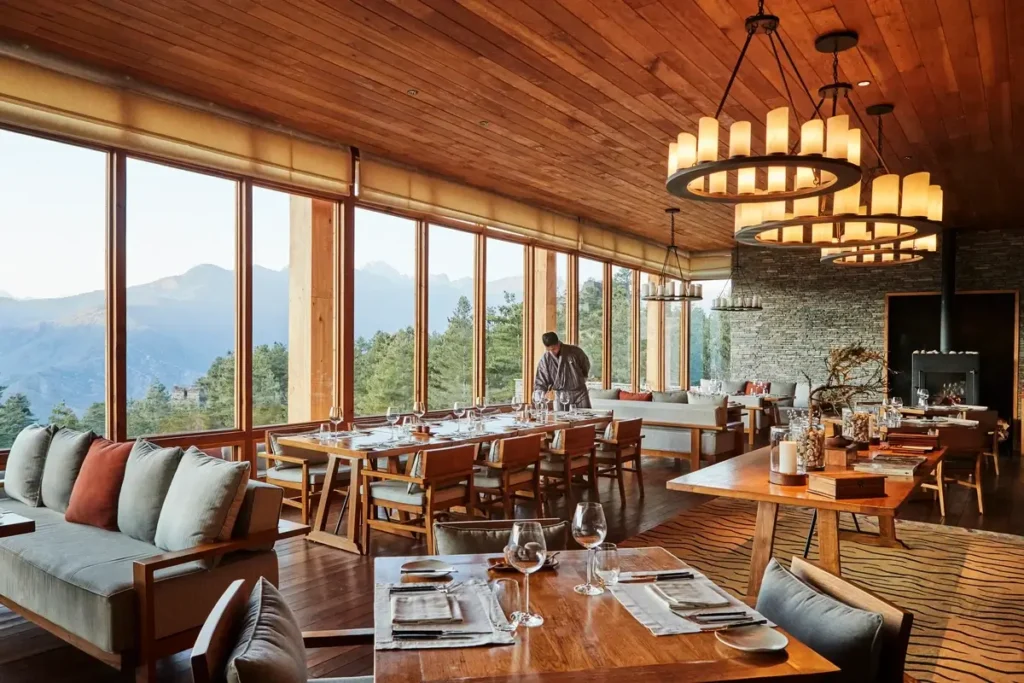
Dining follows the collection’s wider approach: a recognizable standard interpreted through each valley. The lodges combine Bhutanese dishes with regional and Western cooking, drawing on local produce and lodge gardens. Red rice, cheese-based preparations, dumplings, vegetables, and regional specialties sit alongside more familiar international choices.
Each lodge has its own restaurant, with menus reflecting local ingredients and traditions. Bumthang, for example, draws on the area’s buckwheat dishes. The differences are valuable on a multi-lodge journey, particularly when food becomes another way to experience the changing regions.
The locations also make on-property dining important. There are few notable restaurants within walking distance of the lodges, so meals are generally organized around the property or a planned outing. A multi-lodge itinerary brings variety, while guests spending longer in one valley may find menu repetition more relevant.
Travelers with allergies or strict dietary requirements should communicate them before arrival and reconfirm arrangements at each lodge. Preferences may be coordinated between properties, but that should not replace direct confirmation of what each kitchen can accommodate.
Check which meals, drinks, and special dining arrangements are included in each reservation. Do not assume that booking terms are identical across the collection.
Wellness and service are part of the journey
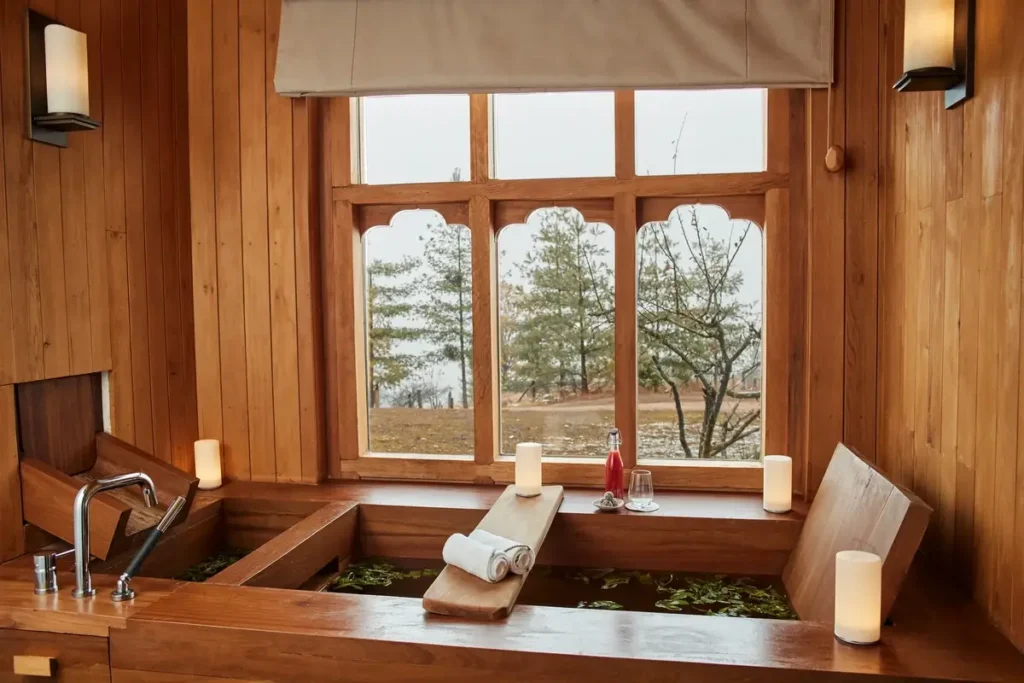
Wellness works best here as a complement to time spent exploring the valleys. Spa treatments, traditional hot stone baths, fitness facilities, yoga, and pools provide a slower counterpoint to hiking and cultural visits. The experience varies by lodge, which makes choosing the right combination of properties important.
Thimphu has an indoor pool, spa, sauna, steam room, fitness facilities, and yoga programming. Paro also has an indoor pool and wellness facilities, while Punakha has an outdoor pool suited to its warmer valley climate. Gangtey and Bumthang are more intimate properties and should be chosen primarily for their particular settings, not on the assumption that every lodge offers the same facilities.
Experiences follow the geography. Paro is the natural base for the Tiger’s Nest hike, Gangtey for walks and the Phobjikha landscape, Punakha for cycling and valley exploration, and Thimphu for the capital’s cultural sights. A treatment or hot stone bath after an active day makes a useful case for leaving time at the lodge rather than moving immediately to the next destination.
Coordination between lodges is an important part of a multi-valley itinerary. Guest preferences, activities, and onward journeys can be organized across properties, reducing some of the planning involved in moving between locations. However, confirm exactly which guides, drivers, inter-lodge transfers, and excursions are arranged or included with your reservation. A coordinated itinerary should not be mistaken for an all-inclusive one.
The trade-offs: road travel, altitude, and access
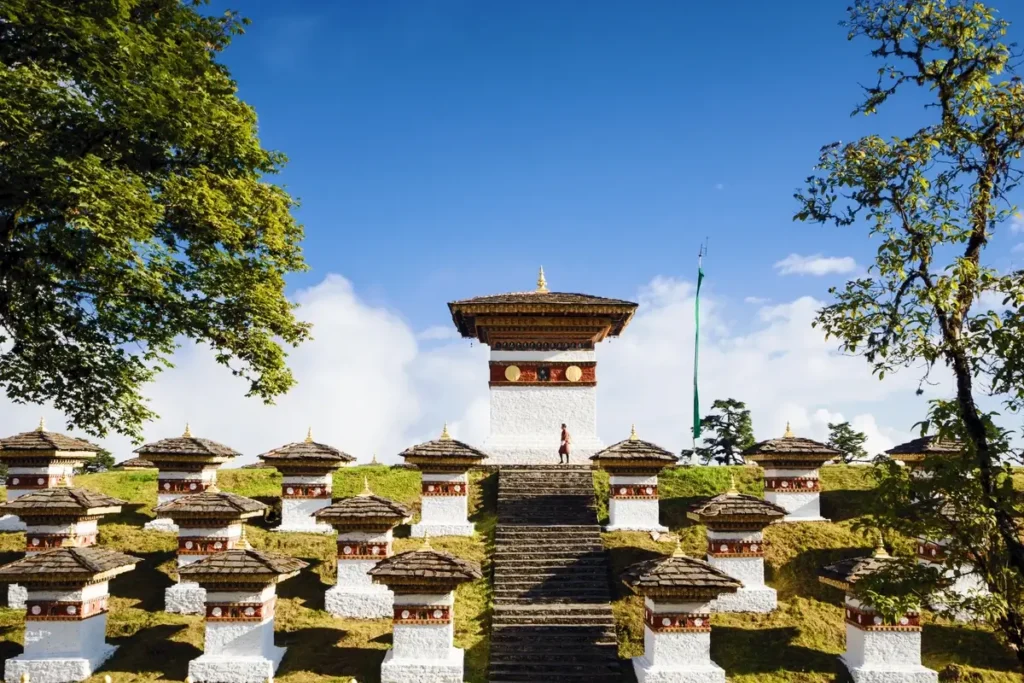
The collection’s geographical spread is an advantage only when travelers want to experience more than one valley. Moving between lodges means winding mountain roads and journeys that can take several hours. A focused stay at one property avoids those inter-lodge transfers, while a longer circuit rewards travelers prepared to spend part of their trip on the road.
Altitude also deserves consideration. Several lodges occupy elevated settings, and hiking adds physical demands to the itinerary. Individual responses vary, so travelers with concerns about altitude or strenuous activities should discuss their plans with a healthcare professional and allow for a sensible travel pace.
Accessibility needs to be confirmed separately for each chosen lodge. Do not assume that room access, routes to shared facilities, or available assistance are identical across the collection. Guests with mobility requirements should ask about their specific accommodation, circulation around the property, and transport arrangements before booking.
Things to know: Six Senses Bhutan comprises five lodges in different valleys. Confirm the lodges in your reservation, road transfers, current inclusions, and accessibility arrangements before booking.
Who should book Six Senses Bhutan?
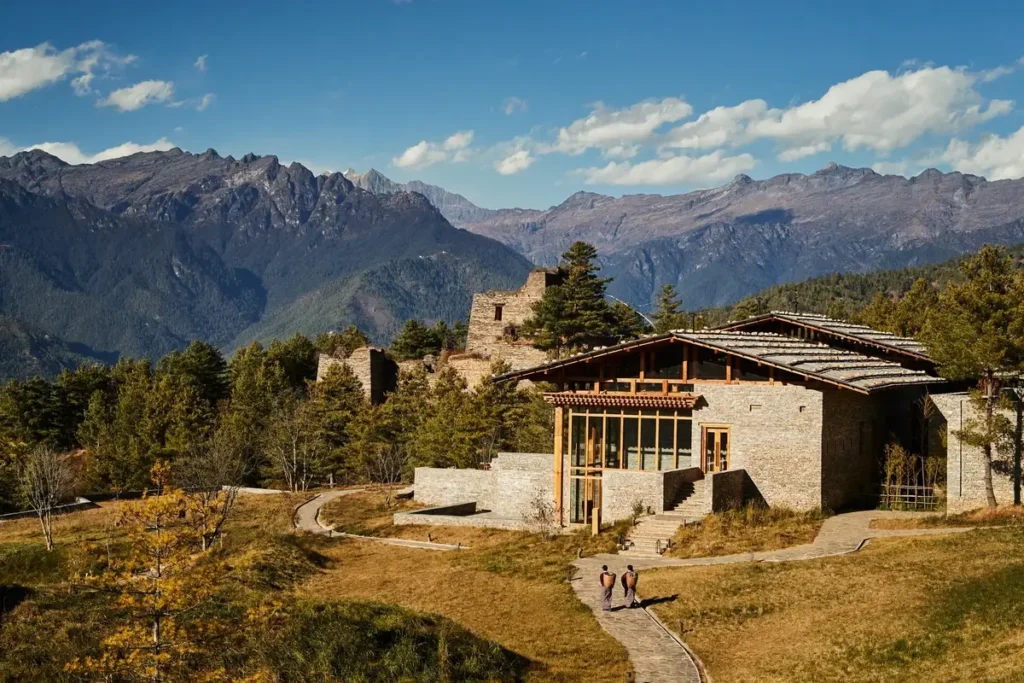
Six Senses Bhutan suits travelers who want the lodges to shape the itinerary as much as the sights do. Couples, families, hikers, and wellness-minded travelers can choose a single valley or combine several, provided there is enough time to enjoy each stop without allowing transfers to dominate the trip.
We would focus a single-lodge stay on Paro for Tiger’s Nest, Thimphu for the capital, Punakha for a warmer valley, Gangtey for Phobjikha’s open landscape, or Bumthang for its woodland setting and intimate lodge experience. Combining locations makes sense when the next valley offers something the trip genuinely needs.
It is less suitable for guests expecting one self-contained resort or uniform accommodation, facilities, and booking terms across every location. The strength of Six Senses Bhutan lies in the differences between its lodges. Choose the valleys you want to experience, not the number you can fit into the itinerary.
Credits for media displayed in this article
- https://www.sixsenses.com/en/hotels-resorts/asia-the-pacific/bhutan/bhutan/
- https://www.sixsenses.com/en/hotels-resorts/asia-the-pacific/bhutan/bhutan/lodges/six-senses-thimphu/
- https://www.sixsenses.com/en/hotels-resorts/asia-the-pacific/bhutan/bhutan/lodges/six-senses-punakha/
- https://www.sixsenses.com/en/hotels-resorts/asia-the-pacific/bhutan/bhutan/lodges/six-senses-gangtey/
- https://www.sixsenses.com/en/hotels-resorts/asia-the-pacific/bhutan/bhutan/lodges/six-senses-bumthang/
- https://www.sixsenses.com/en/hotels-resorts/asia-the-pacific/bhutan/bhutan/lodges/six-senses-paro/