Six Senses Crans-Montana is worth choosing for direct ski access, spacious contemporary accommodation, and a spa substantial enough to shape the stay. Positioned beside the Chetzeron piste and close to the Cry d’Er gondola, it makes getting onto the mountain straightforward, while its pools and thermal facilities give guests a reason to return before the evening. The principal qualification is service: the physical facilities make a strong case, but independent accounts are less consistent about the execution of the guest experience.
We would choose it for a ski holiday where recovery and time at the hotel matter almost as much as the slopes. It also suits travelers accompanying skiers who want substantial facilities of their own. Guests who prioritize traditional chalet atmosphere, a guaranteed panoramic view, or uniformly polished personal service should consider the trade-offs before booking.
At a glance
- Hotel
- Six Senses Crans-Montana
- Address
- Route des Téléphériques 60, 3963 Crans-Montana, Valais, Switzerland
- City
- Crans-Montana
- Country
- Switzerland
- Phone
- +41 58 806 20 20
- [email protected]
- Website
- Official website
- Setting
- Alpine; mountain village; ski-in/ski-out access to the Chetzeron red run
- Style and atmosphere
- Contemporary Swiss chalet design using timber and quartzite; warm mountain atmosphere
- Best suited to
- Skiers; mountain and outdoor enthusiasts; wellness travelers; families
- Accommodation
- Terrace rooms and suites; multi-bedroom apartments and chalets with mountain views.
- Standout facilities
- 2,000-square-meter Six Senses Spa; indoor pool; Ora outdoor pool; Biohacking Recovery Lounge; Alchemy Bar; ski-in/ski-out access.
Slopeside access, close to the village
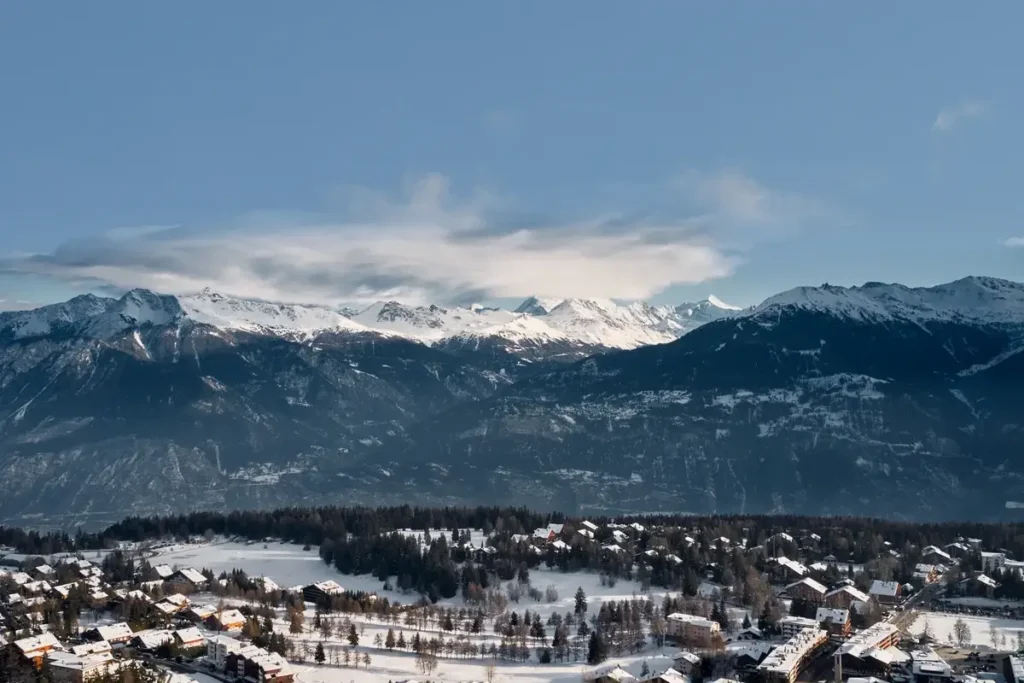
Six Senses Crans-Montana sits beside the Chetzeron red piste, close to the Cry d’Er gondola in the Crans area of the resort. Direct ski-in, ski-out access is its strongest practical advantage. Skiers can reach the mountain without organizing a daily vehicle transfer, while the hotel’s ski concierge assists with equipment and arrangements before and after time on the slopes.
The distinction is especially valuable during a ski-focused stay. Returning to the hotel for lunch, finishing the afternoon at the spa, or collecting equipment for the following morning requires less planning than at accommodation separated from the lifts. The Chetzeron run is red-rated, however, so direct access is more straightforward for confident skiers than for complete beginners. Guests who need easier pistes or lessons should confirm the appropriate route with the ski team, along with current lift and snow conditions.
The hotel is not isolated from the village. Shops and restaurants are within walking distance, and central Crans is approximately a 10-minute walk away. This provides useful flexibility for guests who want an evening outside the hotel without making the property feel like a conventional village-center address. For a broader view of the destination, see Calanova’s Swiss Alps guide.
Architecture takes a contemporary Alpine direction. Timber, stone, glass, and restrained interiors replace the heavy decorative language of a traditional chalet. Large windows and terraces bring the surrounding forest and slopes into the rooms, while the spa and public spaces have a more modern character. It will appeal to travelers who prefer contemporary design over a rustic mountain-hotel experience.
Location
Rooms: generous space, but choose the view carefully
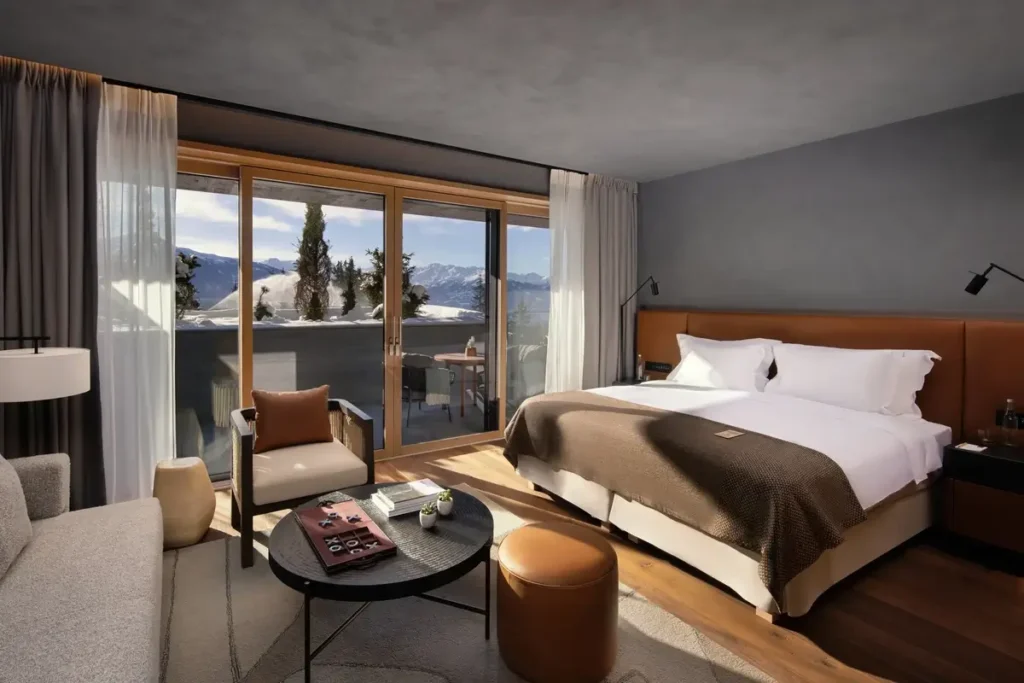
Room size is a meaningful strength at Six Senses Crans-Montana. Even the standard Terrace Room measures approximately 48 to 50 square meters, providing more space than is typical of many traditional Alpine hotels. Natural materials, large windows, outdoor terraces, and contemporary furnishings create accommodation designed for spending time indoors after a day on the mountain.
The important distinction is outlook. Terrace Rooms face the Alpine forest, while Superior Terrace categories can have different orientations. Premium Superior Terrace Rooms combine views of the forest and ski slopes, making them a stronger choice when seeing the piste from the room is part of the appeal. A terrace should not be assumed to guarantee an uninterrupted mountain panorama.
The Deluxe Terrace Room increases the space to approximately 71 square meters, with a panoramic town outlook. It is worth considering for travelers who value a larger interior and terrace more than a direct view of the slopes. The category illustrates why room size and orientation should be evaluated separately: a larger room does not necessarily offer the scenery a skier has in mind.
The Terrace Suite provides a more substantial upgrade. Measuring approximately 71 to 87 square meters, it combines separate sleeping and living spaces, a generous terrace, and a private sauna. That last feature makes the suite particularly relevant to a winter stay centered on wellness and recovery. Views can include the forest, slopes, distant peaks, or village, so the specific orientation still matters.
We would start with a Terrace Room when generous interior space is sufficient, prioritize a slope-facing category for guests who want to watch the ski activity, and consider a Terrace Suite when its separate living area and private sauna will be used. Guests who value privacy should also ask about proximity to the gondola, neighboring accommodation, and public areas, rather than choosing by floor area alone.
There is another practical consideration for summer stays. The hotel’s room specifications describe an enhanced air-circulation system rather than traditional air conditioning. Travelers sensitive to warm sleeping conditions should confirm the cooling arrangements and room orientation before booking during hotter periods. The generous windows and terraces are advantages, but they do not replace individual preferences for temperature control.
Dining: Alpine cooking, Japanese evenings, and après-ski
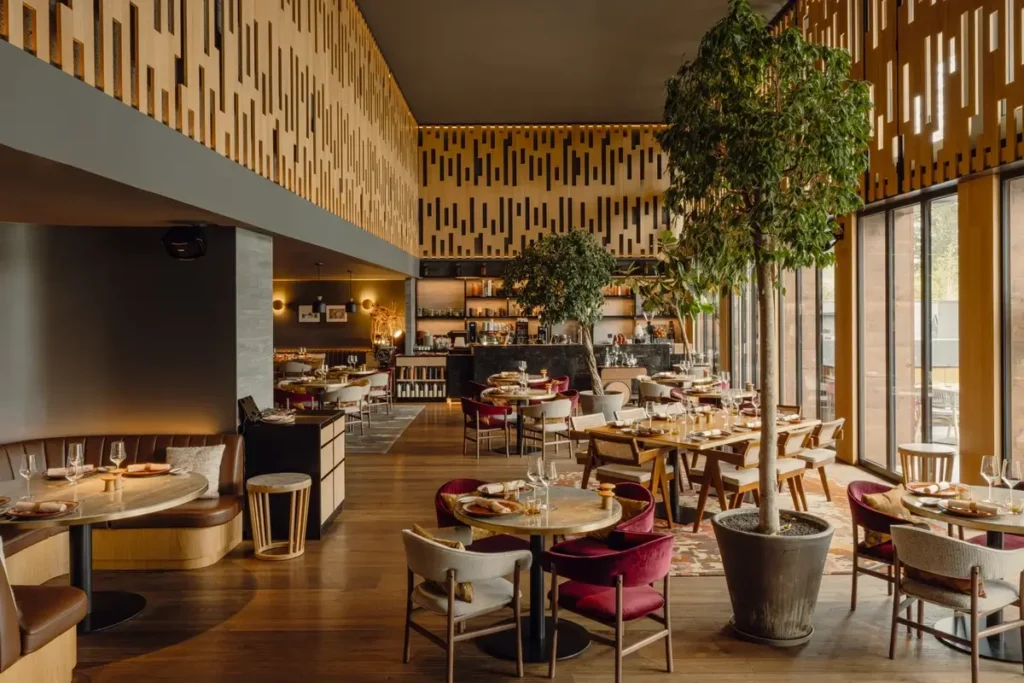
Dining at Six Senses Crans-Montana is organized around two principal restaurants, supported by a bar and seasonal poolside venue. The combination is useful for a ski stay, offering an everyday Alpine brasserie alongside a more focused Japanese dining experience.
Wild Cabin is the all-day brasserie and the practical center of the hotel’s dining program. Breakfast is served here, while lunch and dinner emphasize locally sourced meat, fish, seasonal vegetables, and mountain-inspired cooking. Its open terrace overlooks the surrounding forest and slopes, making it particularly appealing for a midday break during the ski season.
Breakfast combines familiar dishes with produce associated with the Valais region, including breads, cheeses, and fresh ingredients. Independent guest accounts have praised its variety and quality, although individual dining experiences are not uniformly consistent. We would treat breakfast as a useful part of the ski-day routine rather than a reason to book the hotel on its own.
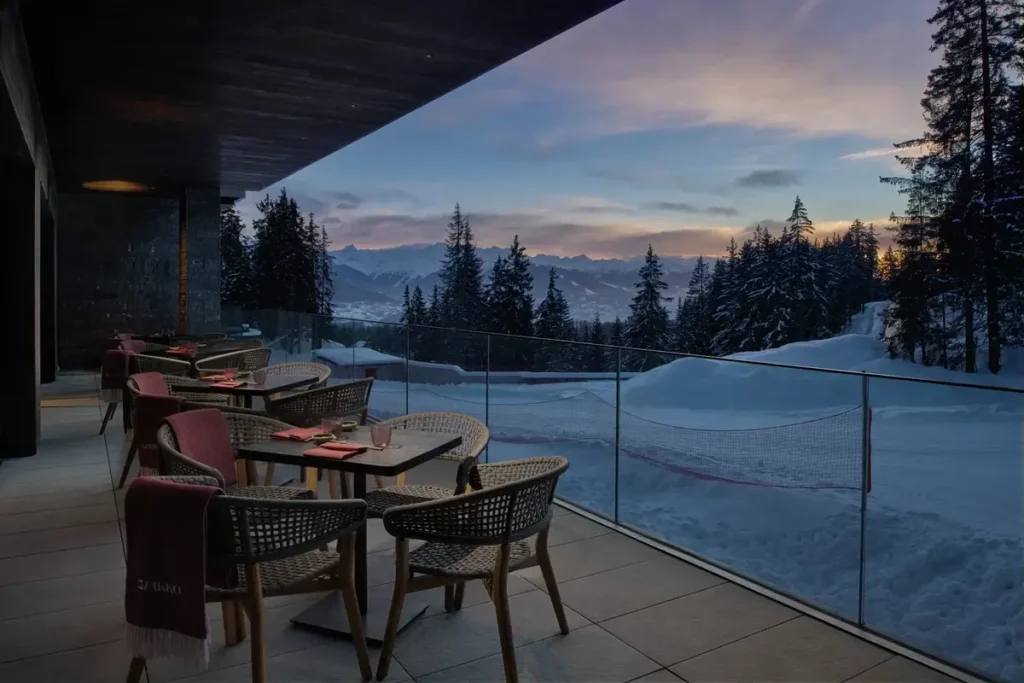
Byakko provides the more occasion-focused dining choice, with Japanese cooking centered on precise preparation, seasonal ingredients, sake, and tea. It is a different proposition from the relaxed atmosphere of Wild Cabin, particularly for guests who want an evening meal with a more deliberate culinary focus. The restaurant currently lists seasonal operations from December through March and June through September, so its availability should be confirmed before planning a stay around it.
Ora Bar & Lounge offers drinks and lighter food in a less formal setting, with music and evening entertainment contributing to its atmosphere. Le Club Alpin adds a seasonal experience around the outdoor pool, combining summer refreshments with a livelier après-ski format during winter. These spaces broaden the options beyond the two principal restaurants, although guests should not assume identical operations throughout the year.
The dining lineup is appropriate for several nights at a ski resort, particularly when guests also want to explore restaurants in Crans. We would use Wild Cabin for convenience, reserve Byakko for a more focused evening, and treat the bar and seasonal venues as alternatives rather than essential parts of every stay. Confirm current restaurant schedules, reservations, dietary arrangements, and meal inclusions before arrival.
The spa is the strongest reason to linger after skiing
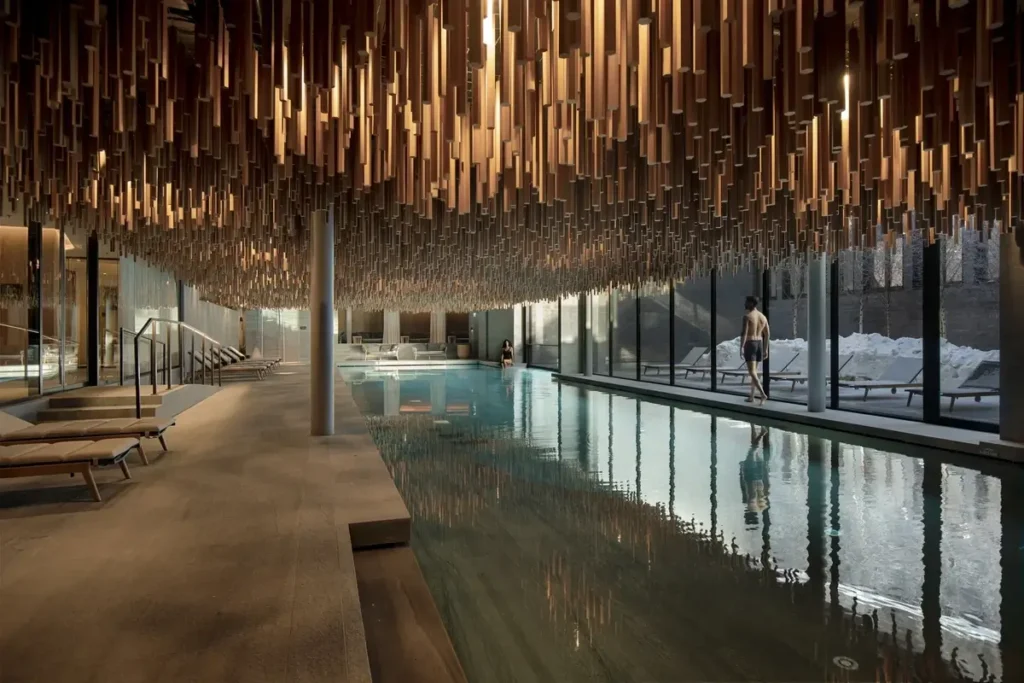
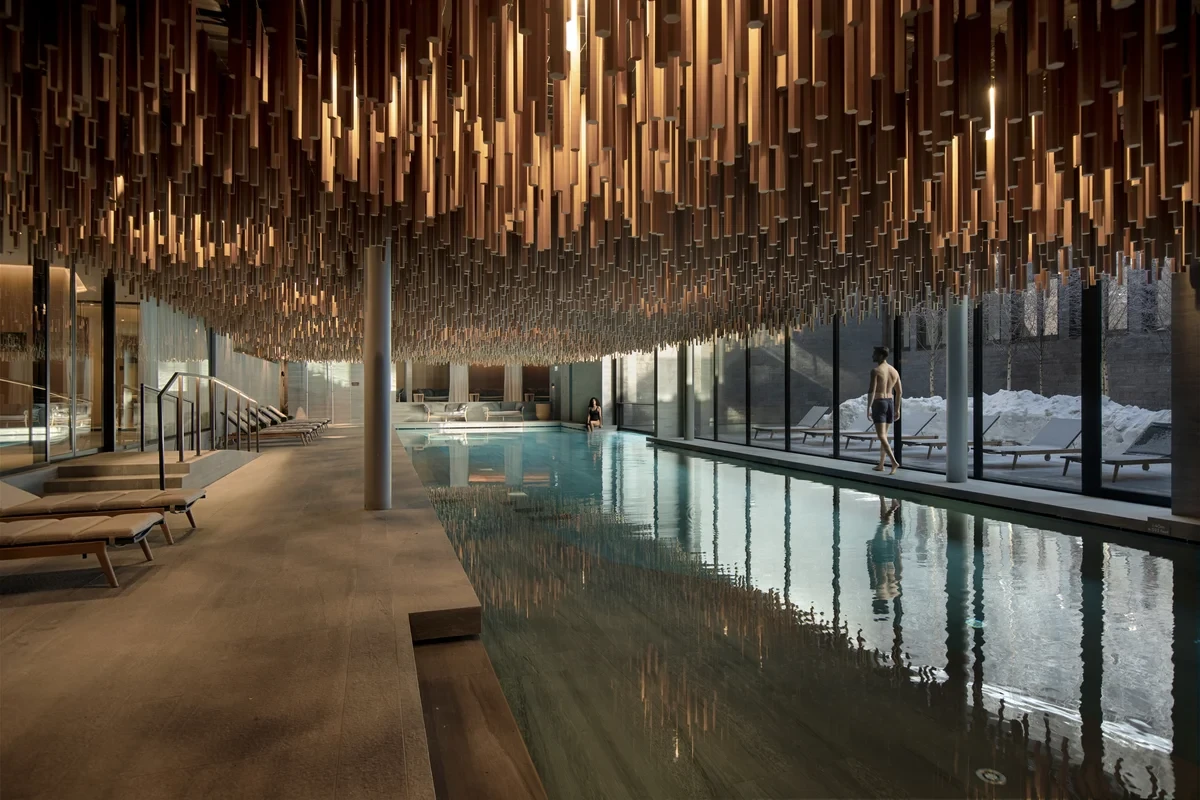
Six Senses Crans-Montana makes an especially convincing case through its wellness facilities. The spa spans approximately 2,000 square meters, combining an extensive thermal offering with indoor and outdoor swimming, treatment rooms, and recovery-focused technology. It is substantial enough to shape the daily itinerary rather than serve as an occasional post-ski indulgence.
The indoor pool is one of the property’s defining spaces, with a suspended timber installation above the water and a connection to the outdoor pool area. Heated outdoor swimming adds another way to experience the Alpine setting, while massage jets and relaxation areas encourage guests to spend time there beyond a quick swim.
The wider thermal facilities include Finnish, rock, infrared, and bio-salt saunas, a steam room, an ice fountain, and a cold plunge pool. Ten treatment rooms support the massage and therapy program, while a fitness center and yoga studio provide alternatives for guests who want movement rather than passive relaxation.
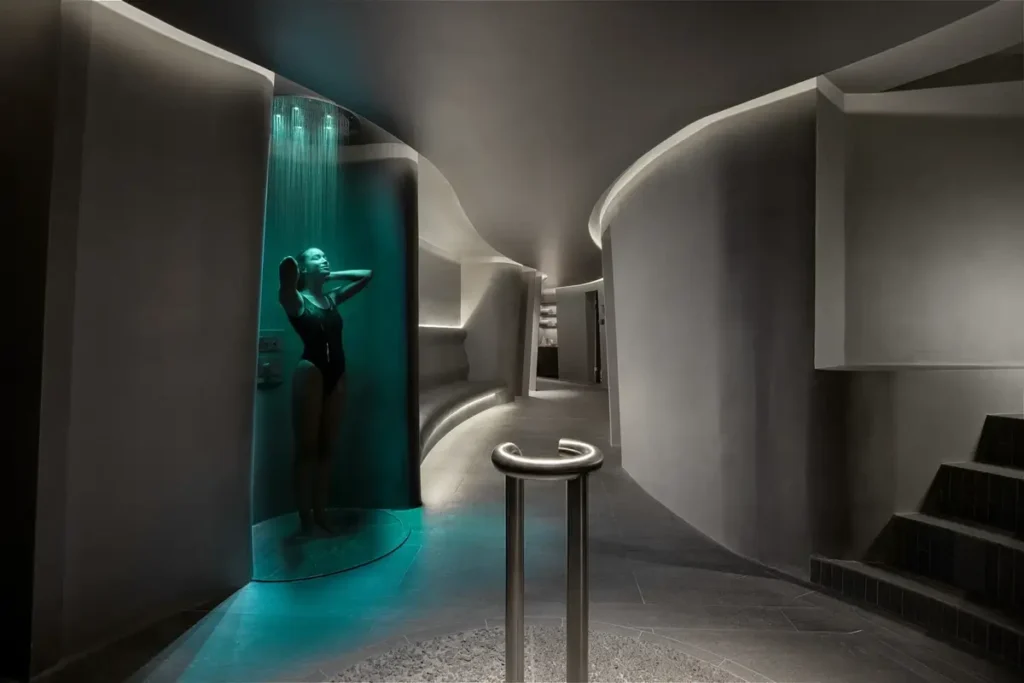
The Biohacking Recovery Lounge distinguishes the wellness offering further, using equipment focused on muscle recovery and relaxation. The Alchemy Bar adds hands-on activities using botanical ingredients. These options give the spa more range than a conventional Alpine hotel wellness area, particularly for travelers whose days involve substantial physical activity.
The scale is relevant to different types of guests. Committed skiers can use the facilities to recover after the slopes, while companions who do not ski have enough to make time at the hotel worthwhile. The resort currently allows guests under 16 to use its spa pools when accompanied by a parent or guardian, although families should confirm current access rules for other facilities and treatments.
We would consider the spa a central reason to choose Six Senses Crans-Montana over a simpler slopeside hotel. Its appeal is the ability to move directly from skiing into a substantial wellness experience without arranging transport or leaving the property. Specific treatments, programs, and recovery sessions should still be confirmed in advance, particularly during busy winter periods.
Service is less consistent than the physical offering
The hotel’s rooms, ski access, and wellness facilities make a relatively clear proposition. Service is harder to assess consistently. Independent guest accounts include strong praise for attentive staff, efficient ski-equipment assistance, and helpful support with activities. Others describe less satisfactory experiences involving room allocation, housekeeping, communication, or the handling of complaints.
These reports should not be turned into a claim that service is uniformly weak. They do, however, suggest a less predictable experience than the quality of the physical facilities alone might imply. At a hotel where convenience and personal assistance form part of the value, that distinction deserves attention.
Room allocation is a particularly useful example. The buildings, floor levels, and orientations can affect the relationship between accommodation, restaurants, spa facilities, and lift access. Guests with strong preferences should communicate them before arrival, especially if proximity to shared facilities, a quiet position, or a particular mountain outlook is important.
We would choose Six Senses Crans-Montana for what it can reliably offer in physical terms: ski access, contemporary accommodation, generous terraces, and one of the more substantial spa facilities in the destination. Travelers whose main priority is a highly personalized and consistently formal style of service should weigh the more mixed guest accounts against those strengths.
Who should book Six Senses Crans-Montana?
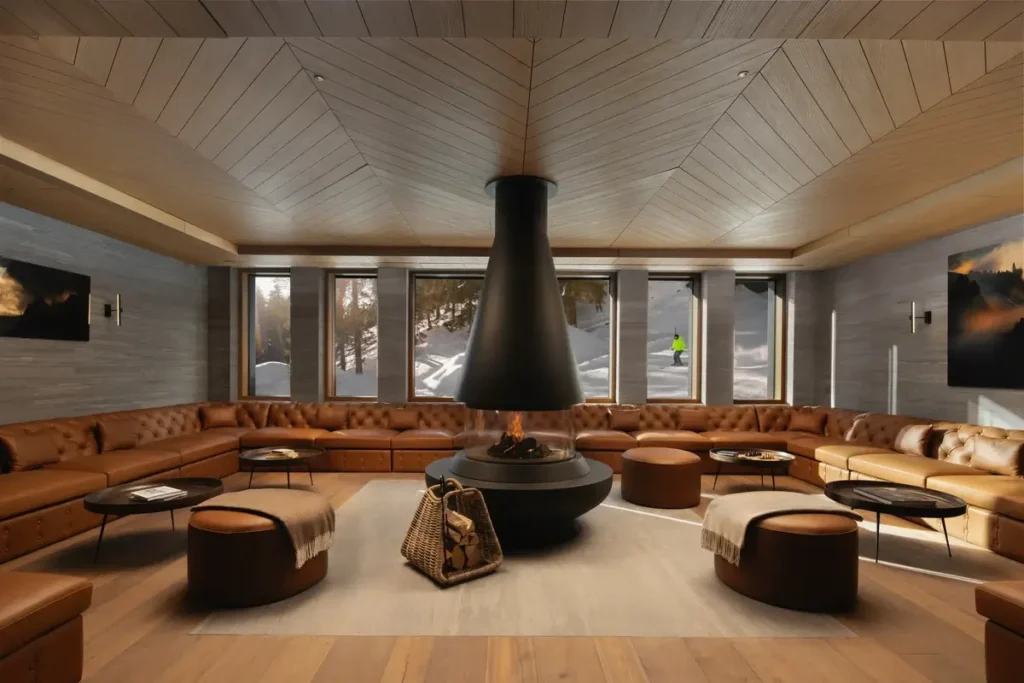
Six Senses Crans-Montana is particularly well suited to skiers who want direct access to the mountain and enough wellness facilities to make returning to the hotel part of the day’s appeal. It also works for couples and families with different interests, where one guest may spend the day skiing while another prefers the spa, pools, or village.
The strongest room choice depends on the priority. A standard Terrace Room offers generous space and a forest setting, a slope-facing category puts the mountain activity in view, and a Terrace Suite adds separate living space and a private sauna. Confirm the exact orientation rather than assuming that every terrace overlooks the same scenery.
The hotel is less persuasive for travelers seeking a traditional chalet atmosphere, guests who want highly predictable personalized service above all else, or beginners who assume direct access to a red-rated piste will automatically suit their skiing ability. Summer visitors should also consider the absence of traditional room air conditioning when deciding whether the contemporary accommodation meets their comfort preferences.
Things to know: Ski-in, ski-out access connects to the Chetzeron red piste and depends on operating mountain conditions. Confirm suitable routes for your skiing ability, room orientation, and current lift access. Byakko operates seasonally, and guest rooms use air circulation rather than traditional air conditioning.
We would choose Six Senses Crans-Montana for a ski holiday built around both the mountain and the hours afterward. Its defining advantage is not simply getting onto the slopes with ease, but returning to a hotel where the spa, pools, and accommodation give the stay a second purpose. That combination is compelling, provided the room and service expectations are set carefully.
Credits for media displayed in this article
- https://www.sixsenses.com/en/hotels-resorts/europe/switzerland/crans-montana/
- https://www.sixsenses.com/en/hotels-resorts/europe/switzerland/crans-montana/accommodation/
- https://www.sixsenses.com/en/hotels-resorts/europe/switzerland/crans-montana/dining/
- https://www.sixsenses.com/en/hotels-resorts/europe/switzerland/crans-montana/gallery/