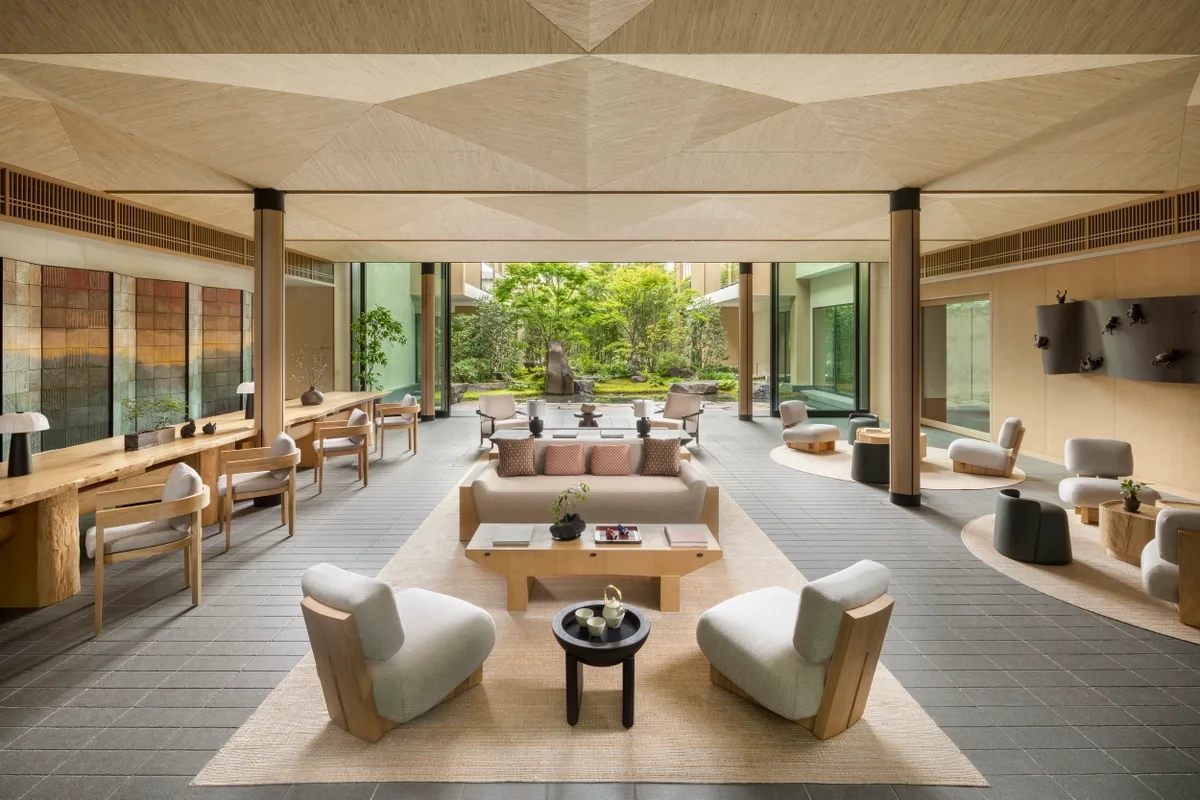
Six Senses Kyoto is worth choosing for its combination of contemporary Japanese design, a substantial spa, and a Higashiyama address close to some of the city’s most important cultural sites. Its courtyard-centered interiors offer a quieter counterpoint to days spent exploring temples and historic streets, while the indoor pool and Japanese-style bathing facilities give guests a reason to return before evening. The main compromise is transport convenience: the hotel is well placed for eastern Kyoto, but less practical for an itinerary organized around repeated journeys through Kyoto Station.
We would choose it for a stay that leaves time for both sightseeing and the hotel itself. It suits travelers who value design, thoughtful accommodation, and wellness rather than treating the room simply as somewhere to sleep. Those planning frequent rail excursions or expecting a traditional ryokan experience should consider a different address or style of accommodation.
At a glance
- Hotel
- Six Senses Kyoto
- Address
- 431 Myōhōin Maekawachō, Higashiyama Ward, Kyoto 605-0932, Japan
- City
- Kyoto
- Country
- Japan
- Phone
- +81 75 531 0700
- [email protected]
- Website
- Official website
- Setting
- Urban; Higashiyama district; near temples and Kyoto National Museum
- Style and atmosphere
- Contemporary Japanese design with Heian-era influences, timber and earth tones; peaceful courtyard atmosphere
- Best suited to
- Cultural travelers; couples; wellness travelers
- Accommodation
- 81 rooms and suites with courtyard, neighboring shrine-garden or city views; includes a three-bedroom penthouse suite.
- Standout facilities
- Six Senses Spa; Alchemy Bar; Biohack Recovery Lounge; Sekki restaurant; Nine Tails bar.
Higashiyama is the advantage, with a transport trade-off
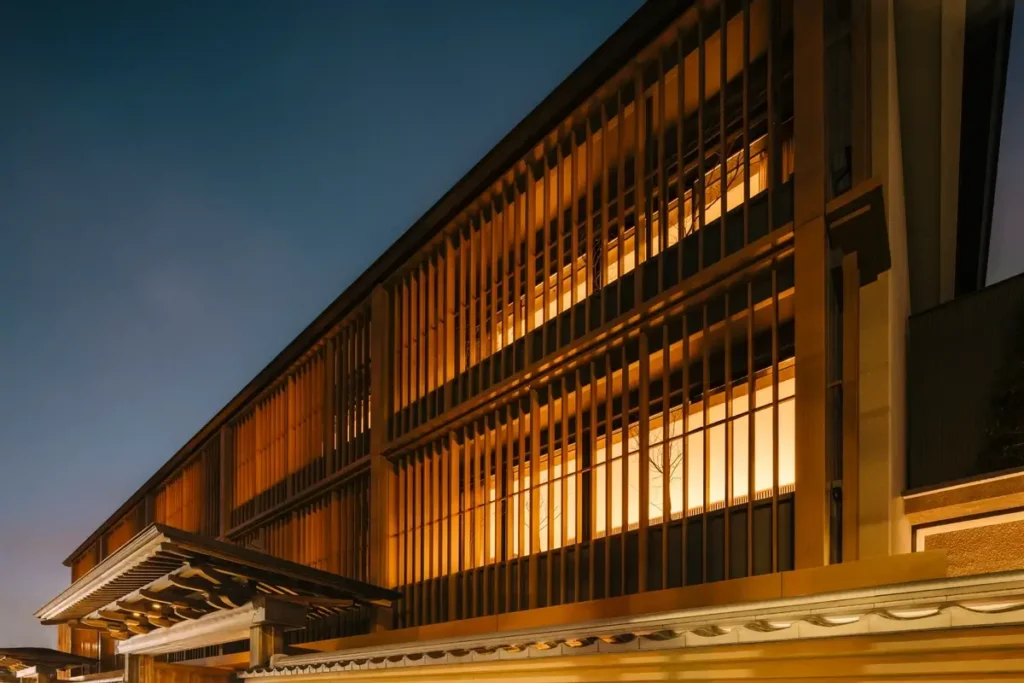
Six Senses Kyoto sits in southern Higashiyama, near Myoho-in Temple, Sanjusangen-do, and the Kyoto National Museum. This is a useful location for travelers who want to spend time exploring eastern Kyoto, with temples, traditional streets, and cultural attractions providing the structure of the day. The hotel feels more connected to this historic part of the city than a property chosen primarily for access to Kyoto’s main railway station.
That distinction matters when planning the itinerary. Sanjusangen-do and the Kyoto National Museum are nearby, while the wider Higashiyama district rewards exploration on foot. Travelers can build days around individual neighborhoods rather than crossing the city repeatedly. For broader destination planning, see Calanova’s Kyoto hotel guide.
The hotel is not disconnected from public transportation. Keihan Shichijo Station is approximately a 10-minute walk away, and Kyoto Station is around seven minutes by taxi under the hotel’s published directions. However, the address does not provide the immediate access to the city’s main transport hub offered by hotels around Kyoto Station. Guests planning frequent train journeys to Osaka, Nara, or other destinations should factor in the additional connection.
We would prioritize Six Senses Kyoto when the intention is to spend meaningful time in Higashiyama and return to the hotel between outings. It becomes less compelling when each day begins and ends with a major rail journey. The location is a strength for a particular style of Kyoto visit, not an advantage for every itinerary.
Location
Rooms and design: choose the outlook, not just the category
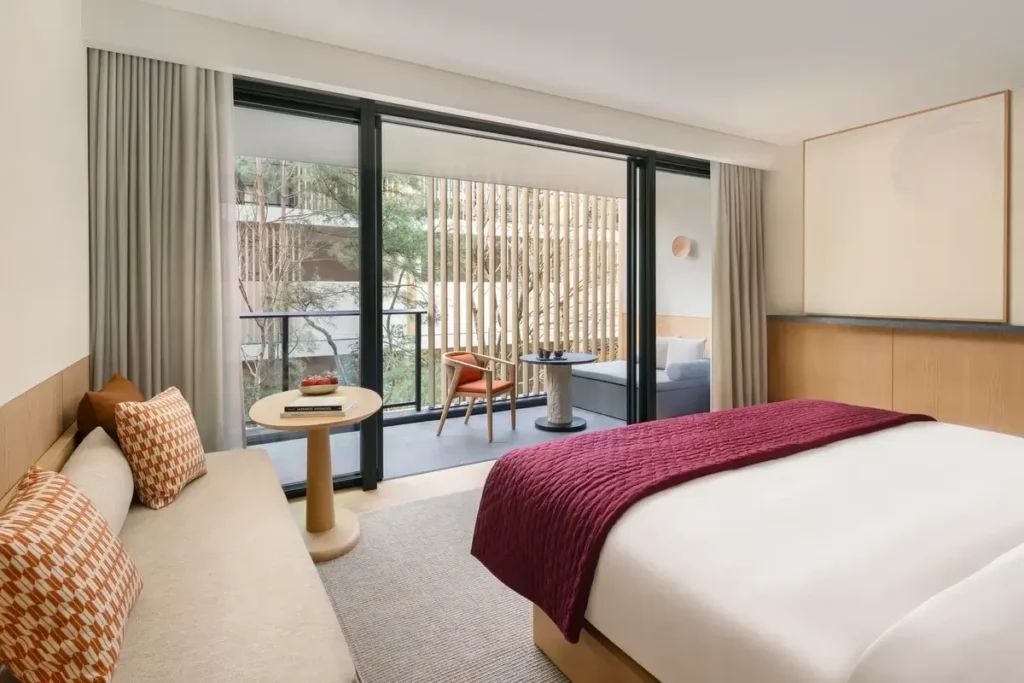
Design is one of Six Senses Kyoto’s strongest distinctions. The 81 rooms and suites use natural materials, restrained colors, contemporary furnishings, and details inspired by Japanese craftsmanship. References to Heian-period culture, The Tale of Genji, and local folklore give the interiors a connection to Kyoto without reproducing the conventions of a traditional ryokan.
The result is contemporary rather than ceremonial. Low visual clutter, natural textures, and carefully considered lighting create a calm setting, while balconies and large windows connect the accommodation to the courtyard, neighboring shrine grounds, or city. This is a hotel for travelers who appreciate Japanese design interpreted through a modern international luxury format, not those seeking tatami rooms and a traditional inn experience.
Room selection deserves attention because the outlook changes meaningfully between categories. The Deluxe King measures 42 square meters and includes a balcony, with views that can face the internal courtyard or the city. The Deluxe Garden King, also 42 square meters, is the clearer choice for travelers who specifically want to overlook the planted central courtyard. Its appeal lies in that quieter outlook rather than additional floor area.
The Junior Suite City increases the space to approximately 65 square meters. Its documented outlook is toward the street, so the category should not be booked on the assumption of a sweeping city panorama. It makes more sense for guests who value a larger interior and seating area than for those whose main priority is an especially scenic view.
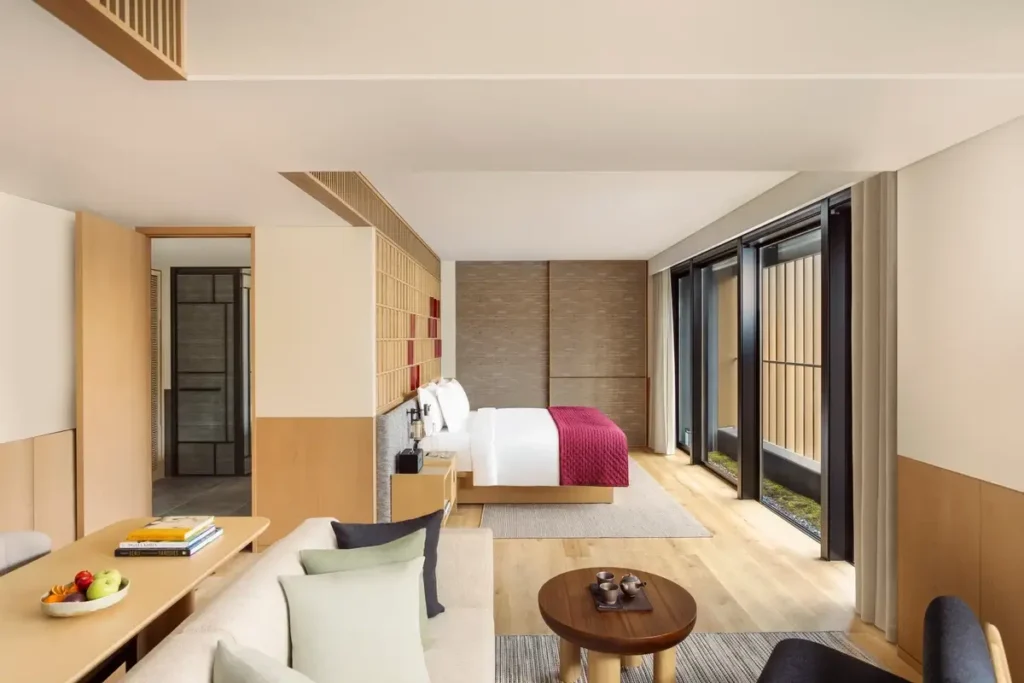
For a more distinctive outlook, the Deluxe Junior Suite Garden measures approximately 62 square meters and has a balcony facing the grounds of Toyokuni Shrine. This is a more compelling upgrade for travelers who want the accommodation to reflect its Higashiyama setting. The Deluxe Suite Garden offers a separate living area and approximately 88 square meters of interior space, alongside a generous balcony overlooking the shrine garden.
Larger suites, including the three-bedroom penthouse, provide more substantial arrangements for families and groups. Their additional space is relevant when guests need separate bedrooms and shared living areas, but it should not automatically be treated as a better choice for a couple spending most of the day outside the hotel.
We would prioritize a Deluxe Garden King for a shorter stay centered on sightseeing, a Deluxe Junior Suite Garden for travelers who want a more distinctive shrine-facing outlook, and a larger suite when separate living space will genuinely be used. Confirm the exact view, balcony arrangement, room layout, and bedding before booking. At Six Senses Kyoto, the relationship with the courtyard or surrounding neighborhood can matter more than a modest increase in square footage.
Dining follows Kyoto’s changing seasons
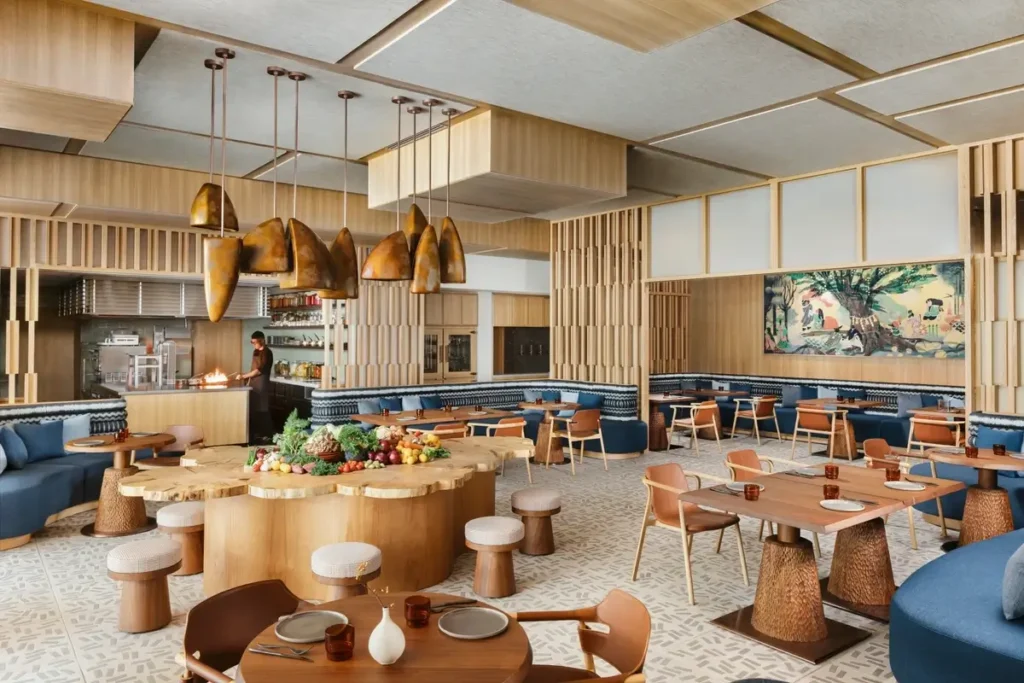
Dining at Six Senses Kyoto is built around seasonality, with distinct options ranging from contemporary Japanese-influenced cooking to a dedicated omakase sushi counter. It contributes meaningfully to the hotel experience, although Kyoto offers enough exceptional dining elsewhere that guests need not plan every meal on property.
Sekki is the principal all-day restaurant, overlooking the central courtyard garden. Its name refers to the 24 solar terms in the traditional Japanese calendar, and its menus change to reflect ingredients at different points in the year. Locally sourced produce, Japanese culinary techniques, fermentation, and plant-forward dishes form the basis of a contemporary rather than traditional kaiseki-style experience.
Breakfast is an important part of Sekki’s offering, combining Japanese and international choices with fresh juices, locally sourced ingredients, and prepared dishes. Independent stay accounts describe both buffet selections and à la carte options. We would make use of breakfast here before exploring Higashiyama, particularly for a stay where slower mornings are part of the itinerary.
Sushi Oga Higashiyama offers a substantially different dining experience. The Kyoto outpost of the Osaka restaurant specializes in counter-style omakase sushi, including its signature red-vinegar rice and carefully selected seafood. This is a focused dining reservation rather than a casual alternative to Sekki. Advance booking is required, and the restaurant currently lists Wednesday closures alongside periodic additional holidays. Guests interested in the experience should confirm availability as part of planning the stay.
Café Sekki provides a more informal option, with coffee, Japanese teas, fresh juices, kombucha, and pastries. It is useful for a quick morning drink or something light between outings. Nine Tails takes the evening role, offering cocktails inspired by Japanese ingredients in an intimate bar setting with a distinctly different atmosphere from the courtyard restaurant.
The combination gives the hotel more range than a single all-day restaurant, although we would not book Six Senses Kyoto for its dining alone. Sekki’s seasonal cooking is the most coherent expression of the hotel’s philosophy, while Sushi Oga provides a separate specialist experience. Guests should confirm current menus, dietary arrangements, reservation requirements, and any meal inclusions before arrival.
The spa makes staying in part of the itinerary
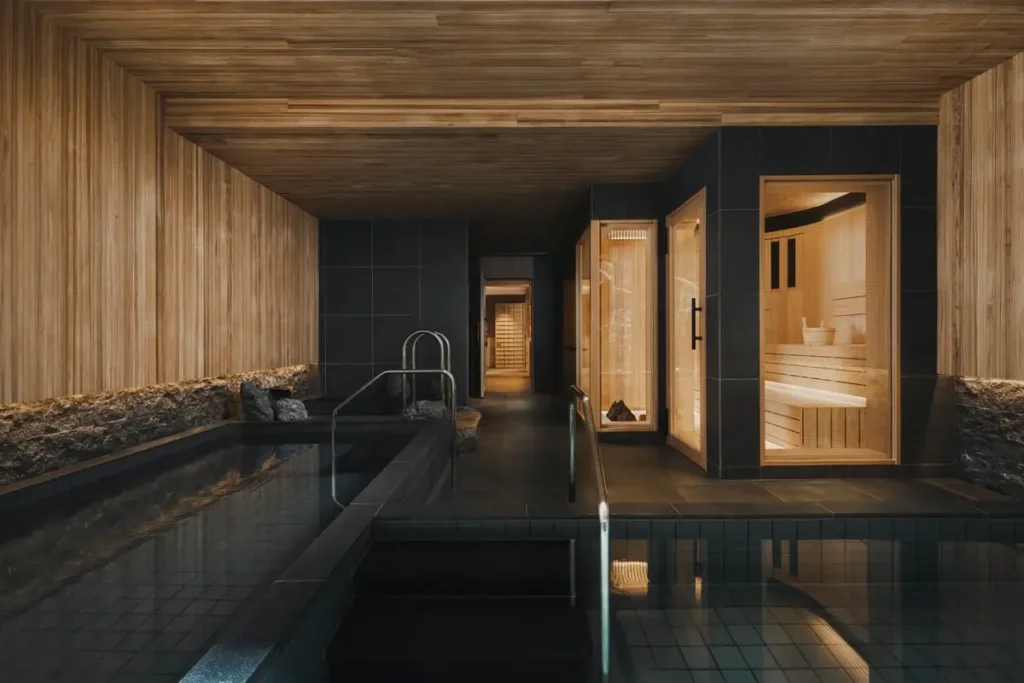
The spa is the clearest reason to choose Six Senses Kyoto over a simpler hotel in Higashiyama. Its facilities go beyond a treatment menu and fitness room, bringing together Japanese bathing traditions, a substantial indoor swimming pool, and a wellness program designed to occupy meaningful time during a city stay.
The indoor pool is the central shared facility. Japanese-style hot baths, sauna and steam areas, and a separate Watsu pool broaden the water-based experience, while a 24-hour fitness center and dedicated yoga and meditation studio provide alternatives to treatments. The combination is particularly useful after long days exploring Kyoto on foot.
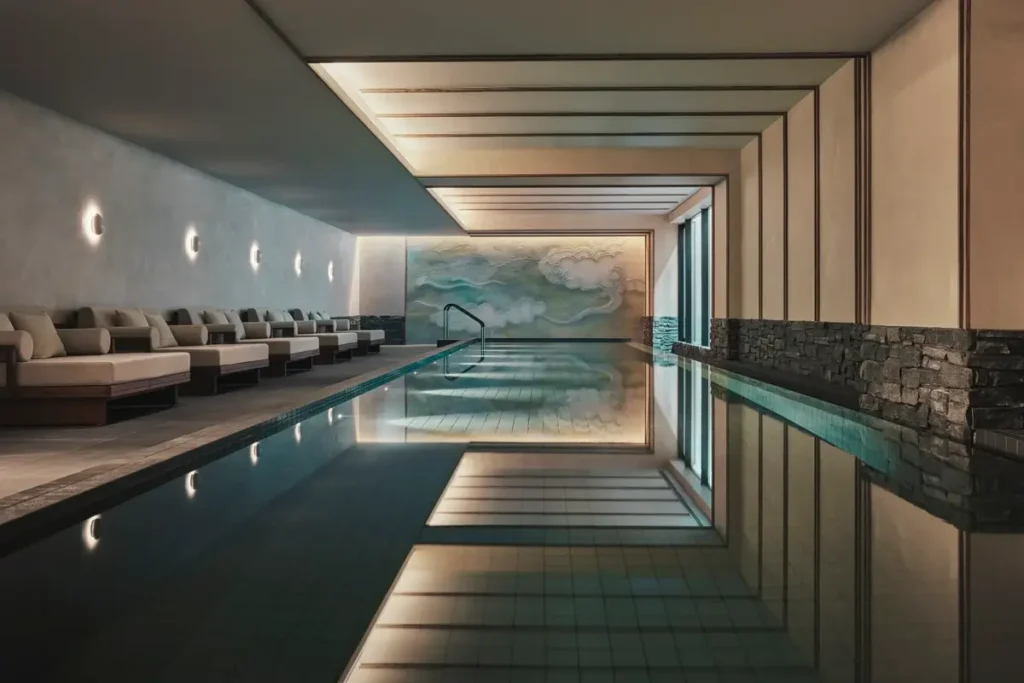
Wellness programming draws on Japanese traditions alongside contemporary approaches to recovery, sleep, and movement. The Alchemy Bar offers hands-on workshops using seasonal ingredients, while massage and other spa treatments provide more conventional ways to unwind. Guests interested in a particular treatment or wellness program should confirm its current content, availability, and any additional charges before arrival.
Pool access requires attention for families. The hotel’s published policy allows children under 16 to use the indoor pool only between 7:00 a.m. and noon when accompanied by a guardian. The restriction is important for guests expecting family swimming time after an afternoon of sightseeing. Confirm current hours and access rules for the baths, sauna, and other wellness facilities separately.
We would choose Six Senses Kyoto partly for the ability to divide the day between the city and the spa. The pool and bathing facilities give guests a reason to return before dinner, particularly during Kyoto’s hotter months or after an ambitious sightseeing itinerary. Travelers who expect to leave early and return only to sleep may not make enough use of the wellness offering to justify choosing the hotel for that reason.
Things to know: Keihan Shichijo Station is approximately a 10-minute walk from the hotel, while Kyoto Station is about seven minutes away by taxi. Children under 16 may use the indoor pool only from 7:00 a.m. to noon with a guardian, under the published policy. Confirm current spa access and reserve Sushi Oga Higashiyama in advance if it is part of your plans.
Who should book Six Senses Kyoto?
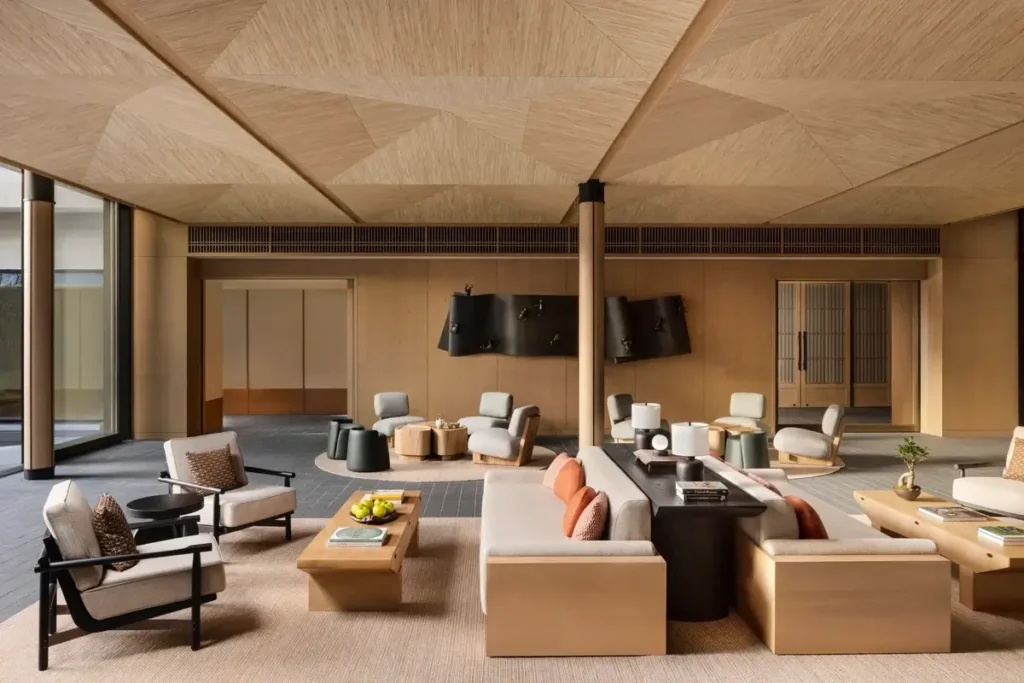
Six Senses Kyoto is particularly well suited to travelers who want to explore Higashiyama without treating the hotel as an incidental part of the trip. Its contemporary Japanese design, courtyard-centered rooms, seasonal dining, and substantial spa make a convincing combination for couples and wellness-minded visitors planning a slower city stay.
Room choice should reflect the intended experience. A garden-facing room suits guests who value a quieter courtyard outlook, while a shrine-facing suite makes a stronger case when the view and additional space will be enjoyed. A city-oriented category should be selected for its documented layout and outlook, not on the assumption that it automatically offers the best panorama.
Independent accounts have described attentive, warm service, particularly around arrival, dining, and general guest assistance. That contributes to the hotel’s appeal, although individual reports cannot guarantee a uniformly polished experience. The stronger reasons to book are the location, design, and wellness facilities, which are easier to evaluate before arrival.
The property is less suitable for travelers who prioritize immediate access to Kyoto Station, have an itinerary dominated by repeated rail journeys, or want a traditional ryokan rather than a contemporary hotel. Families should also consider the restricted swimming hours for children when deciding whether the spa and pool will fit their daily plans.
We would choose Six Senses Kyoto for a stay that balances cultural exploration with time to appreciate the hotel. Its strength is the contrast between Higashiyama’s historic streets and the contemporary calm of its interiors, with the spa turning that distinction into a practical reason to return each day.