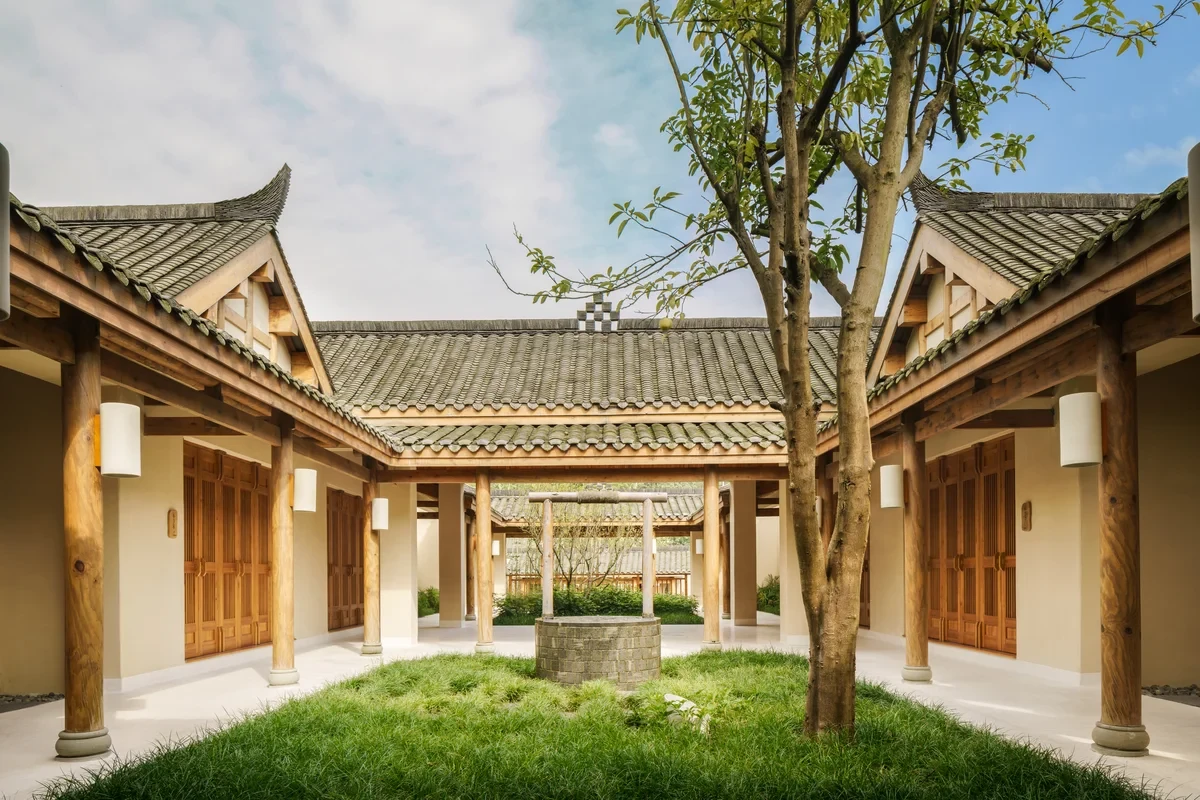
Six Senses Qing Cheng Mountain is worth choosing for its landscaped courtyard setting, spacious suites and villas, and proximity to Qingcheng Mountain and Dujiangyan. Its appeal lies in combining cultural excursions with time at the resort, where gardens, traditional Chinese architectural references, and a substantial spa shape the stay. The main compromise is location: this is a resort outside central Chengdu, not a convenient base for exploring the city’s restaurants and neighborhoods each evening.
We would choose it for a few nights focused on Qingcheng Mountain, nearby cultural sites, and wellness. Travelers whose itinerary revolves around central Chengdu will be better served by a city hotel, while those who want the mountain area to be the destination have a more compelling reason to stay here.
At a glance
- Hotel
- Six Senses Qing Cheng Mountain
- Address
- No. 2 Dong Ruan Road, Qingcheng Mountain Town, Dujiangyan, Chengdu, Sichuan 611844, China
- City
- Dujiangyan
- Country
- China
- [email protected]
- Website
- Official website
- Setting
- Mountain foothills; countryside; near Qingcheng Mountain
- Style and atmosphere
- Traditional Chinese courtyard and village architecture; timber and rattan interiors; tranquil atmosphere
- Best suited to
- Couples; families; cultural travelers; hikers; wellness travelers
- Accommodation
- Suites and courtyard villas with balconies or verandas; selected villas have private pools.
- Standout facilities
- 1,710-square-meter Six Senses Spa; swimming pools; tennis court; yoga and tai chi.
A quiet foothills setting with cultural excursions nearby
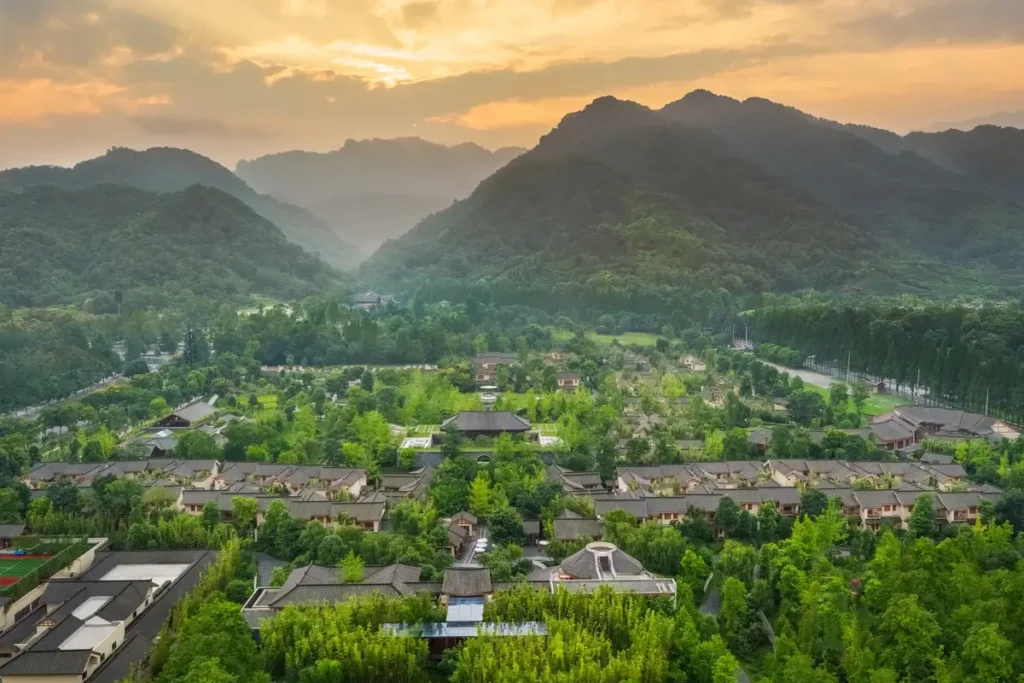
Six Senses Qing Cheng Mountain sits in Dujiangyan, near the foothills of Qingcheng Mountain. The location provides access to a landscape closely associated with Taoist heritage, historic sites, and forested mountain scenery. Mount Qingcheng, Dujiangyan’s historic attractions, and nearby panda conservation centers give travelers several reasons to spend time in the area rather than commute from central Chengdu.
The resort works particularly well when these surroundings are the focus of the itinerary. A day exploring Qingcheng Mountain or visiting a panda center can be followed by time at the spa, pool, or restaurants without a return journey into the city. Guests planning excursions should confirm transport, attraction arrangements, and any guide requirements directly with the property.
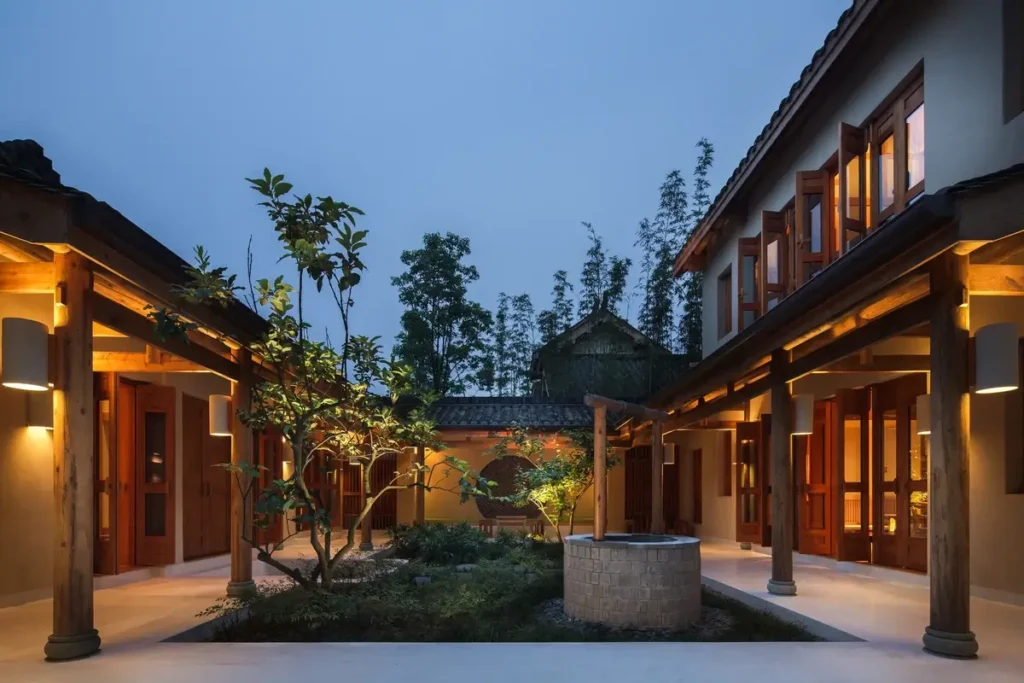
Architecture is an important part of the experience. Low-rise buildings are arranged around courtyards, landscaped paths, ponds, and gardens, drawing on traditional Chinese village forms while providing contemporary accommodation. Timber, stone, rattan, and natural tones give the property a residential character rather than the compact feel of an urban luxury hotel.
The grounds are more than decorative. Moving between accommodation, dining, and wellness areas becomes part of the stay, with gardens and water features creating a sense of separation between buildings. That makes the resort appealing for travelers who want room to wander, although those who prefer a shorter route between their suite and shared facilities should request a suitable location.
For a wider itinerary beyond the Chengdu area, see Calanova’s China coverage.
Location
Things to know: Six Senses Qing Cheng Mountain is outside central Chengdu. Confirm transport arrangements, local excursion availability, restaurant opening hours, and the location of your chosen accommodation before arrival.
Suites and villas: choose by space and outdoor features
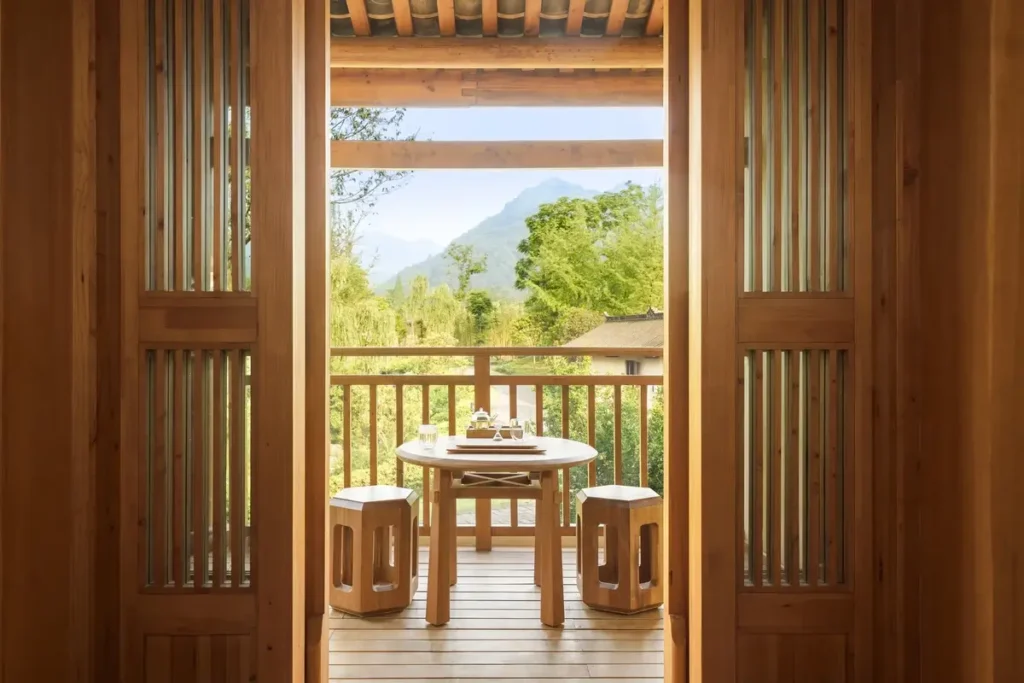
Accommodation is one of the resort’s strengths. Suites and villas share a Chinese-inspired design language, with timber beams, rattan details, generous proportions, and outdoor spaces that vary by category. The useful booking distinction is between interior space, access to a private courtyard, hot spring facilities, and a private swimming pool.
The Six Senses King Suite measures 79 square meters and provides separate sleeping and living areas with a garden outlook. It is already spacious for a couple or solo traveler, particularly when most of the day will be spent exploring or using the resort’s shared facilities. Upper-floor suites include balconies, so floor position is worth confirming if private outdoor space matters.
The Six Senses Garden King Suite increases the space to 121 square meters. Its principal advantage is not simply the larger floor plan. Ground-floor Garden Suites offer private courtyard access with daybeds, while upper-floor accommodation has a different balcony arrangement. Travelers who intend to spend more time in their suite should consider the outdoor configuration as carefully as the room size.
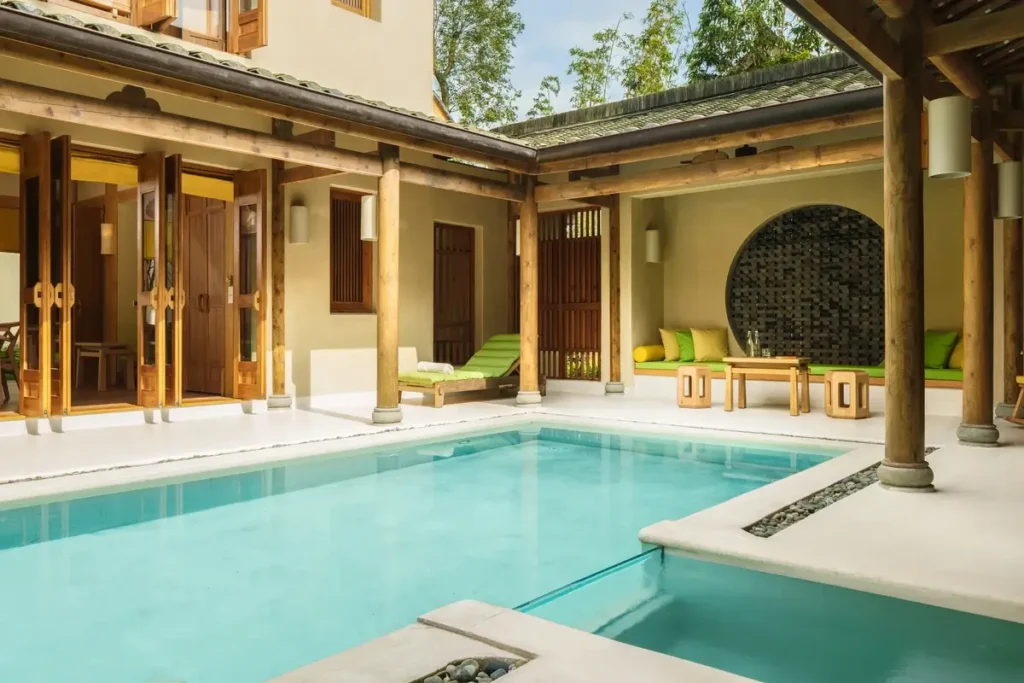
Hot Spring Suites offer another distinction, with private outdoor bathing facilities in selected categories. These should not be confused with accommodation offering a full private swimming pool. The choice between a hot spring tub, courtyard, and pool is more meaningful than a generic move into a higher room category.
Families and groups have more substantial options. Family Suites provide additional sleeping arrangements, while two-bedroom courtyard villas offer separate bedrooms and shared outdoor space. Deluxe courtyard categories add further facilities, and the Two-Bedroom Pool Villa includes a private outdoor swimming pool. These formats are the stronger choice when several guests need independent bedrooms and a common area for spending time together.
Private pools are not a standard feature of every suite or villa. Confirm the exact category, floor position, courtyard or balcony access, bedding, and pool or hot tub provision before booking. A larger room is worthwhile when its layout changes how the accommodation will be used, not simply because it is higher in the category range.
Dining: Sichuan, Thai, and farm-to-table cooking
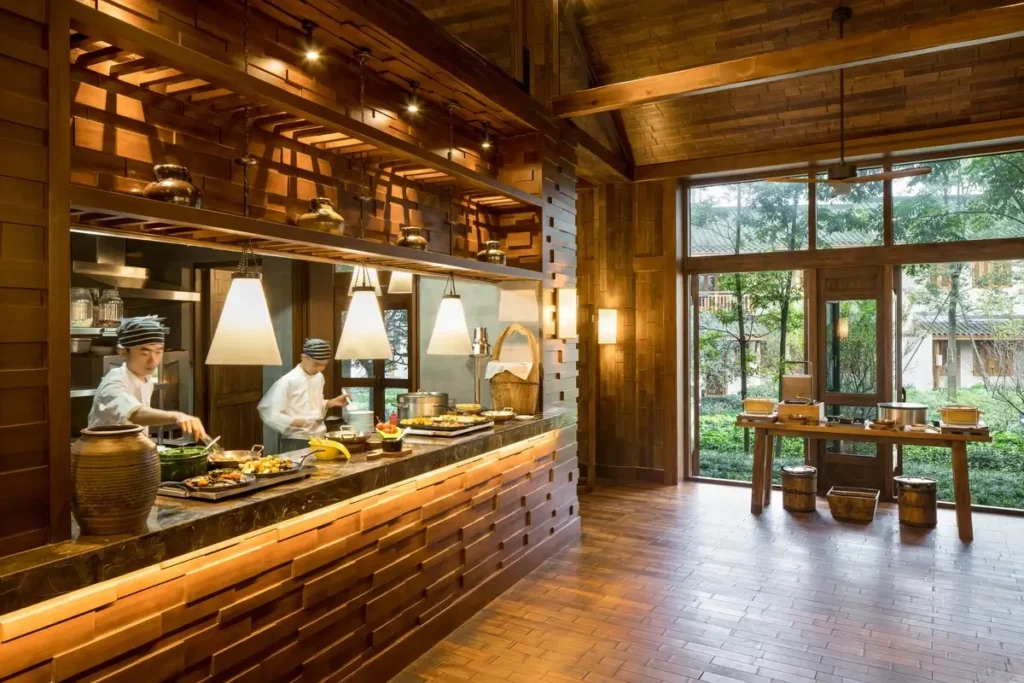
Dining at Six Senses Qing Cheng Mountain offers more variety than a simple resort restaurant arrangement. Farm 2 Fork, Zi Qi Yuan, and Sala Thai provide distinct culinary choices, while The View offers a private rooftop dining experience. The Square and Moon Bar add more casual places for drinks and lighter food.
Farm 2 Fork draws on vegetables, herbs, and seasonal ingredients from the resort’s farm and local producers. It is also a breakfast setting, making it a natural starting point before a day around Qingcheng Mountain. The emphasis on produce and a garden-to-table approach fits the resort’s wider connection to its landscaped grounds.
Zi Qi Yuan is the more regionally focused choice, with Sichuan cooking at the center of its menu alongside Cantonese dishes. It is particularly relevant for travelers who want local food to form part of their stay rather than relying exclusively on international hotel dining.
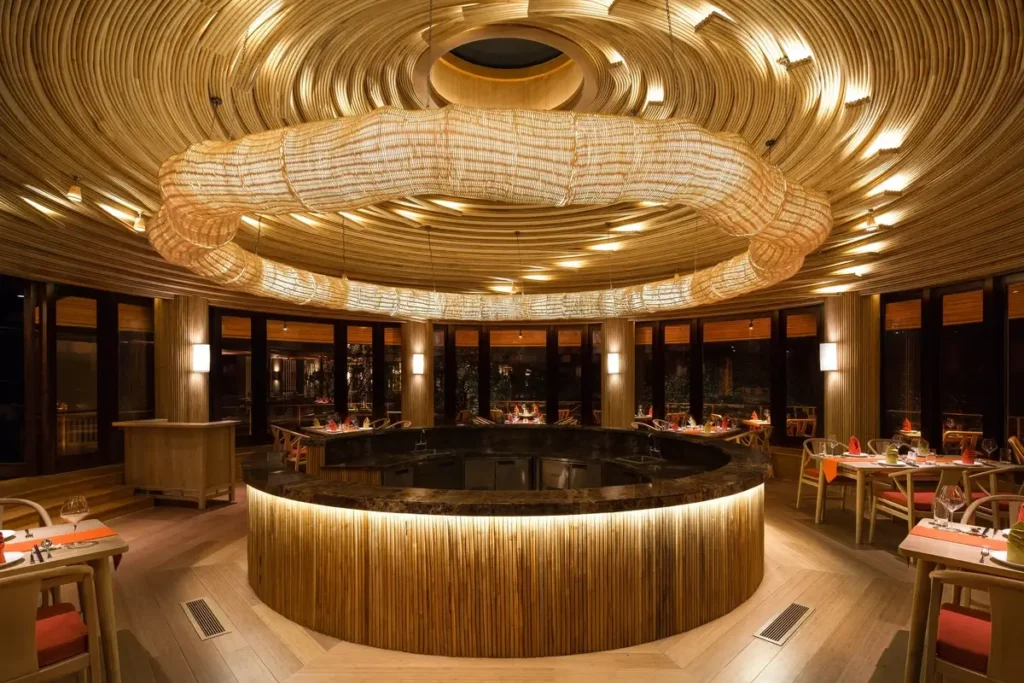
Sala Thai provides a different option, with dishes inspired by northern and southern Thailand. The View, its rooftop private dining setting, offers a more intimate arrangement for a special evening. Guests interested in that experience should confirm the reservation format and availability rather than treat it as a conventional walk-in restaurant.
The Square serves tea, coffee, Chinese snacks, and lighter food, while Moon Bar provides a separate setting for drinks. Together, these venues make it possible to vary meals and refreshments without leaving the resort.
The range is useful for a stay centered on the mountain and surrounding area. Guests can choose regional Chinese cooking, Thai dishes, farm-focused dining, or a simpler meal after an excursion. Still, the number of venues alone does not establish that every restaurant will be available throughout a particular stay. Confirm current opening days, dinner reservations, and dietary requirements with the property, especially when planning several nights.
Spa, pools, and grounds shape the stay
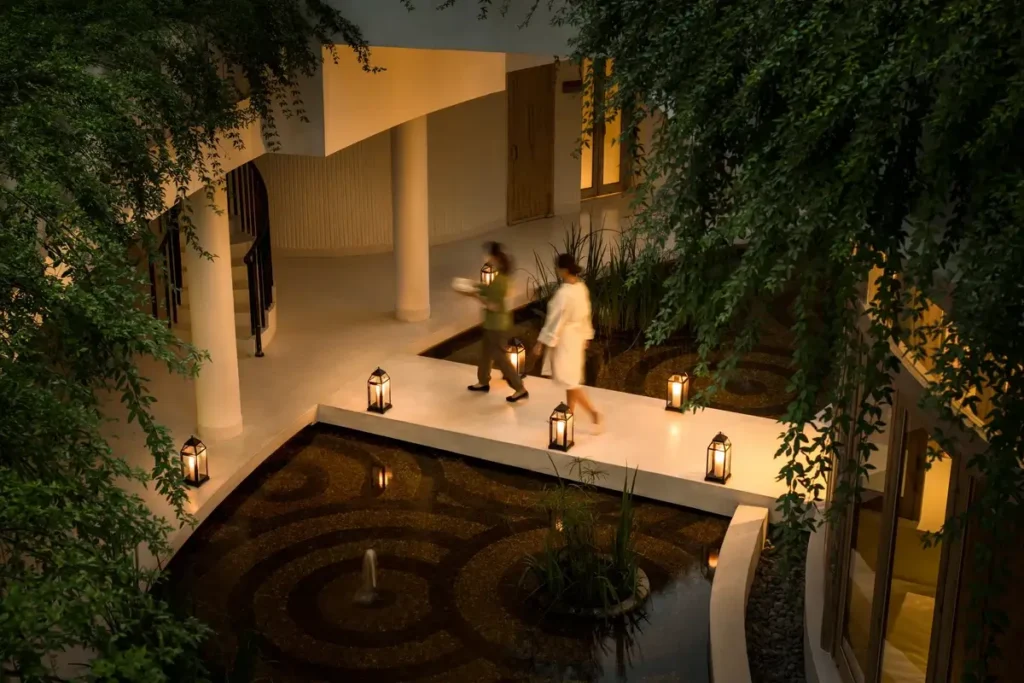
The spa and landscaped setting are substantial reasons to spend time at Six Senses Qing Cheng Mountain rather than treating it solely as accommodation near the mountain. Wellness draws on local traditions, while the resort’s gardens and courtyards provide a quieter counterpoint to cultural excursions.
The Six Senses Spa occupies a garden setting with bamboo and other greenery. Its facilities include treatment rooms, sauna and steam areas, an indoor heated swimming pool, fitness facilities, and spaces for yoga and meditation. The wellness offering also includes Tai Chi and locally inspired treatments, making it especially relevant for travelers interested in the connection between the destination’s Taoist heritage and traditional wellness practices.
The pool provides an alternative to sightseeing, while yoga, Tai Chi, and structured wellness programs offer more deliberate ways to spend time at the resort. Travelers with a particular treatment or program in mind should confirm its contents, availability, and reservation requirements before arrival.
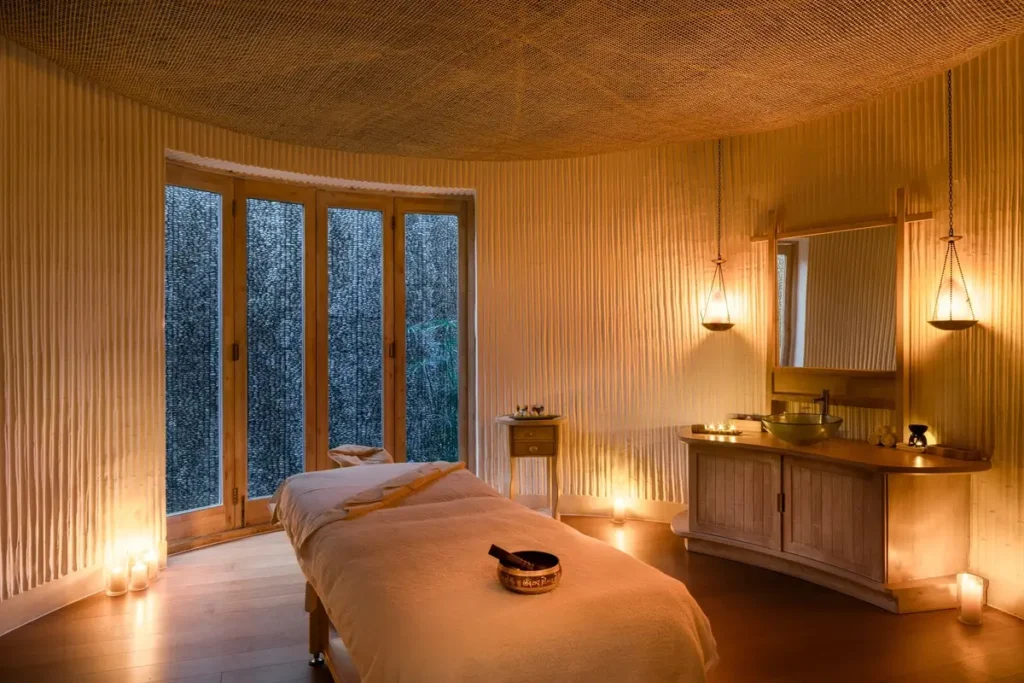
There are also opportunities for more active days, including tennis and outdoor excursions in the surrounding area. The resort is best approached as a place where a mountain visit, spa treatment, and time in the gardens can coexist, rather than as a property whose every facility needs to be used.
The dispersed layout adds to that character. Paths connect buildings through greenery, courtyards, and water features, but the size of the grounds may make room location important for some guests. Those with mobility requirements or a preference for easy access to restaurants and wellness facilities should discuss accommodation placement with the resort.
A Guest Experience Maker can help coordinate activities, local excursions, and other arrangements. This is particularly useful when a stay involves several visits around Dujiangyan rather than remaining entirely within the property. Confirm any essential services or excursions in advance instead of assuming they are included with the room.
Who should choose Six Senses Qing Cheng Mountain?
Six Senses Qing Cheng Mountain suits travelers who want spacious accommodation, a landscaped resort, wellness facilities, and access to Qingcheng Mountain and Dujiangyan. It is particularly appealing for couples planning a slower itinerary, families who need larger accommodation, and travelers combining cultural visits with time at the spa and pool.
Room choice should reflect how the stay will be spent. A King Suite is sufficient for many couples planning to explore during the day. A Garden Suite becomes more appealing when private courtyard access and additional living space will be used, while a two-bedroom villa makes greater sense for families or groups. A private-pool category should be chosen for the pool itself, not simply as a default upgrade.
The main limitation is geographical. This is not an efficient base for guests who want frequent access to central Chengdu’s restaurants, shopping, and nightlife. The distance becomes worthwhile when Qingcheng Mountain, Dujiangyan, and the resort’s own setting are the reasons for traveling.
We would choose Six Senses Qing Cheng Mountain for a stay that balances cultural exploration with time on property. The courtyard architecture, generous accommodation, regional dining, and spa make a coherent case for slowing the itinerary and spending more time in this part of Sichuan.
Credits for media displayed in this article
- https://www.sixsenses.com/en/hotels-resorts/asia-the-pacific/china/qing-cheng-mountain/
- https://www.sixsenses.com/en/hotels-resorts/asia-the-pacific/china/qing-cheng-mountain/gallery/
- https://www.sixsenses.com/en/hotels-resorts/asia-the-pacific/china/qing-cheng-mountain/accommodation/
- https://www.sixsenses.com/en/hotels-resorts/asia-the-pacific/china/qing-cheng-mountain/dining/
- https://www.sixsenses.com/en/hotels-resorts/asia-the-pacific/china/qing-cheng-mountain/wellness-spa/