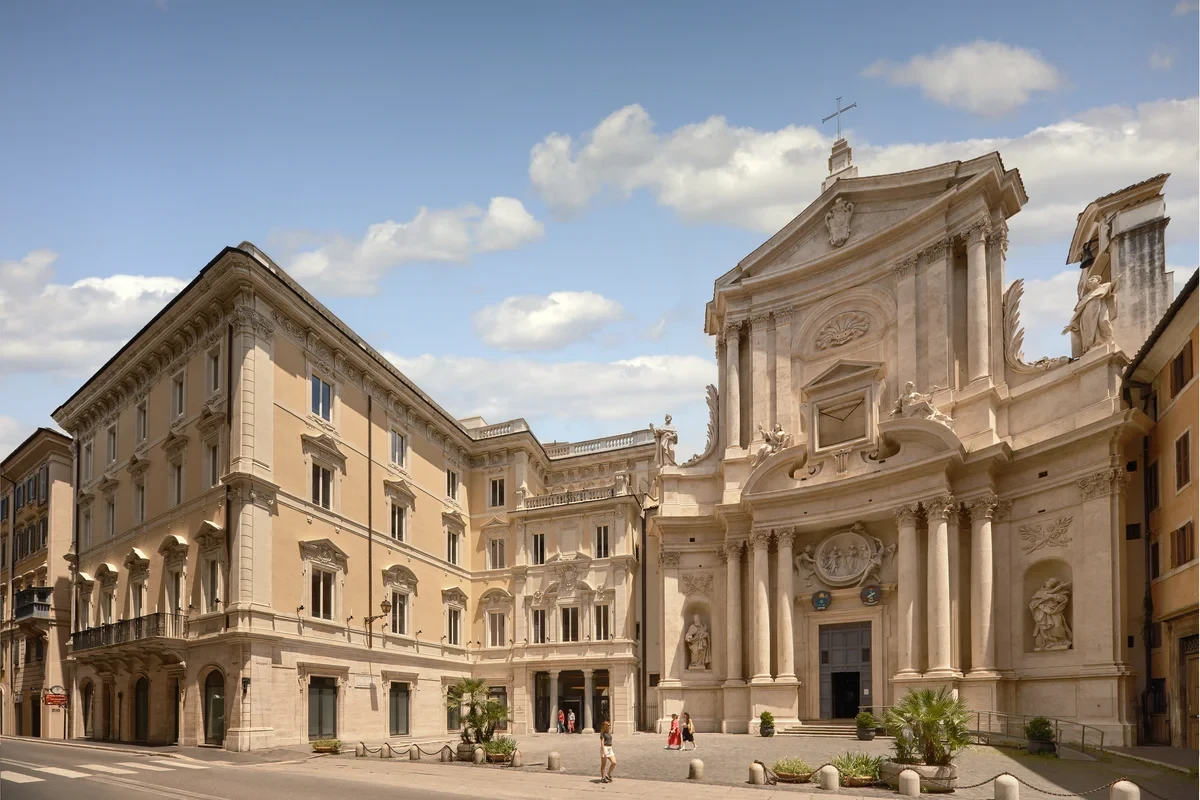
Six Senses Rome is worth choosing for its combination of a central historic address, contemporary Italian design, and a spa substantial enough to shape the stay. The Pantheon and Trevi Fountain are close enough for sightseeing on foot, while the Roman-baths-inspired thermal circuit gives guests a reason to return to the hotel before the day is over. The main consideration is how much time you intend to spend on property. Travelers who want only a central place to sleep, or require generous entry-level room space, may find less reason to choose it.
At a glance
- Hotel
- Six Senses Rome
- Address
- Piazza di San Marcello, 00187 Rome, Italy
- City
- Rome
- Country
- Italy
- Phone
- +39 06 86814000
- [email protected]
- Website
- Official website
- Setting
- Historic city center; near the Pantheon and Trevi Fountain
- Style and atmosphere
- Restored historic palazzo with contemporary interiors, travertine and Cocciopesto plaster; urban wellness retreat
- Best suited to
- Couples; cultural city-break travelers; wellness travelers
- Accommodation
- 96 rooms and suites with courtyard or city views; interiors feature local travertine and traditional plaster.
- Standout facilities
- Roman bathing circuit with caldarium, tepidarium and frigidarium; Six Senses Spa; NOTOS rooftop; BIVIUM restaurant-café-bar.
Location
A historic address with easy access to central sights
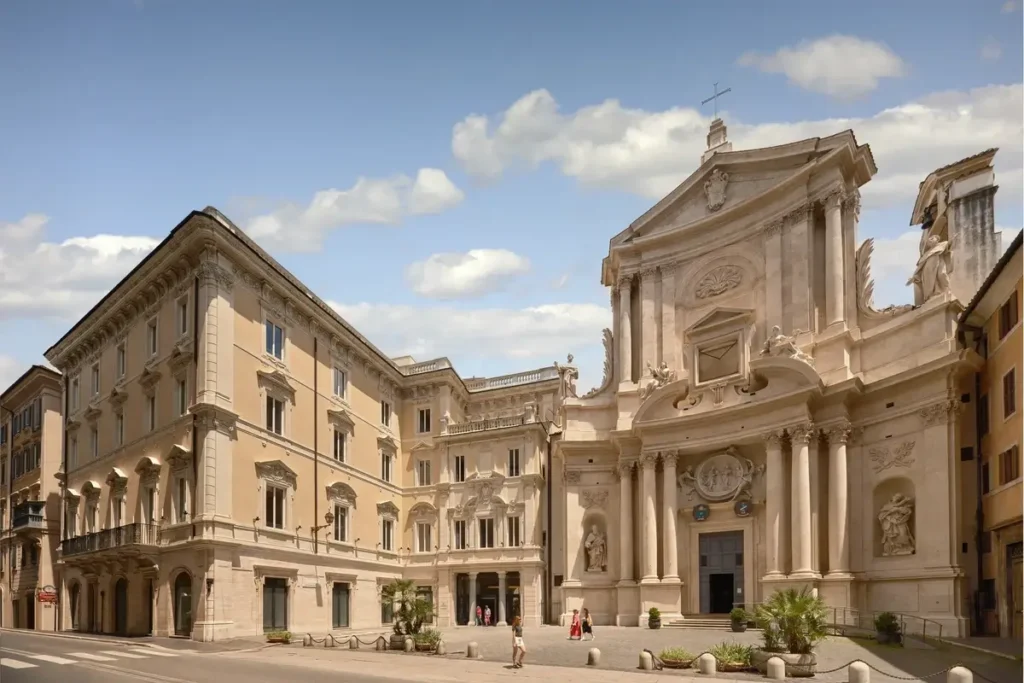
Six Senses Rome occupies Piazza di San Marcello, just off Via del Corso, in the historic center. The Pantheon and Trevi Fountain are a short walk away, while Piazza Venezia, Piazza Navona, and the Roman Forum are also accessible on foot. The location puts much of central Rome within reach without requiring a car or taxi for every outing.
This is a practical advantage for travelers who want to explore early, return between sightseeing stops, or spend part of the afternoon at the hotel. A central location becomes more valuable when it is paired with facilities worth using, and that is where Six Senses Rome makes a stronger case than a hotel chosen solely for its address. For wider destination planning, see Calanova’s Rome guide.
The compromise is the neighborhood itself. Via del Corso and the streets around Rome’s major sights are busy, and the hotel should not be mistaken for a secluded residential property. Its historic facade and contemporary interiors provide a contrast with the surrounding activity, but travelers particularly sensitive to street noise should confirm their room’s outlook and position before booking.
Things to know: The Roman baths are available to guests aged 16 and older. NOTOS rooftop dining is seasonal, generally April through November, weather permitting. Confirm spa access, reservation requirements, and rooftop opening dates before arrival.
Palazzo history, interpreted in a contemporary key
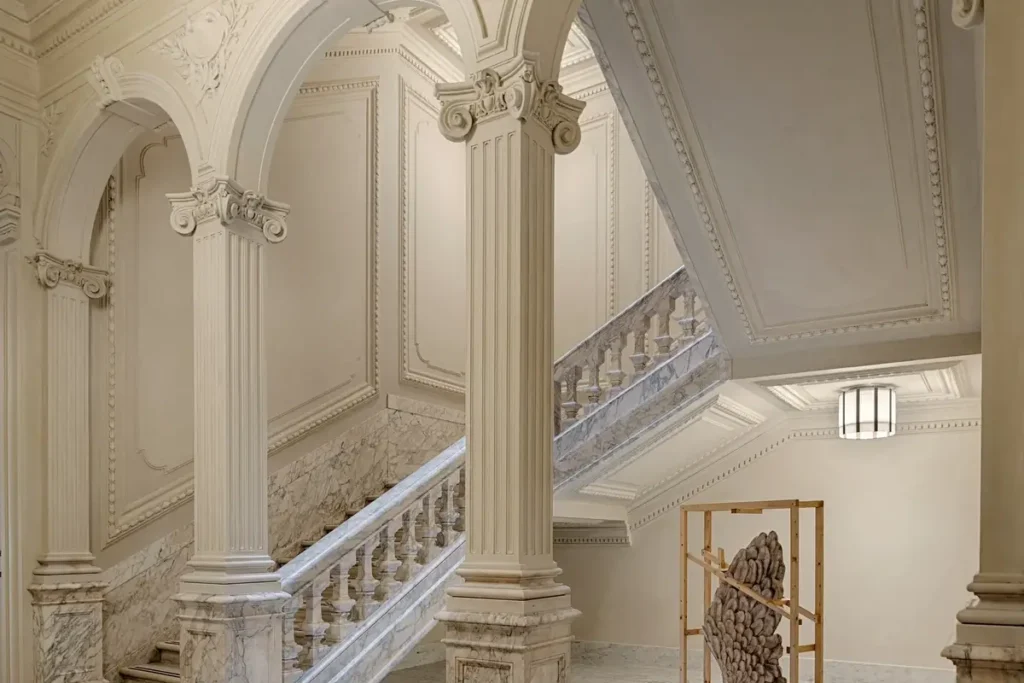
The hotel occupies Palazzo Salviati Cesi Mellini, a historic Roman building restored and adapted for its present use. The exterior, monumental staircase, and surviving architectural details establish the connection with the city’s past. Inside, designer Patricia Urquiola has taken a different approach from the formality associated with traditional Roman grand hotels.
Travertine, cocciopesto plaster, natural wood, curved furnishings, and a restrained palette of mineral tones define the interiors. Historical materials are carried into a contemporary setting rather than used to recreate an earlier period. The treatment is particularly effective in the relationship between the public rooms and spa, where stone, filtered light, and textured surfaces form a consistent visual language.
That distinction matters when choosing the hotel. Guests seeking elaborate antiques, formal salons, and classical grandeur may prefer a more traditional Roman address. Six Senses Rome instead offers a quieter interpretation of luxury, with contemporary design, natural materials, and wellness integrated into a historic palazzo. The building is recognizably Roman, but the experience is deliberately modern.
Rooms: weigh space and aspect, not just category names
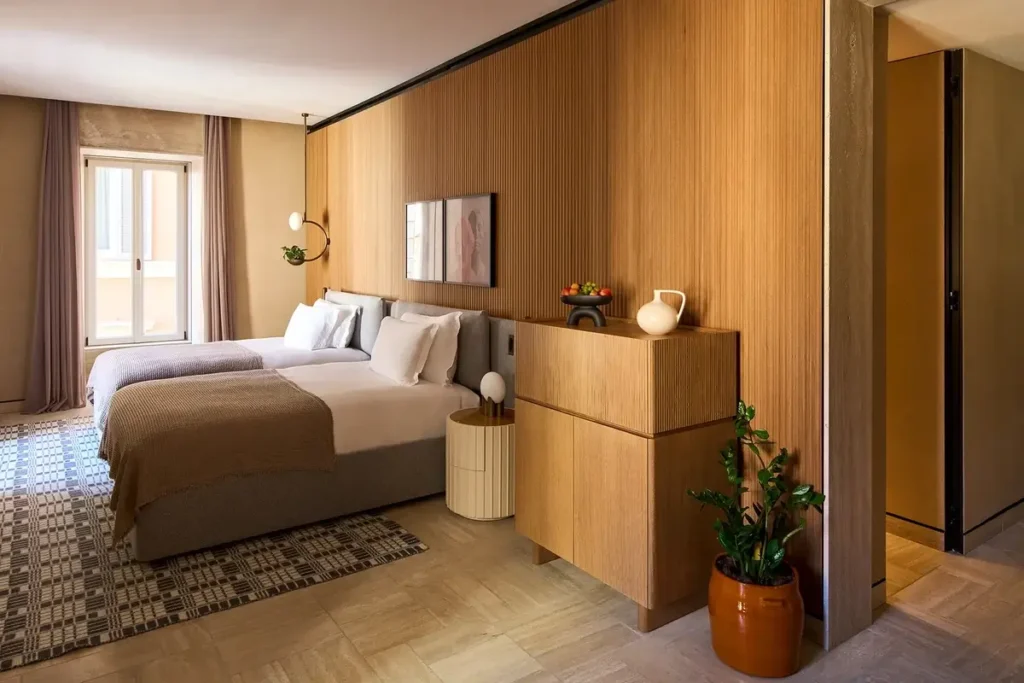
Room choice deserves particular attention at Six Senses Rome. Entry-level accommodation begins at approximately 28 square meters, and some neighboring room categories offer relatively modest increases in floor area. The distinction between them can therefore depend as much on outlook, layout, and ceiling height as on the room name. Travelers should compare the published specifications rather than assume that each move up the category range delivers substantially more space.
The contemporary design favors clean surfaces, natural materials, and a restrained arrangement of furnishings. That gives the smaller rooms a coherent appearance, but it does not eliminate the practical limitations of a compact floor plan. Couples traveling with substantial luggage, staying for several nights, or intending to spend considerable time in the room should look carefully at usable space, storage, and seating. A room that works well for a short city stay may be less persuasive for a longer visit.
The larger suites offer more meaningful differences. Signature categories such as the Salviati Suite and Two-Bedroom Mellini Suite introduce distinctive living spaces and design details, while selected suites add terraces and more substantial layouts. These are worth considering when the accommodation itself is intended to be part of the experience. We would prioritize a clearly documented improvement in space, outdoor access, or outlook over an upgrade justified only by its category name. Confirm the exact floor plan, square footage, view, and terrace provision before booking.
The Roman-baths-inspired spa is the defining facility
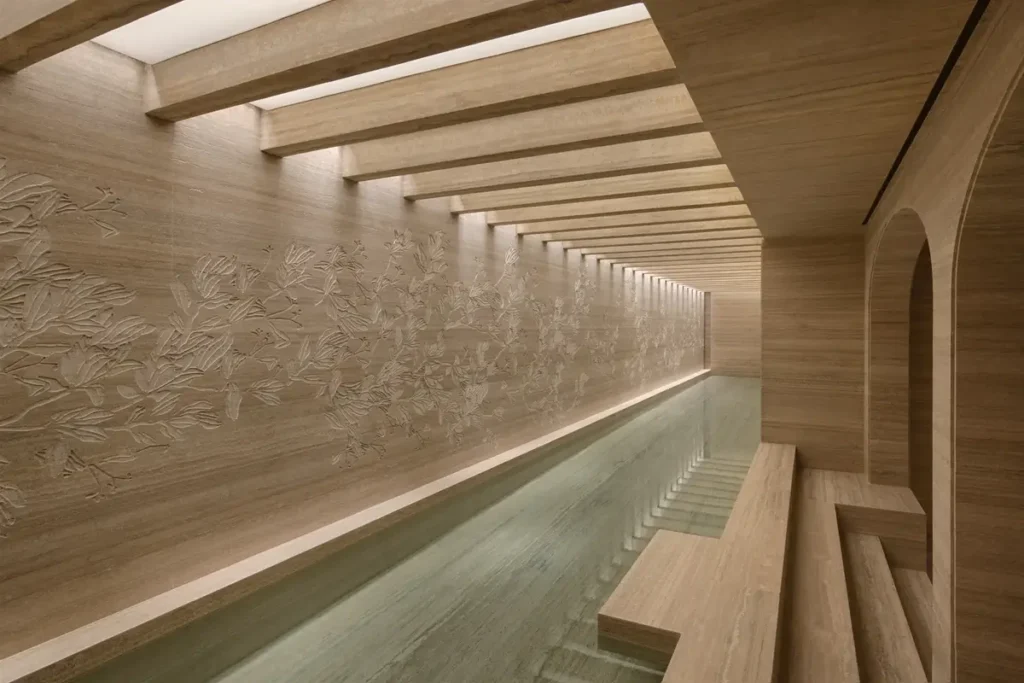
The spa is what most clearly separates Six Senses Rome from a conventional central design hotel. Its Roman bathing circuit is organized around the caldarium, tepidarium, and frigidarium, moving between hot, temperate, and cold water. The experience is a contemporary interpretation of Roman bathing traditions rather than a decorative reference to them, and it gives the hotel’s wellness identity a tangible purpose.
The wider spa extends beyond the baths. Facilities include a hammam, sauna, sensory showers, treatment rooms, relaxation spaces, fitness facilities, and areas for yoga and meditation. Massage, facials, sound therapy, and other wellness experiences broaden the offering, although individual treatments and programs require separate consideration. The important distinction is that guests can build a substantial part of a day around the spa rather than treat it as an incidental hotel amenity.
We would choose Six Senses Rome particularly for a trip that balances sightseeing with time at the hotel. The thermal circuit provides a reason to return after walking the city, while the wider wellness facilities are relevant to travelers planning a slower itinerary or a visit during less favorable weather. Guests expecting to spend every available hour exploring Rome may not make enough use of the spa to justify choosing the property for that reason. The Roman baths are restricted to guests aged 16 and older; confirm access, inclusions, treatment reservations, and current operating arrangements before booking.
Dining: modern Italian cooking and a seasonal rooftop
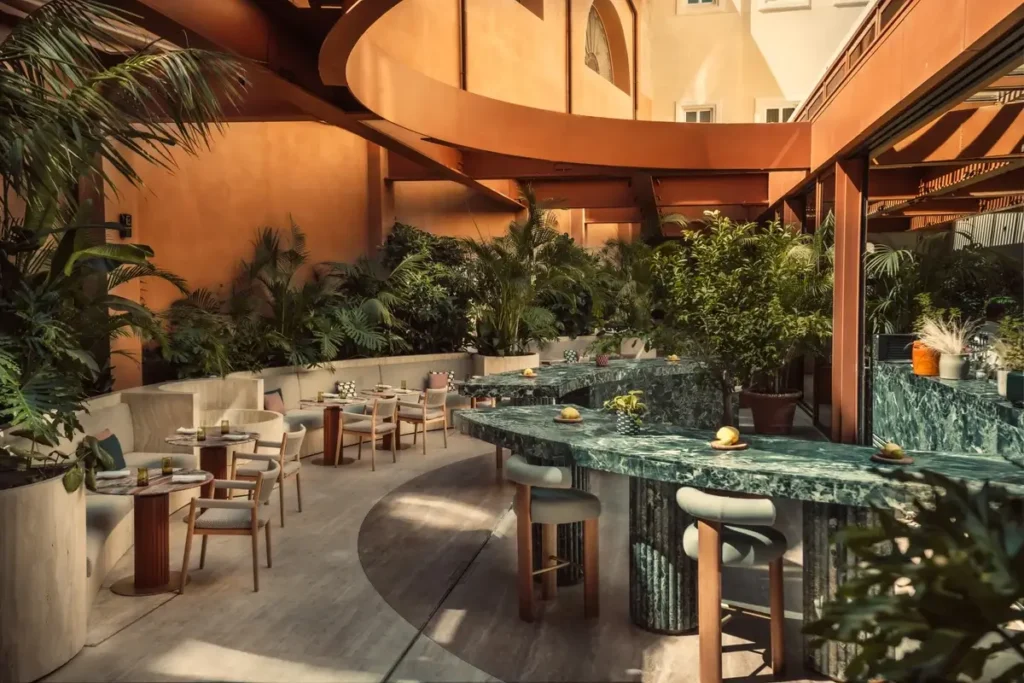
Dining at Six Senses Rome follows the property’s contemporary approach rather than recreating a traditional grand-hotel restaurant experience. BIVIUM Restaurant-Café-Bar is the all-day venue, combining a restaurant, café, bar, open kitchen, and courtyard setting. Its cooking emphasizes seasonal Italian ingredients, with a Josper grill, fresh vegetables, seafood, and meat alongside plant-based dishes and lighter options.
NOTOS brings a different atmosphere to the rooftop. The restaurant focuses on Mediterranean cooking, including seafood and seasonal produce, while the adjoining rooftop bar serves cocktails, aperitivo, and light bites against views of Rome’s historic skyline. The restaurant and bar operate as separate venues, and the rooftop offering is seasonal, generally from April through November when weather permits. Travelers choosing the hotel partly for the terrace should confirm that the relevant venue will be open during their stay.
Breakfast at BIVIUM combines a buffet with prepared dishes, but it is not the strongest reason to select the hotel. Independent impressions have been more consistent about the property’s setting and spa than the breadth or execution of breakfast. We would choose Six Senses Rome for its location, design, and wellness offering, with dining as a useful complement. Rome’s extensive restaurant scene also makes it unnecessary to rely on the hotel for every meal. Guests with particular dietary preferences should review current menus rather than assume that a wellness-focused philosophy guarantees a specific range of dishes.
Service and what makes the stay worthwhile
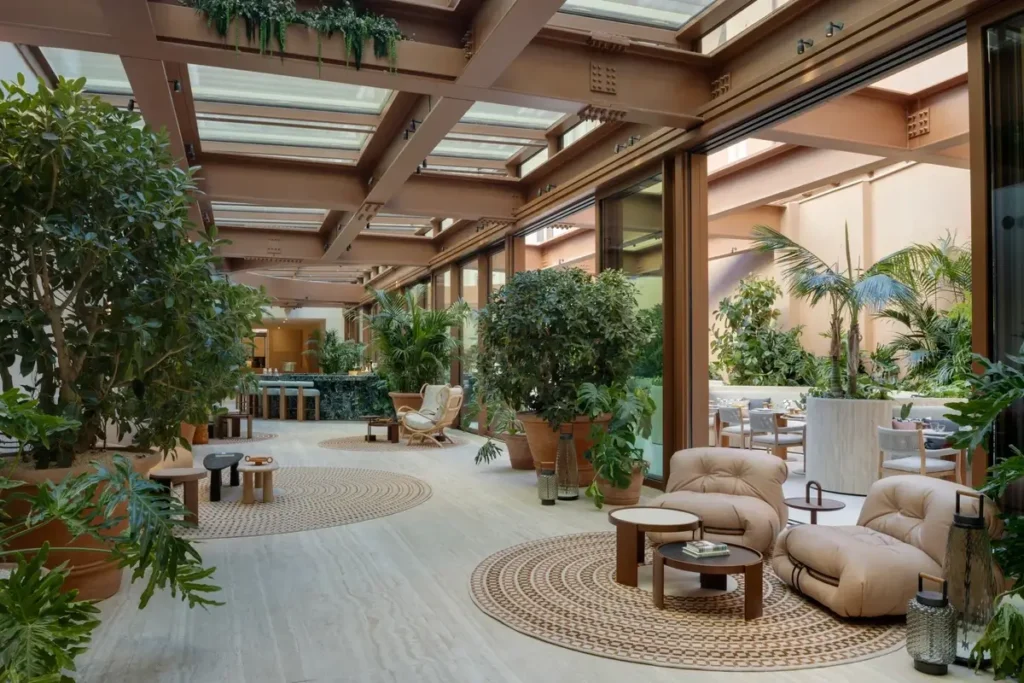
Service is generally described positively, with attentive assistance at reception, in the restaurants, and around the spa. The hotel’s contemporary atmosphere is less formal than that of some traditional Roman luxury properties, which will appeal to travelers who prefer a more relaxed style of hospitality. Individual accounts have also identified lapses in breakfast service and occasional shortcomings in personal attention, but these do not establish a consistent property-wide problem.
The more important question is what the hotel contributes to the itinerary. Six Senses Rome offers a central address, a distinctive modern interpretation of a historic building, and a wellness program that can occupy a meaningful part of the stay. These elements work particularly well together for travelers who want to explore the city without treating their hotel as a place used only at night.
For a visit organized almost entirely around museums, restaurants, and sightseeing, a simpler central hotel may be sufficient. Six Senses Rome makes a stronger case when guests intend to return between outings, use the Roman baths, spend time in the public spaces, and appreciate the contrast between its contemporary interiors and the historic center outside. The value of the stay lies in that combination, not in its address alone.
Who should book Six Senses Rome?
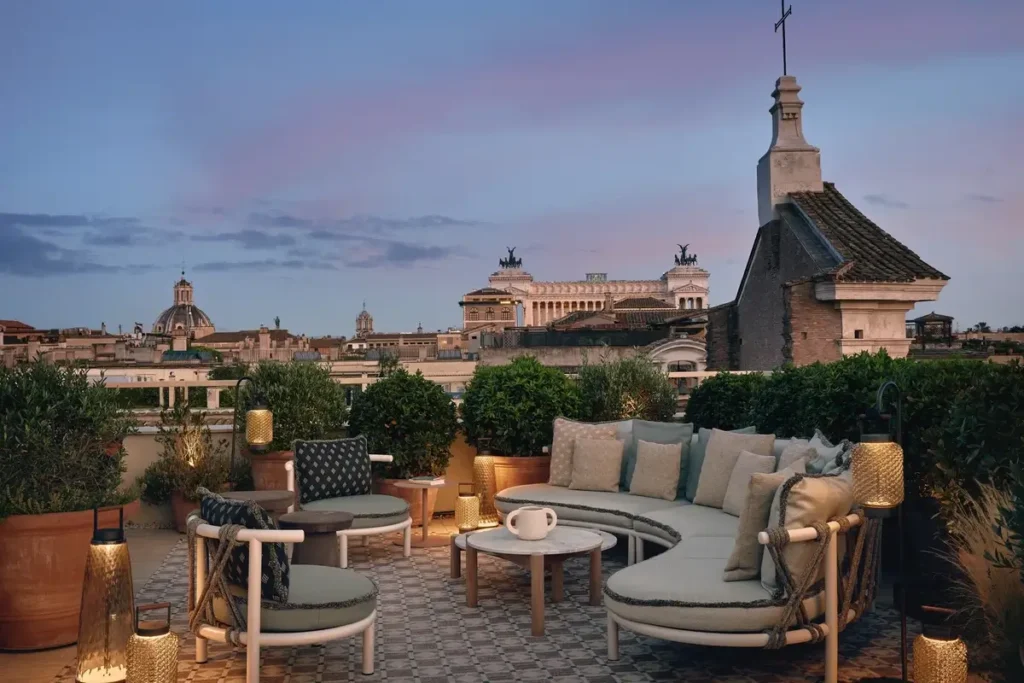
Six Senses Rome is particularly well suited to travelers who want a walkable base near the Pantheon and Trevi Fountain, contemporary design, and time for a substantial spa experience. It is a strong choice for couples and wellness-minded visitors who intend to balance the city’s sights with time at the hotel, rather than spend the entire day away from it.
It is less suitable for guests who require large entry-level rooms, prefer the formality of a traditional Roman grand hotel, or have little interest in using the thermal circuit and wellness facilities. The central location is practical, but it is the combination of the historic palazzo, modern interiors, and Roman baths that makes Six Senses Rome distinctive. We would book it for that balance, with the room category chosen carefully and enough time reserved to enjoy the property itself.