Zakynthos has no single beach for every kind of day. The west coast is defined by cliffs, rocky inlets, deep water, and scenery reached by boat. The southeast and the Gulf of Laganas make more sense for families, with soft sand, shallow entry, and turtle-nesting beaches. For snorkeling around rock formations and caves, look to the northeast.
The distinction is practical. Navagio may be the island’s defining image, but it is not a dependable swimming plan. Gerakas and Kalamaki suit easy sand-and-sea days; Porto Limnionas is for swimmers more interested in exploring an inlet than lying on a beach. Facilities, protected-area rules, crowds, and sea conditions all shift with the season.
We chose these beaches for different strengths: swimming conditions, scenery, family practicality, access, snorkeling, and how development shapes the experience. Read more about how Calanova evaluates places, then explore the wider Zakynthos guide for the rest of the island.
Navagio (Shipwreck) Beach: the defining view, not a guaranteed beach day
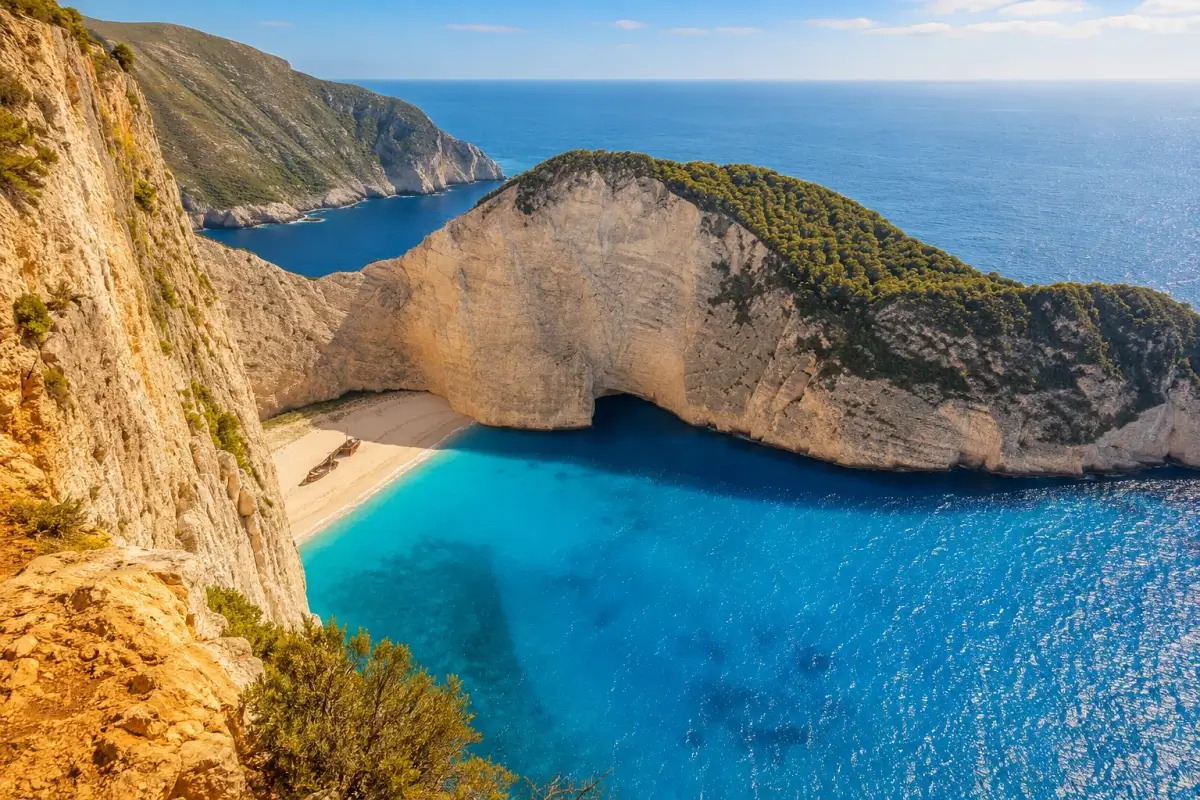
Navagio, also called Shipwreck Beach, is the image that made Zakynthos internationally recognizable: a rusted wreck on pale sand beneath near-vertical white limestone cliffs, with intensely blue water below. It belongs on an island itinerary for the geography alone. It should not be treated as a reliable beach day.
Access to the beach has been restricted because of rockfall risk, and current safety rules can affect how closely boats approach and whether landing or swimming is permitted. Confirm the current status locally before booking a boat trip or planning time on the sand. Seeing Navagio remains worthwhile; using it as a beach cannot be assumed.
The road-accessible viewpoint above the cove delivers the full composition of cliffs, sea, sand, and wreck. Boat trips provide the reverse view from the water and may take in other parts of the northwestern coast. Neither makes Navagio the island’s most practical option for families, loungers, or unhurried swimming.
Access: The viewpoint is reached by road, with a rugged final approach possible. The beach has traditionally been reached only by boat, but current landing restrictions should be checked before travel.
See it, but do not build an itinerary around stepping onto its sand.
Gerakas Beach: the strongest family-and-turtle balance
At the southeastern tip of the Vasilikos Peninsula, Gerakas is the clearest choice for families seeking a proper sandy beach without the machinery of a beach-club day. Broad and naturally framed by cliffs, it has a sandy, shallow entry that works well for small children. The setting is quieter and less built-up than the island’s larger resort beaches.
Gerakas is also part of Zakynthos’s Marine Park and a nesting site for Caretta caretta, the loggerhead turtle. That protection is central to its appeal, but it brings limits. Parts of the beach may be cordoned off for nests, and access restrictions can apply during nesting season, including around sunset. Follow posted rules, stay out of marked nesting areas, and do not plan on a turtle encounter. Wildlife does not follow an attraction schedule.
Facilities remain intentionally limited. A small sun-lounger section may operate, while much of the beach remains comparatively open and natural. There are no extensive beach bars or motorized water sports, which helps make Gerakas a strong fit for a quieter family swim. Bring water and anything else needed for a longer stay instead of expecting resort-level service.
Access: Gerakas is reached by car, with a dirt-road section on the approach. Parking is available nearby, followed by a relatively short walk to the beach.
For soft sand, shallow water, and conservation-minded surroundings over music and waiter service, Gerakas is the strongest all-around choice.
Banana Beach: the easy serviced day with water sports
Banana Beach answers a different brief: a large sandy beach on the Vasilikos Peninsula with shallow water, organized sunbed areas, bars, restaurants, and water sports. It suits a full, uncomplicated day, especially for groups who want lunch, rented loungers, and activities between swims.
Wooden walkways across the serviced section ease the approach with a stroller or beach equipment. Water sports can include parasailing, jet skis, and banana-boat rides, though these are operator services rather than a promise of the same setup along every part of the beach. Its scale is also an advantage over Zakynthos’s smaller coves.
The atmosphere can shift considerably through the day, from relatively calm earlier on to much busier later. Arrive early if space and quiet matter. If the movement of an active beach scene defeats the purpose of the day, choose somewhere less developed.
Access: Banana Beach is accessible by car, with parking serving the beach area. Wooden walkways cover parts of the organized section.
Choose Banana for convenience and activity. Skip it for solitude.
Makris Gialos: the compact northeast pick for clear-water snorkeling
Makris Gialos, a small shingle-and-sand beach on the northeast coast south of Agios Nikolaos, is not about room to spread out. Its appeal lies in transparent water, rocks, and caves that make snorkeling and scuba diving more interesting than at the island’s flatter sandy beaches.
High season exposes the cove’s limits quickly. Loungers and umbrellas are available in limited numbers, and a couple of tavernas sit nearby, but this is not a heavily serviced shoreline. The rocks make the water more compelling, while the restricted beach space makes timing important.
Access: Makris Gialos is accessible by car.
Arrive early if snorkeling and securing beach space matter more than extensive facilities. For an easy all-day setup, Banana or Kalamaki makes more sense.
Porto Limnionas: a rocky inlet for confident swimmers and snorkelers
Porto Limnionas is not a conventional beach, and treating it as one creates the wrong expectations. This west-coast inlet is defined by rocks, steep sides, caves, and deep clear water. There is no substantial sandy shore for children to play on or for adults seeking a low-effort afternoon under an umbrella.
Confident swimmers are rewarded by clear, deep water and sea caves that make this one of the island’s stronger active-swim stops, especially for snorkeling. A taverna sits above the inlet, and platforms or loungers may be available among the rocks. Facility arrangements can vary, so do not assume a lido-style setup throughout the site.
Its beauty comes with awkward access. The water is reached over rocks, and the depth makes it a poor fit for toddlers, non-swimmers, or anyone wanting a gradual sandy entry. Water shoes are the sensible choice.
Access: Reach Porto Limnionas by car on a winding road, then descend steeply by steps or through the rocky approach to the sea.
Go here for a swim with purpose, not an easy beach day.
Kalamaki Beach: shallow turtle-bay swimming with more infrastructure
Kalamaki combines the shallow water and turtle-country setting of the southern gulf with more development than Gerakas or Dafni. Long and sandy, backed in places by dunes and pine woods, it has shallow water that works well for young children and relaxed paddling.
It also sits within the turtle-nesting landscape of the National Marine Park. Protected sections and seasonal restrictions apply, so use the beach with the same care as Gerakas and Dafni. Marked areas are not decorative, and turtle sightings should never be assumed.
Infrastructure is the main difference. Beach bars, tavernas, sunbeds, umbrellas, and activity rentals operate along parts of the beach. This makes food and shade easier for families, though it also creates a busier resort feel than the more natural end of Vasilikos. Its position near the airport can also mean aircraft noise overhead.
Access: Kalamaki is easy to reach by car. Serviced sections and protected nesting areas should be treated as different parts of the same long beach.
Choose Kalamaki when family convenience matters as much as the Marine Park setting. For a more natural day, Gerakas fits better.
Dafni Beach: the quieter turtle cove worth the awkward approach
Dafni is the more secluded alternative to Gerakas, also within the Marine Park and also used by nesting loggerhead turtles. It is a sandy beach with limited development, seafront tavernas, and rocky edges that add interest for snorkeling. The water can be calm, though conditions remain weather-dependent.
Protected status shapes the experience. Nesting areas may be cordoned off during the relevant season, and visitor rules are part of the bargain for using this stretch of coast. Choose Dafni for its quieter setting and limited commercial buildout, not for a guaranteed wildlife encounter.
The drive is its principal drawback. The approach is narrow and steep in places, with rough or uneven stretches possible. Dafni is a poor choice for drivers uncomfortable on demanding roads, especially when the goal is simply an easy sandy beach.
Access: Dafni is reached by a narrow approach road that is steep in places and can include an uneven dirt section. Parking may be available behind local tavernas.
Pick Dafni over Gerakas only when quiet outweighs convenience and the approach will not become the day’s worst part.
Xigia Beach: a sulfur-spring curiosity, not an all-day beach
Xigia stands out because sulfurous springs rise from the seabed, giving parts of the water a milky appearance and a distinct sulfur smell. Small shingle and pebble sections sit below cliffs, with rocky headlands and caves suited to snorkeling.
Some visitors come for the springs’ reputed wellness qualities, but Xigia is better understood as a geological stop than a spa treatment. There is no need for health claims when the water is already interesting on its own terms. Its small size matters, too: Xigia fills quickly, and the pebble shore is less forgiving for families seeking an extended sandy-beach stay.
Facilities and nearby refreshment options are limited, so this is not a place for a long, fully equipped day. Bring water shoes for the pebbles and rocks, spend time in the water, then move on to a more spacious beach if needed.
Access: Parking is available nearby, followed by a descent to the beach that can involve steep steps. The approach is a poor fit for many visitors with mobility limitations or buggies.
Xigia is worth a stop for its unusual water and cliff setting. It is not the island’s easiest swim or most comfortable shoreline.
What to skip when better options fit the day
Laganas Beach: Its long sandy shoreline and resort access can be useful, and conditions vary by section. Travelers seeking a calm, uncommercial setting should look elsewhere. Beach-bar areas can be lively, in keeping with Laganas’s party-oriented resort atmosphere.
Tsilivi Beach: Tsilivi is convenient for those staying nearby, but closely packed sunbeds and crowding can make the beach less appealing than the stronger sandy options on Vasilikos or around Kalamaki.
Porto Vromi: This small sandy-shingle cove has attractive water and dramatic surroundings, but it works best as a departure point for boat trips toward Navagio. Stop for a short swim or snorkeling session if already there instead of making it the priority for a full beach day.