Crete suits travelers who want more than a resort week: a serious beach, an old town worth lingering in, an encounter with the island’s long history, and at least one day in the mountains or on the water. Its scale is the challenge. Greece’s largest island has mountain and south-coast roads that make short map distances slow journeys.
For three to five days, stay in one region. With a week, two bases make more sense than repeated drives across the island. A car is the most useful tool for beaches, villages, and mountain landscapes, though Chania, Rethymno, and central Heraklion are manageable on foot, by bus, or through organized outings. Start with where to stay in Crete/ when choosing a base.
Our selections weigh each experience against the time and logistics it requires. Read how we evaluate/ destinations and travel recommendations.
Wander Chania Old Town for Crete’s essential first evening
Chania delivers the island’s strongest first town experience. Venetian, Ottoman, and Cretan influences meet in a dense network of pedestrian lanes, small squares, and passageways behind the Venetian harbor. The appeal is not ticking off monuments, but allowing time for an unfocused walk before returning to the waterfront as the day cools.
Begin around the harbor, continue toward the lighthouse, and leave room for a long dinner. Chania should not be treated as a stop between beach days. Restaurants, cafés, bars, and tavernas make the Old Town especially useful in the evening; its narrower streets are better in the morning, before the harbor becomes the focus.
Allow at least half a day, though an evening is the better introduction. Much of the historic core is pedestrianized, and nearby parking can be difficult in summer, so park outside the center and walk. Travelers staying near the Old Town can compare the best hotels in Chania.
Choose Elafonissi when the pink-sand lagoon is worth the crowds
Elafonissi earns its fame because it does not look like an ordinary beach. At Crete’s southwest corner, pale sand takes on pink tones from crushed shells, while shallow water forms a broad lagoon in clear conditions. Go for distinctive beach scenery and accept that the journey is part of the day.
The trade-off is straightforward: Elafonissi is a long outing from Chania, and its popularity is not incidental. The beach can fill quickly in peak summer. Arriving early gives the day more room, while spring, September, or October can be more comfortable than the height of summer. None of these approaches guarantees solitude.
We would set aside most of a day for Elafonissi, including the drive, and avoid pairing it with another major west-coast destination.
Take the boat to Balos rather than forcing the rough road
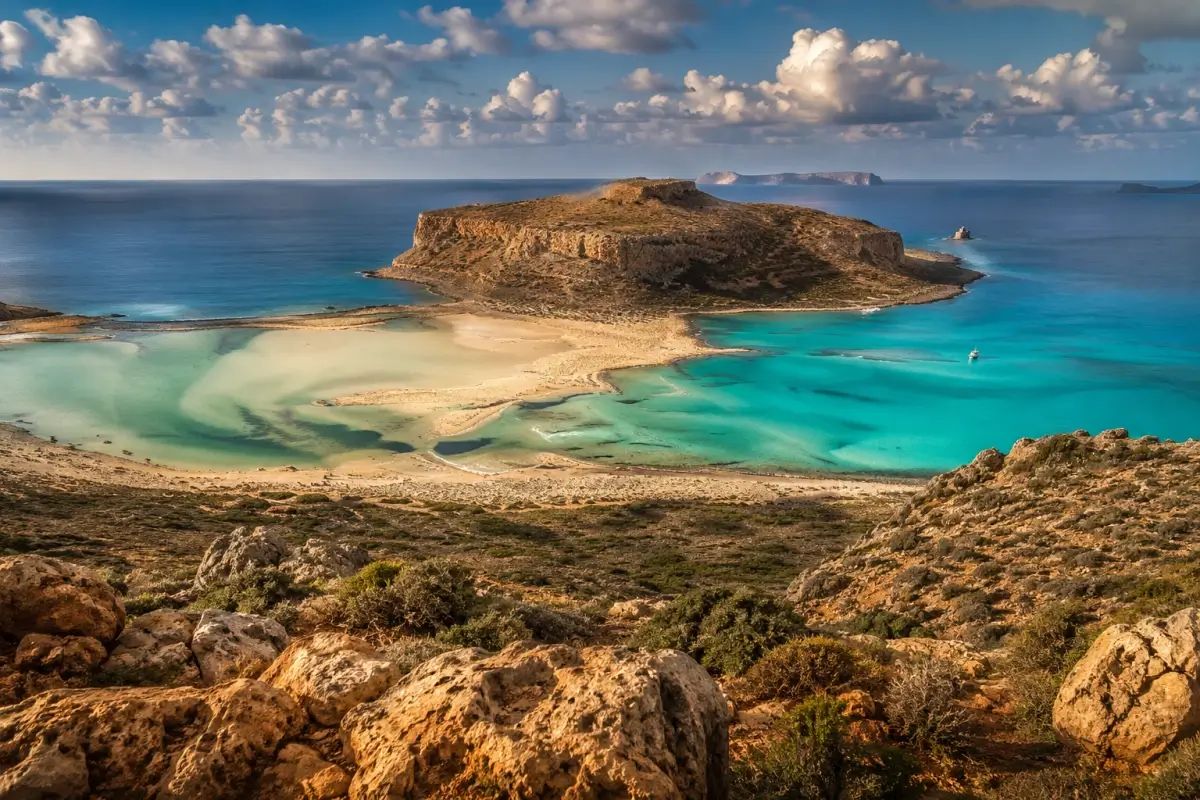
Balos is among Crete’s defining west-coast landscapes: white sand, shallow blue water, and broad patterns of lagoon and shoreline from a remote-feeling corner of the island. It belongs on a first visit for travelers seeking a major beach day, but it is not an easy stop.
For most visitors, the boat from Kissamos is the more sensible approach. The final road to Balos is rough and unpaved, and some rental companies prohibit driving there or exclude damage on that route from insurance cover. If you drive, the road approach also involves a walk down to the beach. A boat trip removes the most awkward driving decision, though the day still has variables.
Check current sailing schedules, operating dates, sea conditions, and landing arrangements before committing, as these can change with weather and season. Organize Balos as a dedicated outing from western Crete, not as part of an itinerary already built around Chania, Elafonissi, and a gorge hike.
Hike Samaria Gorge when you genuinely want a full mountain day
Samaria Gorge is not a scenic stroll with a few viewpoints. The standard route starts at Xyloskalo near Omalos, descends through the White Mountains, and continues toward Agia Roumeli on the south coast. It is roughly 16 kilometers and can take around six hours before the ferry and return transport are factored in.
The landscape is the payoff: high rock walls, a long descent through the gorge, and a finish at the Libyan Sea. This suits fit travelers who want Crete’s mountain terrain to be the day’s main event. Anyone looking for a brief nature stop should choose something else rather than underestimate the distance and logistics.
An organized transfer or guided departure is often the cleanest option because the route is one-way. From Agia Roumeli, hikers continue by ferry to a road-connected town, then return by bus or transfer. Opening dates, temporary closures, park rules, and safe hiking conditions depend on weather, so confirm current status before departure.
Read Minoan Crete through Knossos and the Heraklion museum
Make Knossos the archaeological visit if Minoan Crete is a priority. The palace is closely associated with Minoan civilization and the stories of King Minos and the Minotaur, but it can be difficult to interpret without context. Parts have been reconstructed, and the mix of excavated remains, restoration, and mythology benefits from explanation over a quick independent circuit.
Pair it with the Heraklion Archaeological Museum, which holds important objects and frescoes excavated from Minoan sites. The museum gives the palace a material context that the grounds alone cannot provide. Together, the two visits create a much stronger historical experience than either can in isolation.
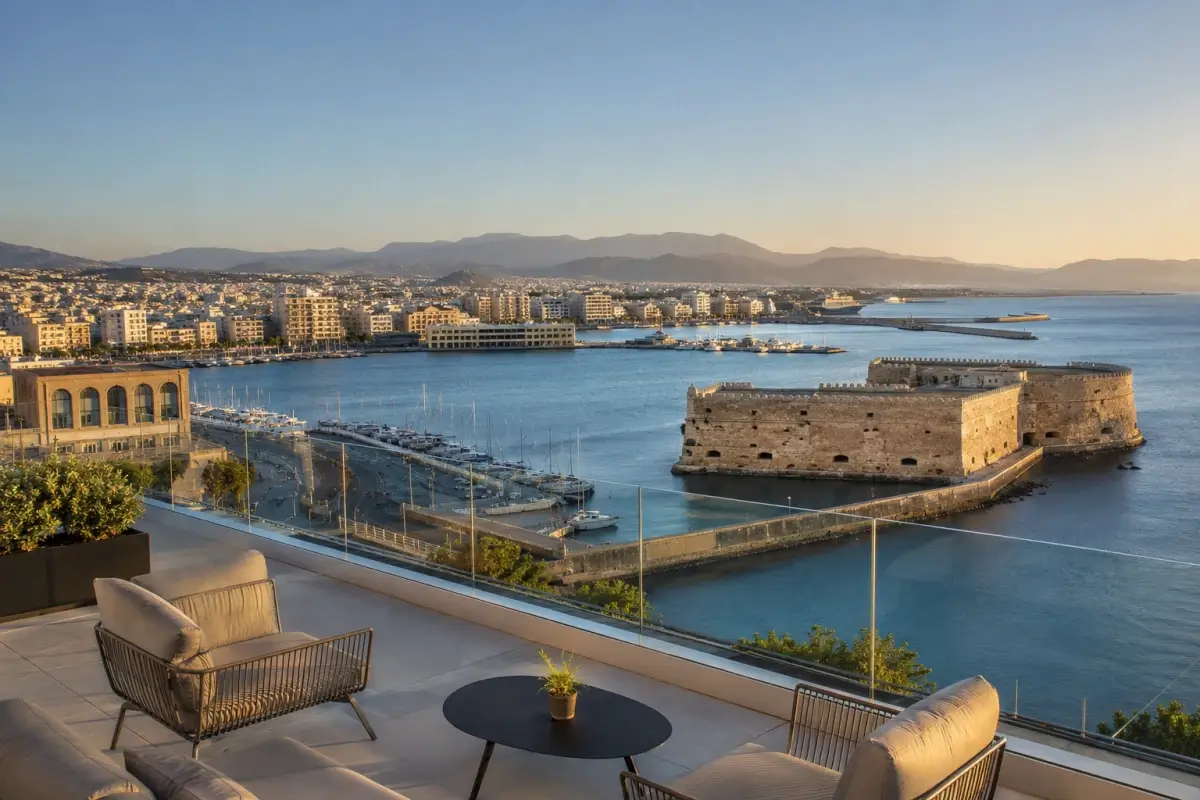
Go early in warm months, when heat and crowds can make the exposed site harder work. A knowledgeable guide is worthwhile at Knossos, particularly for travelers who want to understand what they are seeing instead of simply visiting a famous ruin. The pairing fits naturally from a central-Crete base. For an overnight centered on the museum and city, see the best hotels in Heraklion.
Visit Spinalonga for eastern Crete’s layered, difficult history
Approach Spinalonga as a historical site first, not a picturesque boat excursion. The small island in the Gulf of Elounda served as a Venetian fortress and later as a leprosy settlement. Its later history carries particular weight: people with leprosy were segregated there until the settlement closed in 1957.
Boats depart from Agios Nikolaos, Elounda, and Plaka. Plaka has the shortest crossing, making it the practical choice for travelers already moving around the Elounda area. Check current departures, admission arrangements, and access before setting out, as these details can change.
Spinalonga belongs in an eastern-Crete stay, ideally from Agios Nikolaos or Elounda. It is not a sensible rushed day trip from Chania or the far west. Travelers weighing an eastern base should begin with where to stay in Crete.
Use Rethymno’s Old Town as the island’s best town-and-beach compromise
Rethymno is the practical middle ground between Chania’s urban appeal and a conventional beach stay. Its Old Town layers Venetian and Ottoman architecture through narrow lanes, with the harbor at one edge and the Fortezza above the town. A long sandy beach east of the center provides an easy beach option without a separate coastal transfer.
Choose it when an atmospheric town, good food, and beach access matter in equal measure. The Old Town merits a substantial afternoon and evening, while the Fortezza provides a clear historical anchor. Rethymno is also well placed for an overnight between Chania and Heraklion.
Do not force every stop into a single transit day. Give Rethymno time for a harbor walk, the fortress, and dinner in the old lanes. As in Chania, the historic center is best handled on foot, not by attempting to drive into it.
Eat through Cretan cuisine instead of treating food as an afterthought
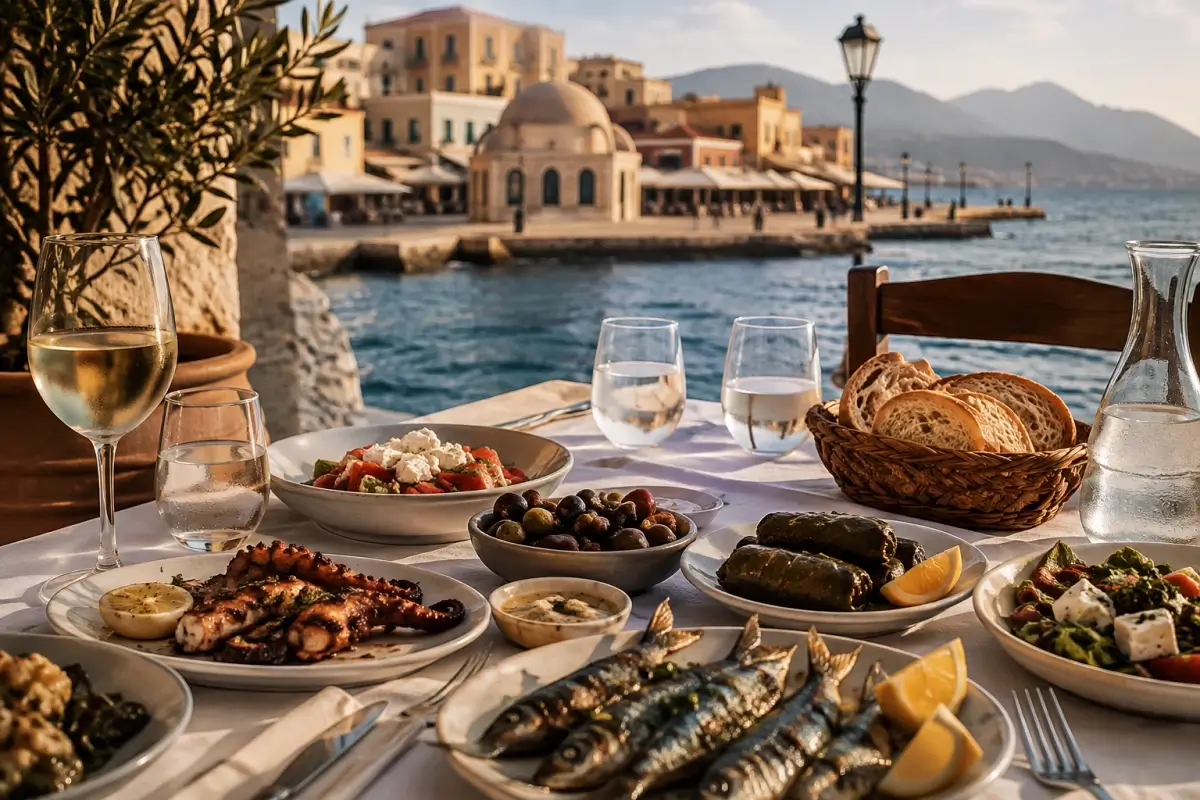
A proper Cretan meal deserves the same planning as a beach or historic site. The island’s cooking is built around olive oil, seasonal produce, bread, local cheeses, herbs, seafood in coastal areas, and the small rituals of a taverna table. Start with dakos: hard twice-baked bread topped with tomato, cheese, oregano, and olive oil.
Look beyond feta. Graviera, a hard cheese associated with the White Mountains, and soft mizithra are central to the local repertoire. Raki, distilled from leftover wine grapes, is Crete’s characteristic spirit and often the final note to a meal. Do not order every regional specialty at once; choose a kitchen that takes its ingredients seriously.
We would favor a well-regarded local taverna or a food-focused inland stop over a generic waterfront meal chosen solely for the view. Begin with the best restaurants in Crete.
What to skip
Trying to cover the whole island from one base. Crete rewards regional focus. Repeated journeys between the west, Heraklion, and the east consume days better spent in a town, on a beach, or at a historical site. Keep a short trip to one region, then add a second base only when the stay is long enough to justify it.
Driving the final road to Balos without clear permission. The rough, unpaved access road is not where to discover that a rental agreement has restrictions. For most travelers, take the boat from Kissamos and save driving energy for routes where a car genuinely improves the day.
Seitan Limania on a tight itinerary. Its narrow beach, cliff-bound setting, lack of facilities, and popularity make it a more complicated use of limited time than its photographs suggest. After Elafonissi or Balos, it is not the west-coast beach we would prioritize.