Santorini rewards a first visit when it is treated as more than a sequence of photo stops. The caldera, volcanic terrain, vineyards, and prehistoric history justify the journey. Oia’s famous lanes are part of that case, but not the whole of it.
This is a restrained edit for first-time visitors, couples, scenery-led travelers, and those who want cultural substance alongside the views. Oia is beautiful and intensely crowded; cliffside walking can be demanding in heat; and the beaches are volcanic rather than soft white sand. These selections weigh payoff, access, physical effort, crowd pressure, and seasonality. Read more about how we evaluate destinations and experiences, or start with the wider Santorini guide.
Walk Oia’s blue-domed lanes, then decide whether the famous sunset is worth the crowd
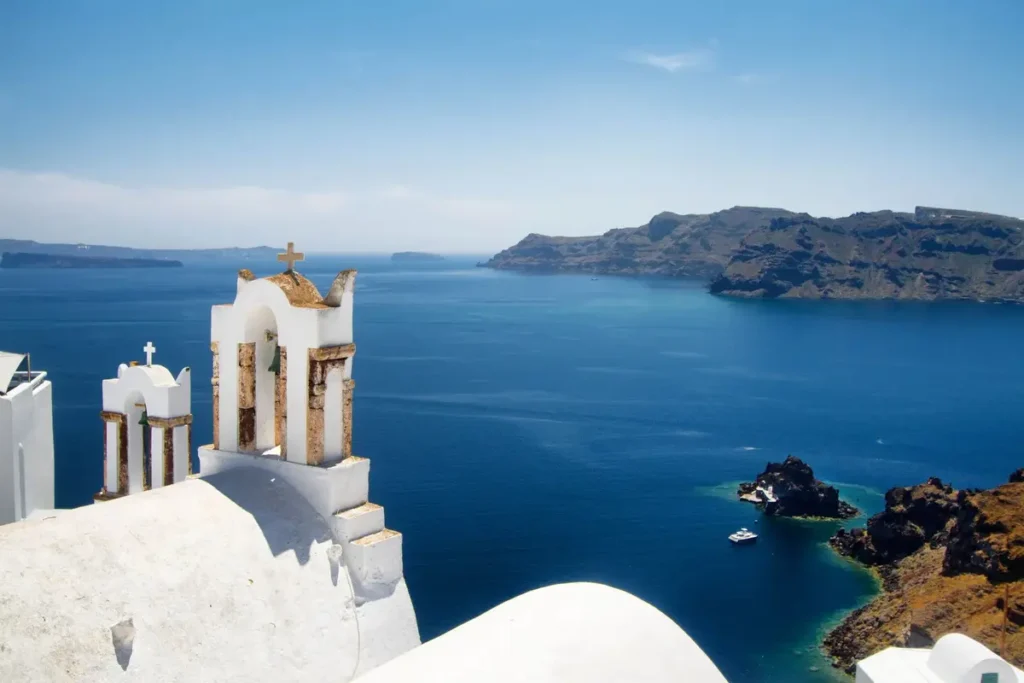
Oia earns its place. The point is not to reproduce one particular photograph, but to walk the whitewashed lanes, pause at caldera views, and find the blue-domed churches that have become Santorini’s visual shorthand. The domes are fewer than the island’s imagery can suggest, making an unhurried walk more rewarding than a rapid circuit of marked photo locations.
Go early, before the main daytime crowds, or return later in the evening after the sunset rush has eased. Oia Castle, at the village’s tip, is the established sunset viewpoint, and crowd pressure is part of the experience. In summer, hundreds of people may gather in a small area to claim a position. The sunset is worth seeing; standing in a dense crowd for it is a separate choice.
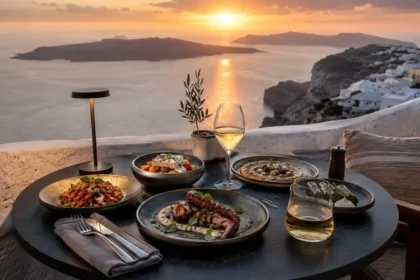
We would make the Oia walk the priority, then choose the sunset format according to tolerance for congestion. A table at a caldera-facing restaurant, a quieter stretch of Oia’s lanes, or an evening in Fira or Imerovigli can preserve the view without making the castle lookout the event. A sunset cruise is the stronger alternative for travelers who would rather see the island from the water. Confirm current sunset times, restaurant reservations, and sailing departures close to travel, since these are seasonal.
Walk the Fira to Oia caldera trail for Santorini’s defining landscape
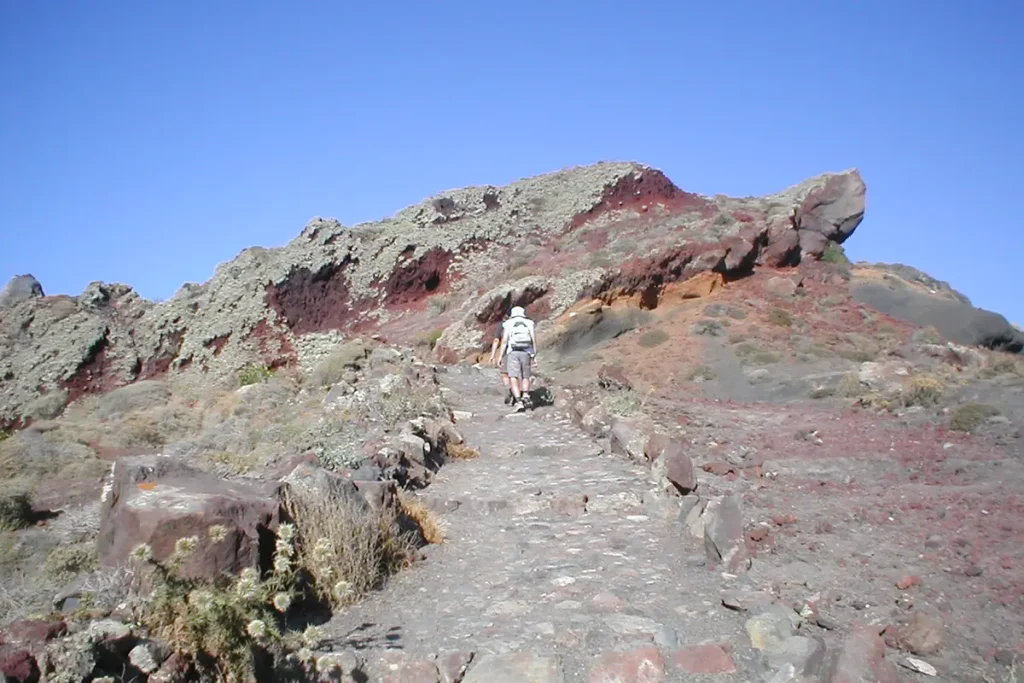
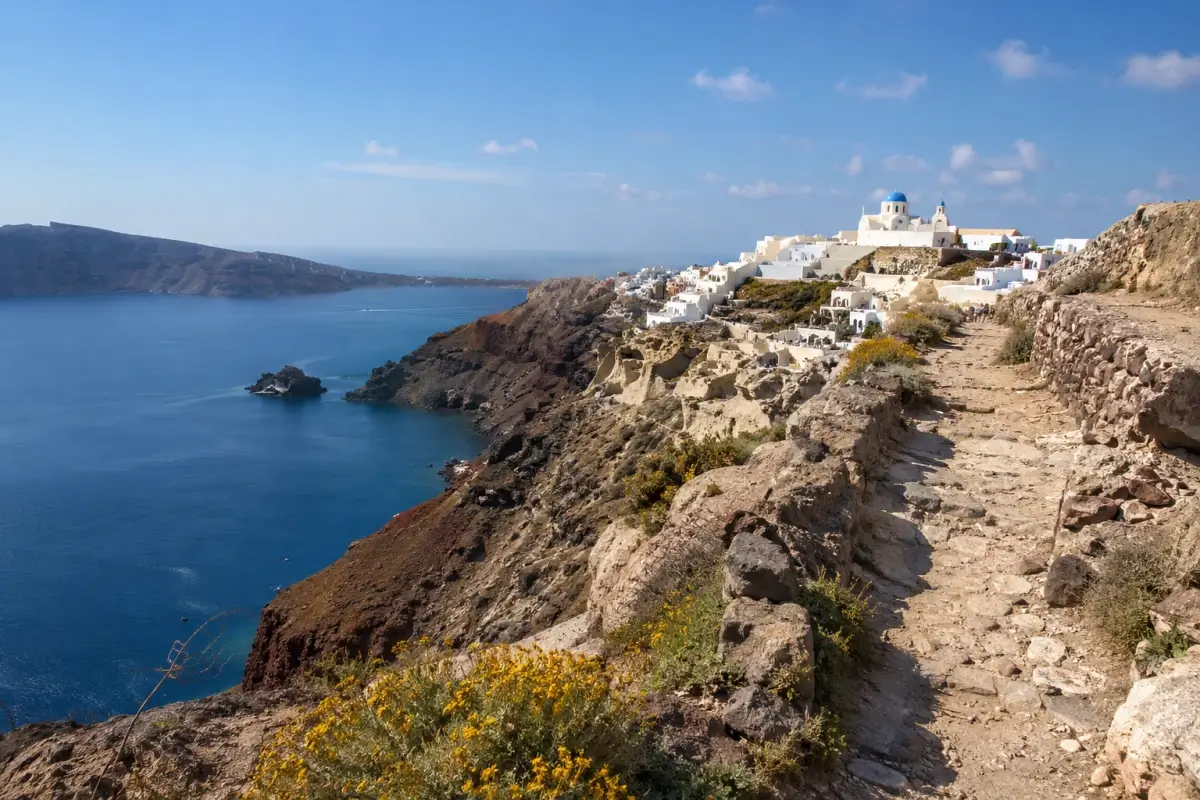
The Fira to Oia trail best explains why Santorini looks the way it does. It follows the caldera rim between the island’s best-known settlements, passing through or near Firostefani and Imerovigli, with views over the volcano and sea for much of the route. For visitors who want the landscape to be more than a hotel backdrop, this is the clearest use of a morning or late afternoon.
Allow roughly two to three hours one way, depending on pace and stops. Route estimates vary slightly around 10.4 kilometers, so plan around time and terrain rather than a fixed distance. Rocky sections and uphill stretches make this unsuitable for flip-flops or the hottest part of a summer day.
Wear closed-toe shoes with grip, carry water, and use sun protection. The route works in either direction, though late-day walking can reduce exposure to the strongest heat. Around Imerovigli, Skaros Rock is an optional detour for those comfortable on steeper, uneven ground. Its ruins and broad caldera outlook are worthwhile, but not necessary for the main trail to feel complete.
Taste Santorini’s volcanic wines in a small-group winery visit
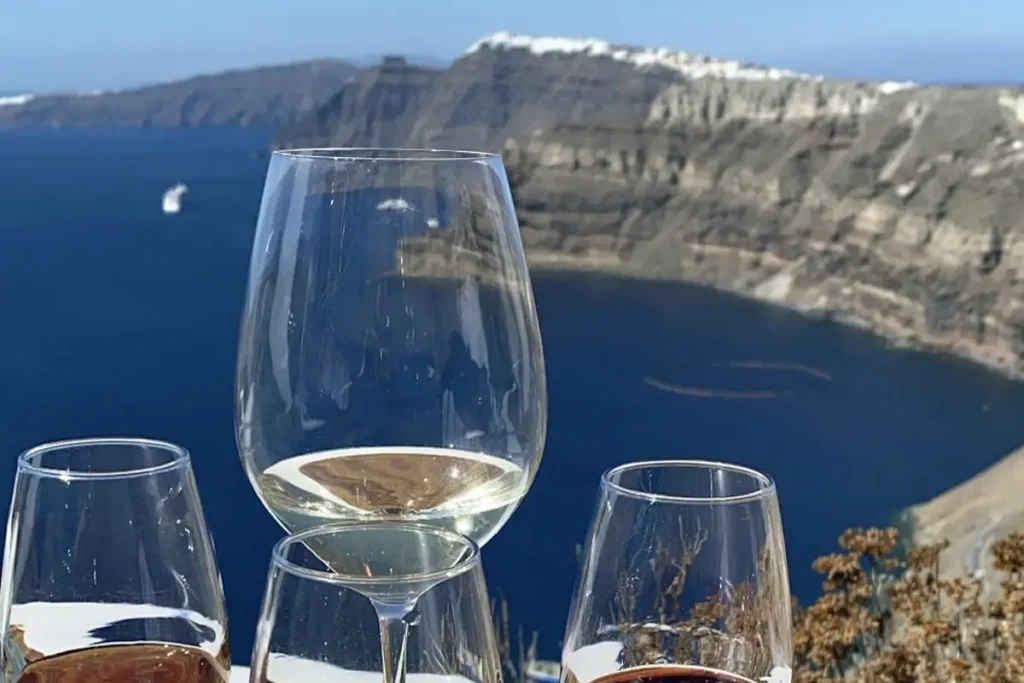
A winery visit belongs on a first trip because Santorini’s volcanic setting is directly relevant to what is poured. Assyrtiko is the best-known local grape, associated with dry white wines from the island’s volcanic soils. Vinsanto, a sweet wine, is another useful reference point for visitors who want to understand the local range rather than only order a glass with a view.
Without a car, we would choose a guided or small-group winery visit over an unstructured tasting crawl. Wineries can sit outside the principal caldera villages, and a tour simplifies access while providing context on the vines, grape varieties, and winemaking. Santo Wines, Venetsanos Winery, and Domaine Sigalas are well-known examples, but format matters more than the most photographed terrace.
Reserve ahead if a sunset sitting matters. Santo Wines is near Pyrgos, making the two a natural pairing for an inland afternoon without turning it into a rigid itinerary. A tasting with explanation is a better use of time than a generic wine stop selected solely for its caldera panorama.
Visit Akrotiri for the island’s most substantial historical experience
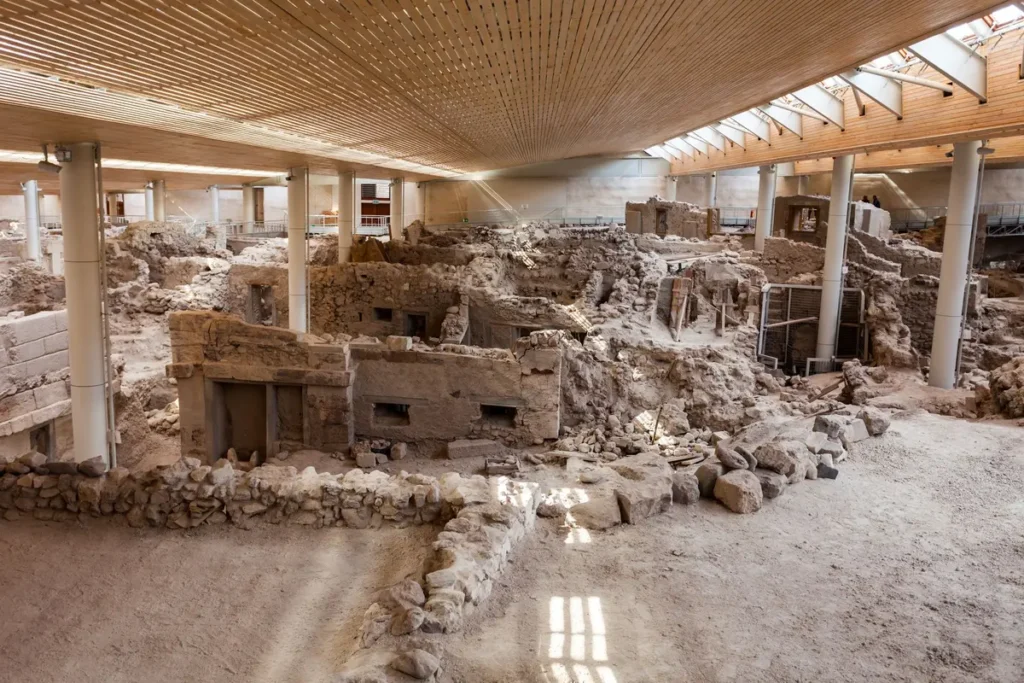
Akrotiri is Santorini’s necessary counterweight to contemporary caldera tourism. The archaeological site preserves a prehistoric settlement covered by volcanic ash after an eruption, leading to frequent comparisons with Pompeii. It gives the island historical weight that the cliff villages alone cannot provide.
The payoff is in the settlement’s scale and its evidence of urban life: archaeologists have identified multi-story buildings, an elaborate drainage system, ceramics, furniture, and wall paintings. Suspended walkways let visitors look down into and across the remains rather than at a small collection of isolated ruins.
Give Akrotiri meaningful time, particularly if history is central to a visit to Greece. A guide is worth considering for travelers who want interpretation of the buildings and artifacts rather than a visual overview alone. Akrotiri, the nearby village, and Red Beach are distinct places, though casual planning often combines them. Check current opening conditions, tickets, and transport before leaving, as these details can change.
Spend a beach day on Santorini’s volcanic coast, not in search of white sand
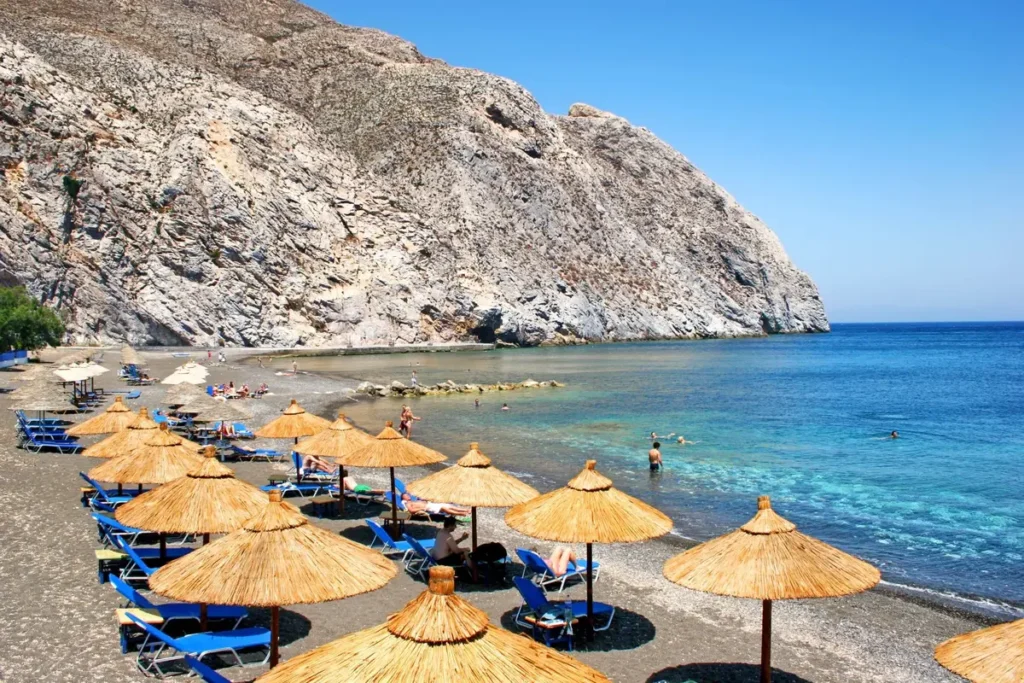
Santorini is not the Cycladic choice for a soft white-sand beach day. Its coast is shaped by volcanic geology: dark sand, pebbles, rocky swimming areas, and exposed cliffs. Choose it for a swim, a change from the caldera, and unusual coastal terrain.
Kamari and the long Perissa and Perivolos stretch are practical choices for a longer beach break, with restaurants and beach bars nearby. Kamari and Perissa have dark volcanic shores that can become painfully hot in direct sun. At Kamari, expect dark volcanic material and pebbly sections rather than classic soft sand; water shoes are a sensible addition.
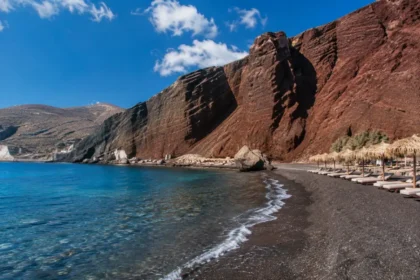
For a quieter setting, choose Vlychada for its wind-shaped rock formations rather than a developed promenade. Swimming conditions still depend on weather and season. Near Akrotiri, Red Beach is better treated as a dramatic short stop than the default beach day: reaching it involves a walk and some scrambling over rocks, and its swimming area is rocky. Take water, wear suitable footwear, and do not assume it suits every swimmer.
For a fuller comparison of access, swimming conditions, and beach character, see the best beaches in Santorini.
Take a volcano and hot-springs boat trip when the sea is calm
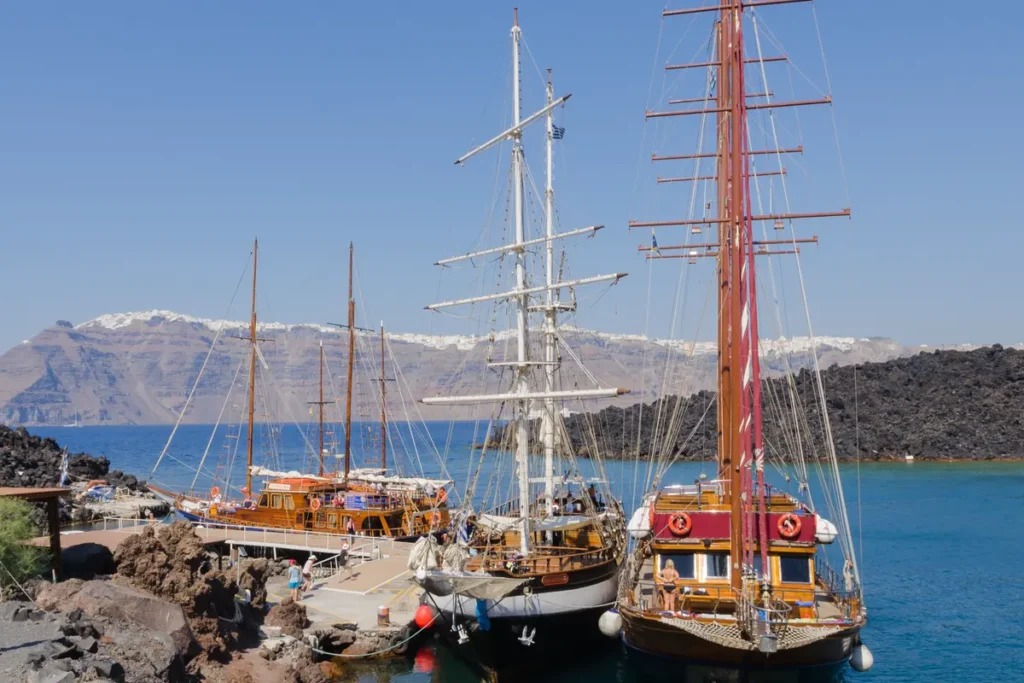
A trip to the volcanic islands suits visitors who want to see the caldera from the water and connect the island’s form to its volcanic history. Depending on the operator, excursions may combine a walk toward the crater on Nea Kameni with a swim stop at the hot springs near Palea Kameni. Some also include Thirassia.
Choose a smaller-group sailing or cruise format if comfort, room on board, and time on the water matter more than fitting the maximum number of stops into a day. Full-day versions can take a large share of a short Santorini stay, so they suit travelers with several full days or a clear preference for being at sea.
Not every boat follows the same route or includes the same swimming time, food, sunset viewing, or island stops. Wind, sea state, boat access, swimming ability, and seasonal operations all affect the experience. Confirm the route and inclusions before booking, then choose a day when conditions support being on the water.
Wander Pyrgos for a quieter, more local-feeling village counterpoint
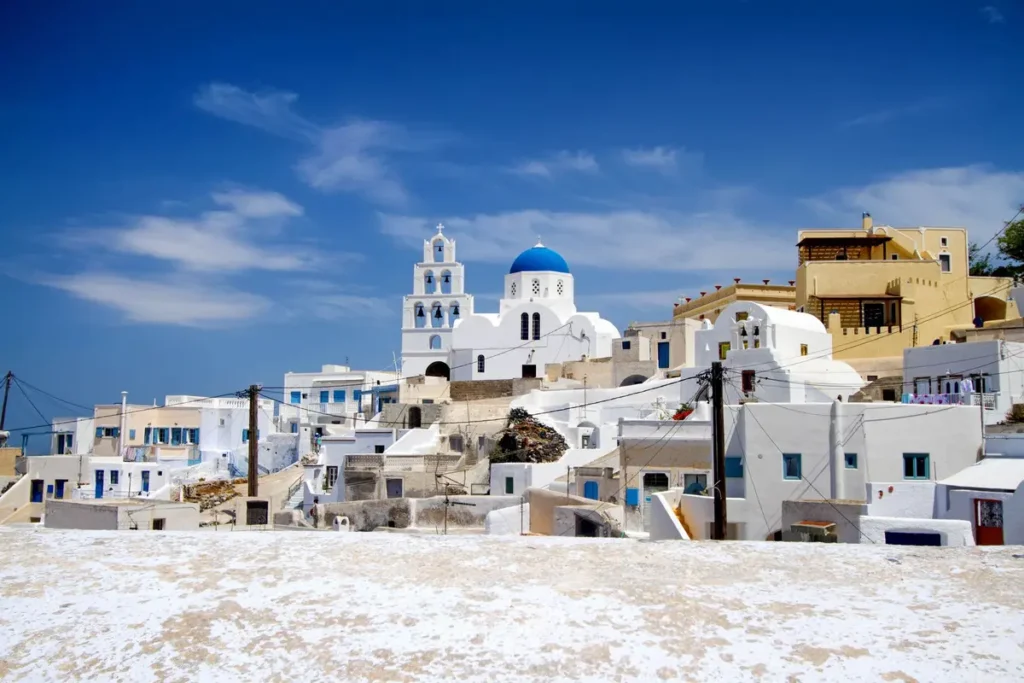
Pyrgos is the corrective to an Oia-only view of Santorini. This inland hilltop village has narrow lanes, whitewashed houses, churches, tavernas, and views across the island. The remains around its castle area give visitors a reason to continue uphill once they have explored the lanes.
Pyrgos is not presented here as an undiscovered village. Its nearby wineries make it a natural inland stop, while its hilltop lanes, churches, tavernas, and island views offer a different experience from the caldera edge.
Move through the lanes without a fixed photographic objective, pause for a taverna meal, and climb toward the castle-area remains for the wider outlook. Pair it lightly with a winery visit if both appeal, but do not reduce Pyrgos to a transit stop between tastings. Its value lies in seeing a different version of Santorini.
What to skip
Treating Oia Castle as the only valid sunset plan. The castle viewpoint is famous because the view is real, but it can become a crowded waiting exercise. Keep Oia for the lanes and churches, then choose another part of the village, Imerovigli, Fira, a restaurant table, or a sunset cruise when the crowd outweighs the payoff.
Donkey rides to or from Fira’s old port. The old-port route has 588 steps and can be slippery and difficult, especially in heat. We would avoid the donkey rides because of the animal-welfare concerns raised about their use on these stairs. Walk only if the steps suit your fitness and footwear, or use the cable car instead.
Self-driving an ATV without relevant experience. Santorini is steep and hilly in places, and ATVs can be dangerous for inexperienced drivers. Travelers already comfortable operating one may decide differently, but learning on public roads is not a version we would recommend.
Frequently asked questions
Is 4 days in Santorini too much?
No. Four full days is not excessive for combining the caldera trail, Oia, a winery visit, Akrotiri, a beach or boat experience, and time in Pyrgos without compressing the island into a rush. Three to four full days is a reasonable window for the principal highlights. More time makes sense for travelers who want slower beach days, more sailing, or fewer fixed plans.
Can you just walk around Santorini?
Oia, Fira, Firostefani, and parts of Imerovigli are walkable, and the Fira to Oia route is among the island’s strongest experiences. Walking across Santorini is less straightforward: distances, steep lanes, stairs, heat, and rocky trails change the calculation quickly. Beaches, Akrotiri, wineries, and boat departures may require buses, taxis, or a tour, particularly for visitors without a car.
Credits for media displayed in this article
- https://www.greeka.com/cyclades/santorini/villages/oia/
- https://commons.wikimedia.org/wiki/File:GR-Santorini-Footpath-Oia-Thira_1.jpg
- https://jetsetseeker.com/blog/best-wineries-in-santorini
- https://www.kivotoshotels.com/santorini/blog/why-you-should-visit-akrotiri-in-santorini/
- https://www.greeka.com/cyclades/santorini/beaches/perissa/
- https://commons.wikimedia.org/wiki/File:Tour_boats_-_Nea_Kameni_volcanic_island_-_Santorini_-_Greece_-_01.jpg
- https://www.greeka.com/cyclades/santorini/villages/pyrgos/