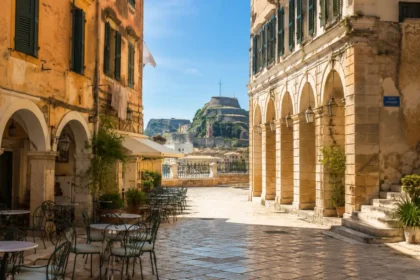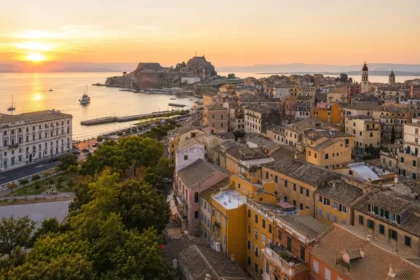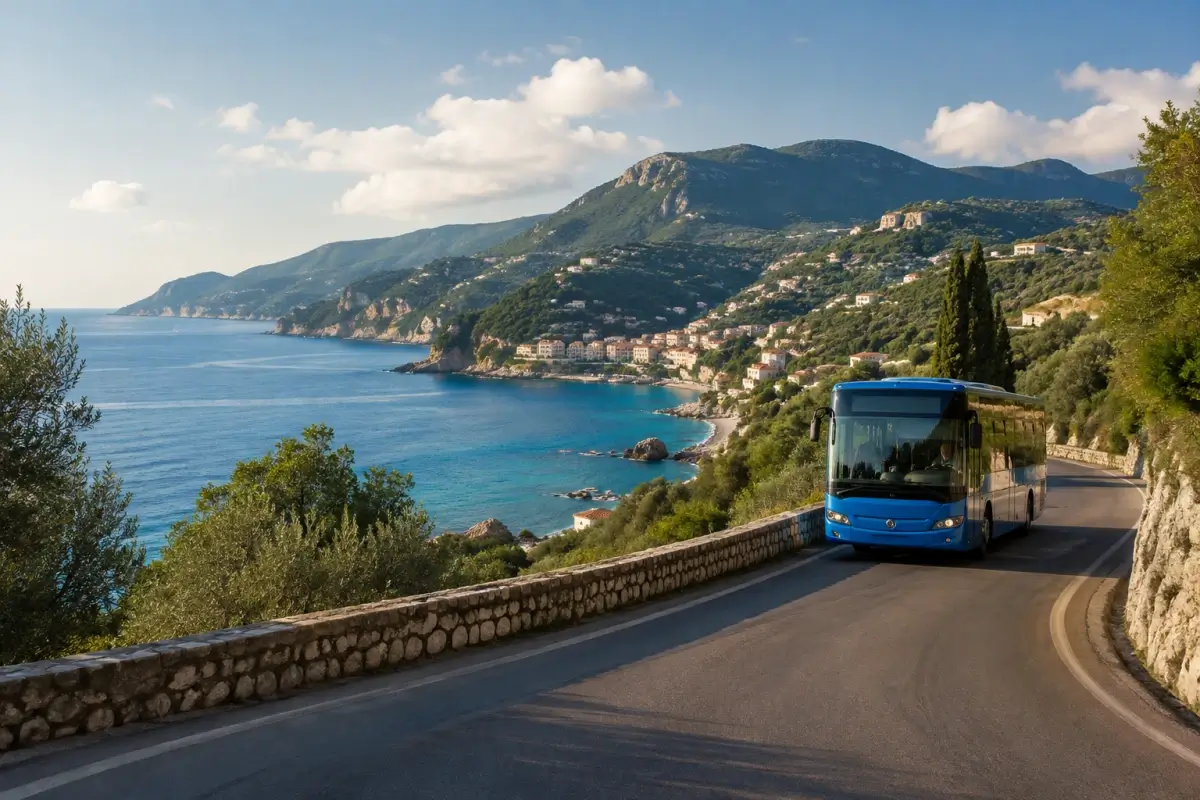
Corfu works without a car if the trip is built around Corfu Town or a resort on a strong bus route. For a stay focused on the beach, dinners near the hotel, and a few planned excursions, public transport is enough. Once the itinerary shifts to distant coasts, secluded coves, and inland villages, a car materially changes the trip.
We would not rent one automatically. For many first stays, buses should form the backbone, with walking around the base and taxis, transfers, boat services, or a short car rental filling the gaps where the network stops being useful. Given Corfu’s roads and parking, that is often more appealing than keeping a vehicle for the entire stay.
Buses are enough for a focused Corfu stay
A car-free Corfu holiday is realistic for travelers prepared to choose their outings instead of trying to cover the whole island. Corfu Town is the natural hub, with urban buses for nearby areas and intercity services to resorts and villages beyond town. Beach bases such as Dassia and Ipsos can also work well, especially for a shorter stay combining local beach time with trips into town.
The question is not whether buses run, but where they take you efficiently. Main corridors serve established resorts well. Beaches away from them, hillside accommodation, and small inland villages can mean awkward connections, a long walk from the stop, or no practical service. Remote beaches and lesser-known places are where a car begins to make a significant difference.
Set expectations accordingly: public transport suits a concentrated version of Corfu, not the freedom of a car. For help choosing a base before deciding between the two, see where to stay in Corfu.
Things to know: Bus schedules change with the season, and delays can occur away from the main terminals. Check the current timetable before each longer outing, as well as the last return service before leaving Corfu Town.
From the airport or port, keep the first connection simple
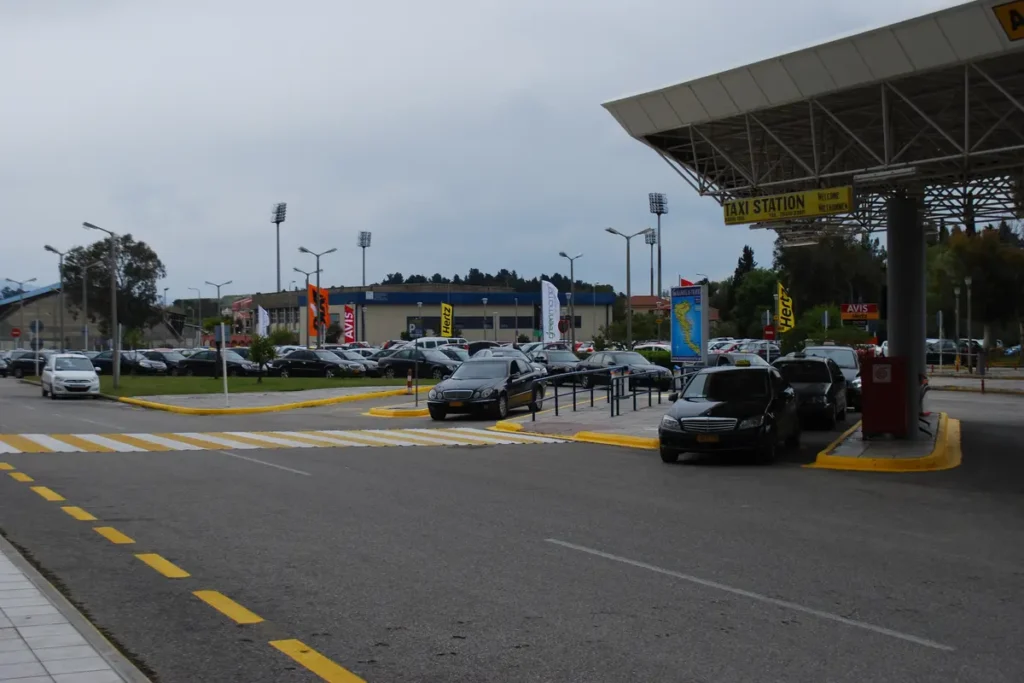
From Corfu International Airport, the practical choices are Blue Bus, taxi, a pre-booked private transfer, or a rental car collected at the airport. Luggage, arrival time, and the accommodation location matter more than distance.
Blue Bus 15 connects the airport with the intercity Green Bus station, San Rocco Square in Corfu Town, and the port. It is the sensible public transport option for a light arrival into town. San Rocco is useful because Corfu Old Town is pedestrianized, meaning even a taxi cannot reach every hotel or apartment directly. Travelers staying near the port can remain on the bus after San Rocco.
For an evening arrival, a hillside property, or heavy luggage, we would arrange a transfer instead of beginning with a bus connection. Taxis are available at the airport and in Corfu Town, but pre-booking removes uncertainty when timing matters. The same applies outside the town center, where the final leg can be less straightforward than the airport-to-town journey suggests.
Mainland ferry passengers should distinguish between the island’s ports. Kerkyra, or Corfu Town, is the useful arrival point for town and northern Corfu; Lefkimmi is better placed for southern stays. Ferries from Igoumenitsa serve Corfu Town, while Lefkimmi services are seasonal. Choose the port according to the accommodation area, not the other way around.
Use Blue Buses in town and Green Buses between areas
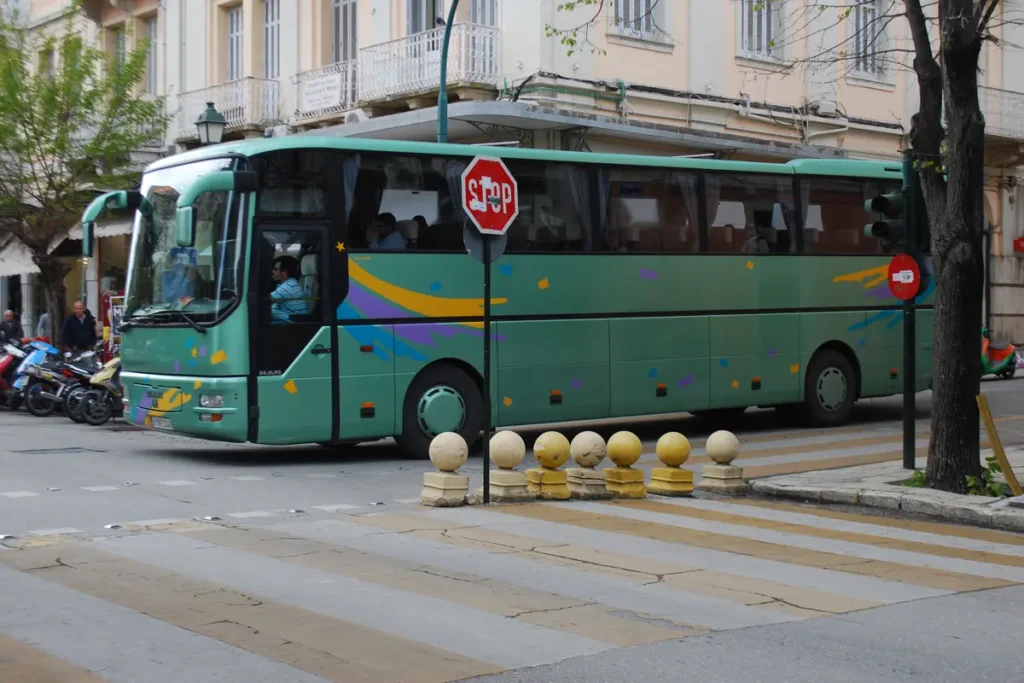
Corfu’s public transport is easier to use once the two networks are separated. Blue Buses serve Corfu Town and nearby urban areas, including the airport route. Green Buses are the intercity network, connecting Corfu Town with resort areas and villages across the island.
For longer daytime trips, use Green Buses. Current routes from Corfu Town include Paleokastritsa, Kassiopi, Sidari, Nisaki, and other destinations around the island. Frequency varies by route, day, and season, so a useful direct service in summer should not be taken as evidence that every part of Corfu is equally easy to reach.
Paleokastritsa shows the network at its best: it has a direct Green Bus from Corfu Town. Kassiopi and Sidari also have direct connections with town. Think of these as destination-led day trips, not pieces of an elaborate island circuit. Do not assume that two places close together on the map have a useful direct bus between them; check the current operator timetable before planning a multi-stop day.
Use the operator timetable for the specific travel date instead of relying on an old route map, a hotel noticeboard, or a saved timetable screenshot. Schedules change during the year, and intermediate stops deserve extra time in the plan.
For outings that fit a bus-led stay, the best things to do in Corfu can help narrow the list before routes are chosen.
Without a car, stay on a reliable corridor
Corfu Town is the strongest base without a car. It combines the island’s most walkable urban area with access to both bus networks, restaurants, shops, and evening options. It also avoids a common problem of car-free resort stays: one useful bus line, with little flexibility beyond it.
For a beach resort base with access to Corfu Town, Dassia and Ipsos are the better alternatives. Both sit on the bus route into town and work well for a shorter car-free trip. They suit holidays centered on their own shoreline, local dining, and regular town visits, with one or two longer Green Bus excursions added.
Paleokastritsa can work for a focused stay without a car. Its direct town connection is useful, and local boat trips can extend the coastline beyond the road. It is less flexible than Corfu Town for exploring in several directions. Resort bases farther from town require the same caution: they may suit staying put, but not broad island exploration.
Being connected is not the same as being connected to the rest of the itinerary. For beach access, evening atmosphere, and practical location, read the Corfu area guide.
Hire a compact car for the island-wide version of Corfu
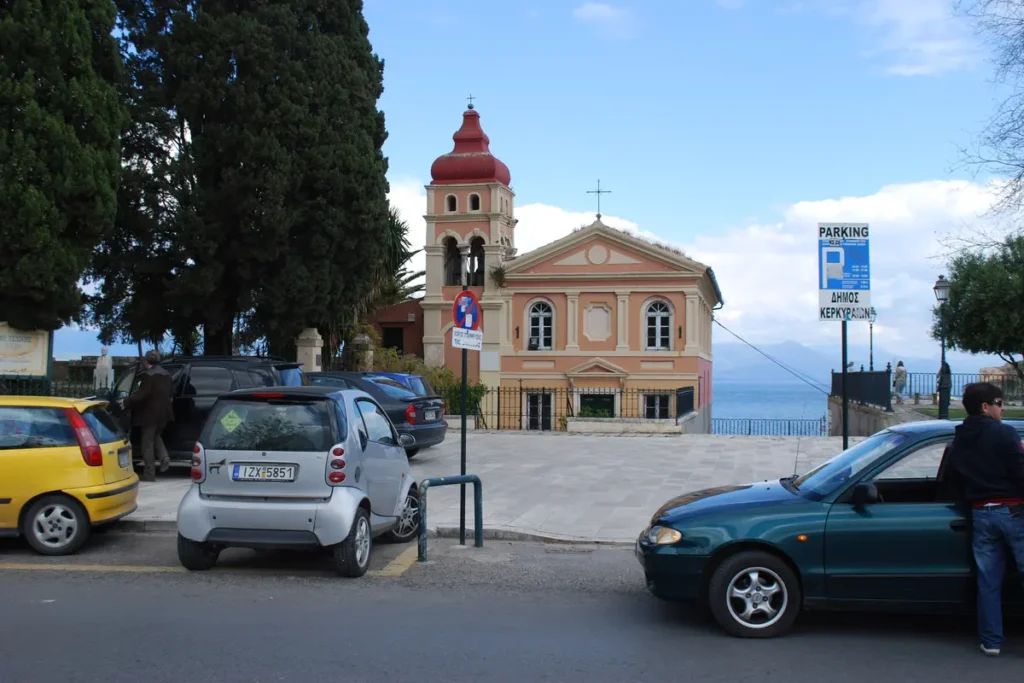
Rent a car if the trip centers on multiple coasts, inland villages, viewpoints, and beaches beyond established bus routes. This is where the bus network stops being a substitute for driving. A car lets travelers leave a resort when the day suits them, link places that are poorly connected by public transport, and reach accommodation above the coast or away from a main road.
Choose a compact model over a larger one. Rural and hillside roads can be narrow, winding, and unlit, while village streets may be difficult in a larger vehicle. A smaller car is also easier to fit into limited beach parking. The benefit comes with a cost: driving expands the island, but brings parking, road navigation, and the need to think about transport after dinner.
Parking at popular beaches can be limited in peak weeks. Arriving early may help, but a car does not guarantee a space close to the water. In Corfu Town, park once and continue on foot. The central streets, shops, landmarks, and restaurants are close enough together that driving between them adds little.
A full-week rental is not always needed. For a town or resort stay, a sharper plan may be to rent a compact car for the two or three days reserved for wider exploration, then return it. This keeps the flexibility for remote beaches and villages without paying for a vehicle that spends much of the trip parked.
For beach planning, see the best beaches in Corfu. Beaches that are easiest to reach by road are not always best approached by bus.
Walk in Corfu Town; do not treat rural walking as a transport network
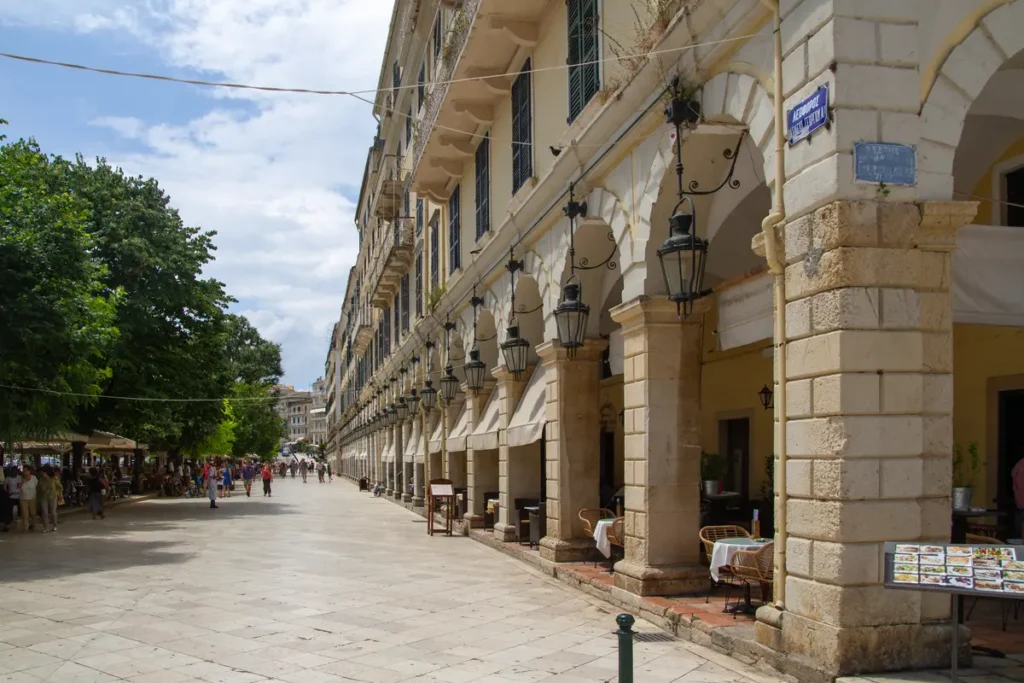
Walking is the default in Corfu Town. The Old Town, waterfront areas, shops, markets, restaurants, and major landmarks sit within a compact urban area. This is the part of the island where a car is least useful and a central stay has the greatest practical payoff.
Compact resort centers can be manageable on foot as well. Parts of Dassia and the Gouvia to Kontokali stretch allow walks among accommodation, marinas, tavernas, and the waterfront, though pavements can be intermittent. Within a resort, the practical question is often whether the hotel sits on the same side of the road as the beach and dining options.
Elsewhere, map distance can mislead. Rural roads may be narrow, unlit, and short on pavements. A hillside villa or inland restaurant that looks close may not be suitable to reach on foot, particularly with luggage, in summer heat, or after dark. For those final legs, a taxi is more sensible.
Once in Corfu Town, leave the car behind and plan meals within walking distance. The best restaurants in Corfu is most useful for travelers staying in or visiting town.
Use taxis and boats to solve the awkward gaps
Taxis work best as a targeted tool, not as the island’s primary transport network. Use them for an airport arrival with bags, a late return from dinner, or the final climb to accommodation beyond a bus stop. They are readily available at the airport and in Corfu Town. For journeys elsewhere on the island, book ahead when timing matters, particularly for dinner returns or fixed departures.
For a pre-booked or longer journey, confirm the fare arrangement before departure and keep a backup payment method available. Cost is the larger consideration: taxis make sense for one awkward journey, not as a substitute for repeated long cross-island trips.
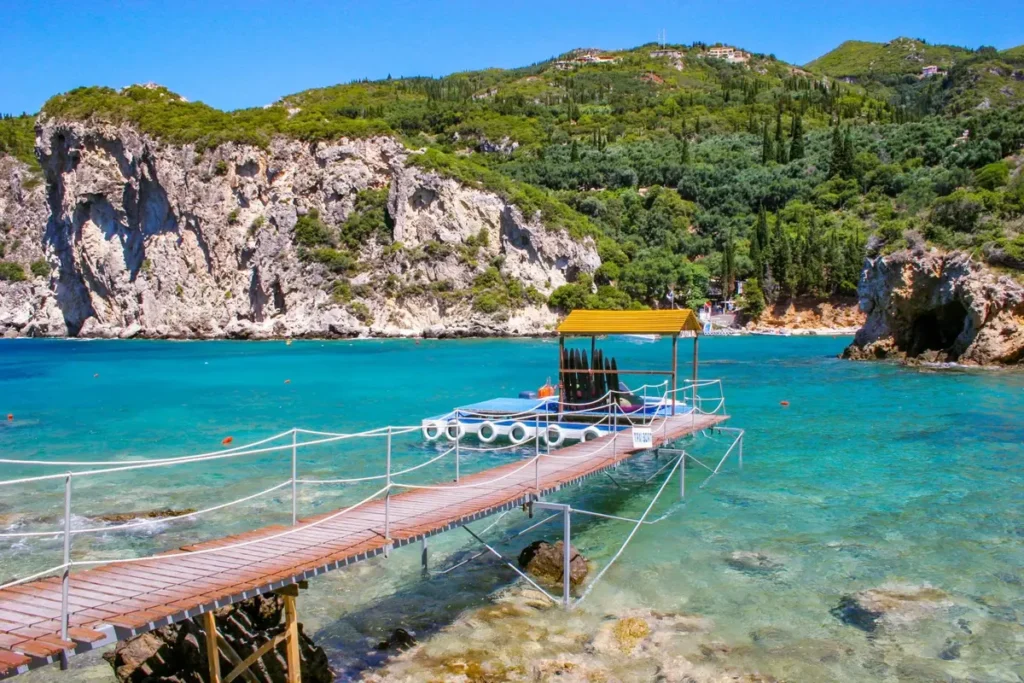
Boat taxis and organized boat trips can be a better answer along parts of the coast. In harbor villages and organized coastal areas, they can connect nearby waterfront stops or reach bays without the problem of beach parking. Paleokastritsa is one area where boating is part of the local travel pattern, while boat taxis along the northeast coast may be arranged through restaurants or accommodation hosts.
Availability varies by season and location. Confirm the return arrangement before leaving on a boat taxi, especially in July and August. For beach days, a boat trip can be a more useful addition to a car-free itinerary than another ambitious bus connection. The Corfu beach guide covers the coastal areas where this trade-off matters most.
The transport strategy we’d use
For a first Corfu trip without a car, we would take Blue Bus 15 when staying in Corfu Town with light luggage. For a late arrival, a resort stay, or a property above the main road, use a pre-booked transfer. Corfu Town would be the first-choice base, with Dassia or Ipsos as beach-led alternatives.
Use Green Buses for one destination at a time, such as Paleokastritsa, Kassiopi, or Sidari, instead of trying to string together several distant stops. Walk locally, keep evening plans close to the base, and save taxis for journeys that become difficult after the last bus. Add a boat trip where the coast is better connected by water than by road.
For a broader island itinerary, reverse the approach. Rent a compact car for exploration days, accept that popular beaches may require an early arrival and a short walk from parking, then leave the car parked once you return to your base for the evening. The strongest Corfu plan is not ideological about cars. It uses buses where they work well and driving where the island’s geography makes it worthwhile.
For the wider island picture before deciding how much ground to cover, visit Calanova’s Corfu guide.
Credits for media displayed in this article
- https://www.greeka.com/ionian/corfu/beaches/paleokastritsa/
- https://commons.wikimedia.org/wiki/File:2018-06-17_Corfu_(Kerkira)_town_street_03.jpg
- https://commons.wikimedia.org/wiki/File:Corfu_airport_taxis.jpg
- https://commons.wikimedia.org/wiki/File:Corfu_town_bus.jpg
- https://commons.wikimedia.org/wiki/File:Panagia_Mandrakina_-_Corfu_01.jpg