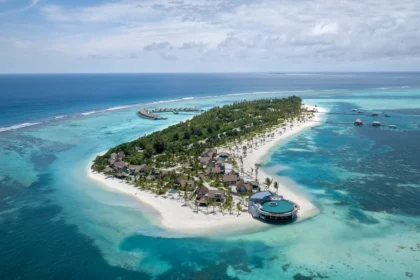
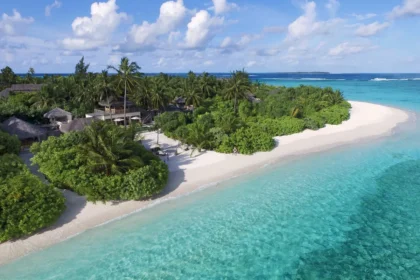
January to April is the best time to visit the Maldives for most travelers. This is the clearest dry-season window, with lower rainfall and humidity, warm temperatures, and generally favorable conditions for beach time, snorkeling, and diving. February and March are the standouts.
The wider November-to-April period can work well, especially for winter sun, but January through April is the more dependable recommendation. Average highs remain broadly around 84°F to 88°F throughout the year, though tropical weather is never guaranteed. Dry-season trips can still bring a shower, while wetter months can produce long, bright spells between heavier rain.
For a first trip centered on beaches and time in the water, target February or March. October and November make a different case: they carry more rain risk but can coincide with plankton-fed manta ray and whale shark activity in relevant areas, alongside softer seasonal demand. For a wider introduction to the archipelago, see our Maldives guide.
Best time to visit the Maldives at a glance
| Travel window | Weather and sea conditions | Water activities and wildlife | Demand and price direction |
|---|---|---|---|
| January to April Peak season |
Generally the driest period, with lower humidity and more settled beach weather. Rain becomes somewhat more likely later in April. | Usually the strongest period for snorkeling and diving visibility. Calm conditions are more likely than during wetter months. | High demand and typically higher resort rates. Booking ahead is sensible. |
| May to September Low season |
Warm, with a greater likelihood of rain, storms, wind, and rougher seas. Showers can be intense but intermittent. | Larger swells favor surfers. Plankton can reduce diving visibility, while June can be a strong period for manta rays in relevant locations. | Lower seasonal demand and more frequent promotions, though the Maldives remains expensive. |
| October to November Shoulder season |
Warm, with long sunny spells possible but a higher chance of rain and storms. | A compelling period for plankton-feeding manta rays and whale sharks in supported areas. Visibility may be less consistent than in the dry season. | Often better value than January through April, with resort promotions more common. |
| December Transition month |
Warm, with sunshine possible, though rain and storms remain a consideration. | Marine wildlife opportunities shift by area. Western atolls are associated with manta ray and whale shark sightings from December through April. | Demand rises into the holiday period, and resort rates tend to follow. |
“Peak,” “low,” and “shoulder” are planning labels, not guarantees. They reflect the usual mix of rainfall, wind, sea conditions, resort demand, and rate direction. The Maldives spans many atolls, so a national pattern will not describe every island or reef on every day.
January to April: the clearest choice for beaches and underwater visibility
This is the period that best fits the standard Maldives brief: warm days, lower humidity, less rain, and better water visibility. Choose it for a sun-focused stay, swimming, and the most consistently favorable conditions for snorkeling and diving.
January starts strongly, bringing warmth, sunshine, and good visibility for snorkeling and diving, but it is also popular. February and March are the decisive picks. Audley identifies them as the driest months, combining low humidity with strong underwater visibility. If dates are flexible, this is where we would place a beach-first trip.
April remains a good option, especially earlier in the month. Expect warmth, sunshine, and good water visibility, with a slightly greater chance of rain as the month progresses. It is not a reason to rule April out, simply a less clear-cut choice than February or March.
Cost and availability are the compromise. Resorts see their strongest demand during this dry-season stretch, and rates are generally higher. Many resorts occupy individual islands, which avoids some of the density associated with conventional beach destinations, but peak dates can still be difficult to secure. Book early if a particular villa type matters, especially at one of the destination’s best water villas.
Things to know: Dry-season conditions are a climate pattern, not a forecast. Keep some flexibility around boat excursions and outdoor plans, even between January and April.
May to September: value, flexibility, and surf
May through September suits travelers who prioritize lower seasonal demand, resort promotions, or surf conditions over maximum weather certainty. It is not the period we would select for an itinerary built around uninterrupted beach days and consistently calm transfers.
Temperatures remain warm, and wet-season weather does not mean rain all day. Heavy showers can pass quickly, sometimes leaving hours of sunshine around them. Still, rain is more likely, storms are possible, and stronger winds can make the sea less forgiving for boat trips and water activities. National guidance indicates that southern atolls receive more rain during this period.
There is a worthwhile exchange for flexible travelers: resorts commonly have fewer guests and lower rates than in the dry season, while larger waves and stronger swells make this the principal surfing period. The water stays warm, though plankton can slightly reduce diving visibility from May to September.
June has a particular marine-life appeal. U.S. News identifies it as a prime time for Hanifaru Bay, a manta ray hot spot, while its wider May-to-October guidance places manta rays and whale sharks on the eastern side of the atolls during the wetter period. These are location-specific patterns, not a promise of an encounter.
Approach July and August with the most caution. They can still suit surfers and travelers willing to accept changing conditions for a potentially lower-priced stay, but they bring the clearest weather risk within an already wet and windy period. For plans less dependent on a cloudless day, see the best things to do in the Maldives.
October and November: a contrarian window for marine wildlife
October and November are the worthwhile exception to the dry-season recommendation. Travel then for the possibility of manta rays and whale sharks feeding on plankton, long sunny spells, and a better chance of seasonal resort promotions. Do not expect February’s weather certainty.
Audley singles out these months for whale sharks and manta rays, while stressing the increased likelihood of rain and storms. The draw is a more wildlife-led trip that accepts less predictability, not peak-season beach conditions at a lower rate.
Regional detail matters. U.S. News places wetter-season manta ray and whale shark opportunities on the eastern side of the atolls, while associating sightings in western areas, particularly around Maamigili in South Ari Atoll, with December through April. If a trip depends on a specific species, check the seasonal pattern with the chosen resort or excursion operator instead of treating the country as one marine calendar.
We would favor this period for a flexible traveler more interested in the water than in a faultless run of beach weather. It is a weaker fit for a short, expensive stay in which every day depends on sunbathing, swimming, and calm seas.
What to avoid for most travelers: the wettest and windiest stretch
For most travelers, June through August is the period to avoid when stable beach weather, smooth transfers, and predictable snorkeling or diving visibility matter most. July and August are the clearest months to skip when dates are flexible: U.S. News identifies them as the riskiest months, and broader climate guidance places June, July, and August among the months with the most rainfall.
This is not a closure season, nor is it uniformly poor. Air and sea temperatures remain warm, sunshine can break through between showers, and surfers may actively prefer the larger swells. The compromises are tangible: heavier rain can interrupt beach time, winds can affect sea conditions, and plankton may make diving visibility less reliable.
The deciding factor is how much weather change the trip can absorb. A longer stay with indoor resort facilities, flexible excursions, and no fixed expectations around daily diving can work well. Schedule a short celebratory trip built around calm water and clear snorkeling elsewhere.
Choose your month around the activity, not just the forecast
For snorkeling and diving visibility: January to April is stronger, with February and March standing out as the driest months and a period of particularly good visibility. April is still favorable, though rain risk rises toward its end. From May to September, plankton can slightly reduce visibility.
For surfing: Look to May through October, when larger waves and better swells are associated with the wetter season. The weather trade-off is real: stronger winds and rougher seas can affect other water activities and boat travel.
For manta rays and whale sharks: Consider the location first, then the month. June is highlighted for Hanifaru Bay, while May to October is associated with sightings on the eastern side of the atolls. October and November are particularly associated with plankton-feeding manta rays and whale sharks. Western-area sightings, including around Maamigili in South Ari Atoll, are linked to December through April.
For a beach-centered stay: January through April is the uncomplicated answer. Warm temperatures are not the differentiator because they hold up through the year. Rainfall, humidity, wind, and water visibility are what separate one month from another.
For planning beyond the reef, see our fuller guide to the best things to do in the Maldives.
Prices, demand and booking timing
January through April generally brings the highest resort demand and stronger rates. May through November more often brings promotions and lower seasonal demand. “Lower” remains relative in the Maldives, which stays costly throughout the year, and there is no reliable single cheapest month across every resort.
Holiday dates need their own caution. Christmas, Easter, and other private-resort celebrations can add pressure to already popular periods. Resorts in the Maldives are permitted to celebrate non-Islamic holidays including Christmas, Easter, and Diwali, while those celebrations are not found on inhabited islands in the same way.
Book well ahead for January, February, March, and sought-after holiday dates, particularly if villa availability or a specific transfer schedule matters. In wetter months, compare like with like: room category, meal plan, transfer costs, cancellation terms, and stay dates can all change the apparent value of a promotion. The best resorts in the Maldives can help clarify which details justify the rate.
Practical timing before you book
Transfers should shape the booking, not be an afterthought. Many resorts require a speedboat or seaplane connection, so confirm the process, timing, and terms before committing to international flights. Weather variability is another reason to leave room in the plan, particularly during wetter months.
For a rainy-season stay, keep excursions flexible and consider travel insurance that covers unexpected delays or cancellations. A rain forecast does not necessarily mean a lost day, but do not schedule every key activity within one narrow weather window.
Holiday programming also varies by setting. Private resorts may stage Christmas, Easter, or Diwali celebrations; inhabited islands follow local customs and require more attention to respectful dress and behavior. Travelers splitting time between a resort and a local island should check arrangements with each property instead of assuming the same holiday atmosphere throughout the country.
The final decision is straightforward. Choose February or March for the strongest all-around Maldives conditions. Choose January or April when those dates fit better, accepting April’s slightly higher late-month rain risk. Choose October or November for a wildlife-oriented alternative with a greater chance of rain. Leave June through August to surfers, price-conscious travelers, and anyone comfortable letting the weather set the pace. Once dates are fixed, see where to stay in the Maldives for the right base.