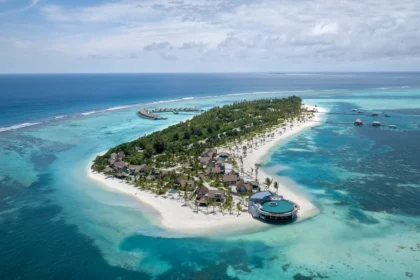
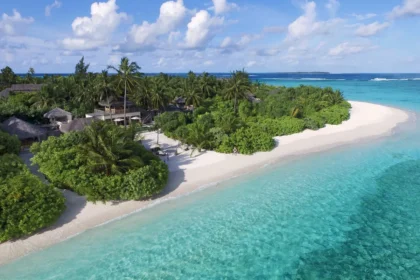
The Maldives is best experienced in the water, not merely viewed from a deck. An overwater villa is part of the appeal, but the days that justify a long journey across the Indian Ocean are usually built around a good house reef, one well-run wildlife trip, and an outing beyond the resort perimeter.
Islands are not interchangeable. Reef quality, lagoon conditions, transfer time, and excursion access vary considerably between resorts and local islands. Rates are also typically higher during the dry-season months from November through April, making generic add-ons and long detours harder to justify. For most couples, families, and active travelers, put the budget toward water access and one or two specific excursions instead of filling every afternoon from an activity menu.
Our choices weigh the marine setting, the difference between resort and local-island experiences, and whether an activity remains worthwhile when weather or wildlife does not cooperate. Read more about how Calanova evaluates destinations and stays.
Snorkel the house reef before booking a boat trip
Snorkeling deserves priority because it can turn an ordinary resort day into the reason for choosing an island in the first place. Some properties have reefs accessible directly from the beach or villa; others require a boat ride. Do not assume an overwater villa means excellent snorkeling beneath it. A broad, shallow lagoon may be ideal for swimming and paddleboarding while holding less immediate coral interest than a resort with a closer reef edge.
Try the house reef early in the stay, ideally with guidance from the resort team on entry points and conditions. If access is good and the water is cooperative, return to it instead of automatically booking another boat trip. Reef sharks, turtles, rays, and schools of fish are possible sightings, but none is assured. Marine life and visibility shift with conditions, location, and timing.
A guided small-group outing is worthwhile when it reaches a reef materially better than the resort’s, or when currents and visibility make local knowledge useful. It is also the stronger option for less confident swimmers. Strong swimmers should still follow local advice, avoid touching coral or wildlife, and use reef-safe habits that do not turn a fragile reef into a souvenir shop. For the right base, see our guide to the best beaches in the Maldives.
Dive the channels for a deeper marine experience
Scuba diving is the more serious version of the Maldives underwater experience. Snorkeling is enough for a strong house reef and surface encounters, while diving reaches deeper reef systems, channel dives, and wrecks beyond a casual swim. Certified divers should assess the dive center before committing to a resort, particularly when diving is central to the trip rather than an occasional diversion.
Channel sites can bring larger marine encounters and the sense of open-water movement absent from a protected lagoon. They can also involve stronger currents. The Maldive Victory wreck, for example, is described as unsuitable for new divers because currents can catch divers by surprise. Do not arrange diving independently: go with an established resort dive center or a local-island operator that can match sites and conditions to the group’s experience.
An introductory lesson is a reasonable way for first-timers to discover whether diving appeals, but it should not be confused with access to more demanding sites. Protected water is the appropriate starting point; channels and wrecks are the payoff for divers with the training to enjoy them properly. Conditions are not uniform between atolls, so a resort’s dive brochure should not settle the question on its own.
Seek whale sharks and manta rays with a conservation-minded operator
Whale sharks and manta rays are the marine encounters most likely to justify leaving the house reef, especially for travelers seeking one standout wildlife outing. South Ari Atoll is repeatedly associated with both animals, and operators there run snorkeling and diving trips. Even there, an encounter remains conditional. Weather, season, animal movement, and the operator’s route determine what happens on a given day.
Favor a knowledgeable small-group operator with clear distance rules over the loudest or fastest boat. The aim is time in the water with minimal pressure on animals, not a staged pursuit. Ask how the crew handles crowding at a sighting, whether guides enter the water, and what happens if conditions become unsuitable. Those questions reveal more than promotional photographs.
Snorkeling can be enough when animals feed near the surface, making it a stronger choice than diving for capable swimmers who do not need certification. Non-swimmers should not book in expectation of an equivalent boat-side view. A semi-submarine may suit that group, though it is not where we would spend limited excursion time if entering the water is an option.
Spend at least one night in an overwater villa, if the setting earns the premium
An overwater villa is worth doing once when direct lagoon access, privacy, and an open-water view are part of the room itself. It is not an automatic upgrade for every night of a Maldives stay. Beach villas can place guests directly on sand, under more vegetation, and closer to a useful reef entry point. In some cases, that makes for the more complete island experience.
The decision is not simply beach versus water. Confirm that the water villa has steps into a swimmable lagoon, that the surrounding water suits snorkeling, and that neighboring decks do not compromise privacy. A water villa with easy lagoon access is a different proposition from one primarily intended for looking at the sea.
With a limited budget, split the stay: spend one or two nights over water, then move to a beach villa or local island. Published estimates from a 2023 guide placed luxury water villas at roughly $700 to $1,000 or more per night on an all-inclusive meal plan, while transfers can add materially to a resort stay. Those figures are a dated guide, not a current quote, but the underlying trade-off remains. Seaplane, domestic-flight, or speedboat transfers and meal plans can substantially change the real premium. Compare the room experience with our picks for the best water villas in the Maldives.
Take a sandbank or private-island trip when the sea is calm
A sandbank trip is among the few Maldives excursions where the setting, not the activity, is the point. A narrow strip of sand surrounded by open water appeals to couples, photographers, and anyone wanting a few hours away from resort routines. It is not necessarily a better beach than the hotel beach. Its appeal lies in the isolation and the spare view in every direction.
A resort-organized picnic on a nearby sandbank differs meaningfully from a private castaway-style outing to an uninhabited island. The first can be a polished, short excursion. The second can feel more removed, though it may require more boat time and a larger private booking. Take the shortest private or small-group version that still allows enough unhurried time ashore.
Sea state, wind, tides, and direct sun shape the experience. Confirm departure conditions with the resort or operator, and do not build the trip around a fixed photo plan that cannot accommodate a weather change. A morning snorkeling stop can work well if the route is sensible, but a packed combination trip can erode the quiet that makes a sandbank worthwhile.
Visit Malé or a local island for context beyond the resort
A resort island is designed to remove friction. A visit to Malé or an inhabited island restores some context. Malé is the stronger choice for travelers passing through the capital who want markets, an urban view of the country, and the National Museum in Sultan Park. The museum was established in 1952 and includes a gallery focused on the medieval period, while Malé’s fish market gives a more immediate view of the country’s fishing economy.
A local island generally suits travelers with more time and a greater interest in everyday island life. Small cafés, homes, schools, mosques, and local guesthouses show a Maldives that operates differently from a private resort. Local stays can also cost less than a resort, though the decision should not be reduced to price. They exchange resort privacy and unrestricted service for a community setting and a more direct relationship with the place.
A guided half-day visit is sensible when available, particularly for a first visit to Malé. On inhabited islands, dress modestly and respect Islamic customs. Alcohol is not available on local islands, and beachwear rules differ from those on private resort islands. Do not assume mosque access, excursion schedules, or resort-style facilities. For help deciding which setting suits the trip, see where to stay in the Maldives.
Choose calm-lagoon water sports over a generic activity menu
Kayaking and stand-up paddleboarding best suit the Maldives setting. In a calm lagoon, they provide a low-commitment way to cover more water and look down into the shallows without giving a full day to an excursion. They are particularly useful for trips with mixed swimming confidence, assuming the resort provides suitable equipment and instruction.
Choose a paddleboard or kayak before booking a motorized activity by default. Jet skis and similar options can appeal to travelers who want speed, but they are less connected to the reef-and-lagoon experience that distinguishes the destination. Glass-bottom kayaks appear at some properties, but they should be treated as an island-specific feature, not an expectation.
Surfing belongs in a separate category. The Maldives has serious breaks, including Cokes near Thulusdhoo, where access can involve jagged rocks and the waves suit experienced surfers. Bigger swells are associated with the rainy season from May to October, according to U.S. News Travel, though weather patterns also bring stronger winds and more rain. Reserve a surf-focused stay for a location that supports it. A resort lagoon is not a substitute.
Book a sunset dolphin cruise only if the boat time appeals
A sunset dolphin cruise is a pleasant late-afternoon outing, not a wildlife guarantee. Dolphins may appear in pods and sometimes travel beside boats, but sightings depend on chance and conditions. Sunset happens regardless, and can be just as satisfying from the beach or villa. The cruise earns its time only when being on the water is appealing in itself.
Where available, choose a traditional dhoni or small-group boat. It keeps the outing focused on a slower passage through the atoll instead of turning it into a wildlife chase. A larger boat can be practical for families, but rarely improves the essential experience.
Do not fill the trip with duplicate boat outings. If a sandbank picnic, local-island stop, or wildlife excursion already provides time offshore, the dolphin cruise may be redundant. Book it when the route aligns with another planned stop or when a quiet evening at sea matters more than the possibility of a sighting.
What to skip
Submarine and semi-submarine rides: For non-swimmers, these can provide a workable view of the reef without entering the water. For anyone able to snorkel safely, they are a weaker substitute for a house reef session or guided lagoon excursion.
An expensive private yacht charter: A fully private day on the water can suit a celebration or travelers who specifically want seclusion. Otherwise, it is difficult to justify against a well-run small-group wildlife trip and a private sandbank outing.
A long transfer for a generic resort day pass: Some travelers based on local islands use day passes to access resort facilities. Skip a lengthy journey for a generic pool-and-lunch day when a nearby reef, local island, or properly chosen boat trip has more to say about the Maldives.