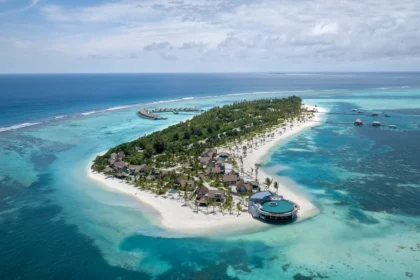
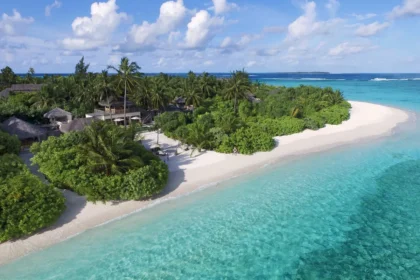
The best beaches in the Maldives are not interchangeable. Some belong to private resort islands, where a beach day is inseparable from the stay. Others are on inhabited islands, with local guesthouses, cafés, and designated areas where visitors can wear swimwear.
That distinction matters more than a universal ranking. Reethi Rah suits a high-service resort stay; Dhigurah stands out for a long local-island beach and time on the water; Veligandu is the easier pick for lagoon swimming. Maafushi combines local-island access with excursions, while Fulhadhoo favors quiet. Cocoa Island suits couples seeking reef-and-lagoon scenery in a resort setting. For broader planning, see our Maldives guide.
We weigh beach character, swimming and reef appeal, practical access, facilities context, and the essential difference between resort and local-island beaches. Read more about how we evaluate our recommendations.
Choosing a Maldives beach experience
The Maldives is defined by white coral sand, lagoons, and reefs, but the experience changes sharply from island to island. A resort beach may have loungers, organized water sports, and an easily reached house reef, but it is generally part of a resort stay rather than somewhere to visit casually. Every resort island has at least one beach, and many have a house reef close enough for shore snorkeling.
Inhabited islands work differently. They can provide a less resort-led stay, along with local restaurants and guesthouses, but swimwear rules require attention. Maafushi and Thulusdhoo are among the islands with designated tourist beaches where visitors can sunbathe in swimwear. Away from those areas, modest dress is expected and bikinis are not permitted.
Choose according to the day you want. For easy swimming, a protected-feeling lagoon and soft sand matter more than remoteness. For snorkeling, the nearby reef matters. Dhigurah and Fulhadhoo suit long walks and a quieter shoreline. Resort islands are the stronger choice for privacy and service, with one necessary limitation: the beach comes with the resort booking.
Best Beaches in the Maldives at a glance: which one fits your trip?
| Beach | Beach type | Strongest use | Snorkeling appeal | Access character | Principal trade-off |
|---|---|---|---|---|---|
| Reethi Rah | Resort island | High-service beach days and seclusion | Reef nearby | Resort stay | Not a casual public-beach stop |
| Dhigurah | Inhabited island | Long beach and marine excursions | Strong, with reef snorkeling and whale-shark trips | Longer ferry journey from Malé | Less resort polish |
| Veligandu Island Beach | Resort island | Easy lagoon swimming | Nearby reef | Resort stay | No public-beach base |
| Bikini Beach, Maafushi | Designated tourist beach on an inhabited island | Local-island stay, swimming, and excursions | Available through island activities | Inhabited Maafushi | More developed, less secluded |
| Fulhadhoo Beach | Inhabited island | Quiet and a long white-sand shore | Not the main reason to choose it | Boat or seaplane planning required | Remoteness limits convenience |
| Cocoa Island | Resort island | Romantic lagoon-and-reef scenery | Marine life around the resort | Resort speedboat transfer | Resort dependent |
Reethi Rah, polished resort seclusion
Reethi Rah in North Malé Atoll is not a public beach with a single access point. It is a resort island with 12 beaches, giving it an advantage over smaller islands where the shoreline experience is more limited. White sand, coral reef, and resort service shape the beach day, rather than the rhythms of an inhabited island.
It suits travelers who want the beach experience contained and managed: time on the sand, water sports arranged through the property, and no need to seek out restaurants or facilities elsewhere. TravelOnline describes complimentary water sports for guests, while other coverage emphasizes the island’s scenery and reef. This is a high-service proposition first, and a beach destination second.
Reethi Rah is not a casual stop for travelers staying elsewhere in the Maldives, nor does it suit those seeking local-island culture or a low-key guesthouse stay. Its exclusivity is part of the appeal, but it narrows who it suits. For a fuller comparison, see the best resorts in the Maldives.
Access: Reethi Rah is a resort-island beach. Confirm current transfer arrangements and visitor access directly with the resort before booking.
Dhigurah, the local-island pick for length and marine life
Dhigurah in South Ari Atoll is the strongest local-island option for travelers who want a substantial beach alongside time in the water. Its long, narrow stretch of fine white sand creates a sense of space that many smaller local islands cannot match. At the far end, a sandbar extends toward the sea, making Dhigurah a proper beach base rather than simply an island with a usable swimming area.
The setting is deliberately low-key, with a handful of hotels and cafés instead of resort-island polish. Nearby reefs support snorkeling and diving, and South Ari Atoll is associated with excursions that seek whale sharks. Sightings and sea conditions cannot be assumed, so whale-shark trips are an opportunity, not a guarantee.
For a long white-sand shore and a more restrained island setting, Dhigurah is a better fit than Maafushi. The trade-off is travel time. It asks more of an itinerary, but rewards travelers staying long enough to make the journey feel proportionate. For help weighing local islands against resort islands, read where to stay in the Maldives.
Access: The ferry journey from Malé has been reported at around four hours. Check current schedules before committing to arrival or departure connections.
Veligandu Island Beach, easy lagoon swimming
Veligandu Island Beach is the straightforward swimming pick. Soft white sand and clear lagoon water suit travelers who want to get into the sea without making snorkeling, diving, or an excursion the entire point of the day. The water is described as warm and shallow, a meaningful advantage for families with younger children and less confident swimmers.
A reef close to shore gives Veligandu more depth than a simple lounging beach. Snorkeling is available nearby, but the central reason to choose it is the easy rhythm of sand, lagoon, and swimming. The appeal is convenience once on the island, not the longest shoreline or the greatest sense of isolation.
Facilities and water sports belong to the resort context, not the beach in general. Veligandu is serene and simple after arrival, but it does not function as a public beach base. Travelers seeking cafés, local dining, or an inhabited-island stay should look to Dhigurah or Maafushi.
Access: Veligandu is a resort-island beach. Do not assume a public day-visit route; confirm the current resort transfer arrangement before booking.
Bikini Beach, Maafushi, local-island access and excursions
Bikini Beach on Maafushi is the practical local-island pick for travelers who want swimming, local accommodation, and excursion access without committing to a private resort island. The beach has soft white sand and clear blue water, and its designated tourist status makes it one of the places in the Maldives where visitors can wear a bikini in public.
That designation matters. On inhabited islands, swimwear rules apply outside tourist beach areas, so modest dress is required elsewhere. Bikini Beach is the appropriate place for swimming and sunbathing in swimwear; this does not extend across Maafushi or to other local islands.
More developed and active than Fulhadhoo or Dhigurah, Maafushi works well for travelers who want a social local-island base and snorkeling or diving activities. It is less convincing for anyone seeking the absorbed quiet of a remote shore, and it does not reproduce the privacy or service structure of a resort island. Still, it is a better fit for an inexpensive beach day with local-island context than a resort beach requiring a full stay. For ideas beyond the sand, see the best things to do in the Maldives.
Access: Bikini Beach is on inhabited Maafushi. Confirm current boat routes and transfer times before travel, as this shortlist does not treat it as a resort transfer destination.
Fulhadhoo Beach, the quietest shoreline on the shortlist
Fulhadhoo Beach in Baa Atoll suits travelers who value a long, remote-feeling stretch of sand over resort facilities. In an island nation of small landmasses, its nearly one-kilometer beach is unusually substantial. Fine white sand, open space, and a location away from the main resort circuits give it a different character from the polished resort picks on this list.
Fulhadhoo is inhabited, not an empty private island. Local restaurants are part of the stay, making the island more grounded than a resort enclave. Yet quiet remains the main appeal. This beach is better for walking, reading, and unhurried days by the water than for travelers seeking a programmed schedule of resort activities.
Its remoteness is a feature, not an inconvenience to explain away. Travelers wanting the shortest possible transfer should choose a nearer island. Those prepared to plan around the journey will find that Fulhadhoo’s distance protects the quality that sets it apart here: a lengthy shore with fewer competing demands.
Access: Travel from Malé has been reported at around two hours by boat or about 20 minutes by seaplane. Timings depend on current operations, so confirm them before booking flights or accommodation.
Cocoa Island, a romantic resort beach for reef-and-lagoon scenery
Cocoa Island in South Malé Atoll is best understood as a collection of resort beaches around the island, not one independently accessible public strand. Its strength lies in the relationship between beach, lagoon, and surrounding marine life. Couples seeking a quiet setting, high-end service, and time in the water will find it most relevant.
The island is repeatedly positioned for romance and relaxation, making most sense as a honeymoon or couples’ option rather than a general-purpose beach day. Fish and stingrays are described around the resort’s overwater accommodation, while the shoreline and lagoon provide the visual focus. The beach is part of a self-contained resort environment, with little relevance for travelers seeking local cafés, island life, or an inexpensive afternoon swim.
The choice between Cocoa Island and Reethi Rah comes down to scale. Reethi Rah has multiple beaches and a broader resort-beach proposition. Cocoa Island is the more concentrated couples’ option, with reef-and-lagoon scenery doing much of the work. Travelers planning a honeymoon should also see the best Maldives resorts for honeymoons.
Access: Cocoa Island has been reported as around 40 minutes by speedboat from Malé International Airport. Verify the resort’s current transfer arrangement before booking.
What to skip
Hulhumalé Beach: Useful for an urban-access beach stop near Malé Airport, but not for a dedicated Maldives beach holiday. It is a public beach where bikinis are not welcome, so it lacks the freedom of a designated tourist beach and the seclusion of a resort island.
Vaadhoo’s Glowing Beach: Its appeal is bioluminescence at night, created by microscopic organisms in the water. This is a nighttime phenomenon, not a dependable recommendation for swimming or a complete daytime beach experience.
Thulusdhoo Bikini Beach: Thulusdhoo has its own separately named Bikini Beach and is associated with the local surf scene. It should not be folded into the Maafushi recommendation simply because both beaches share the same name.