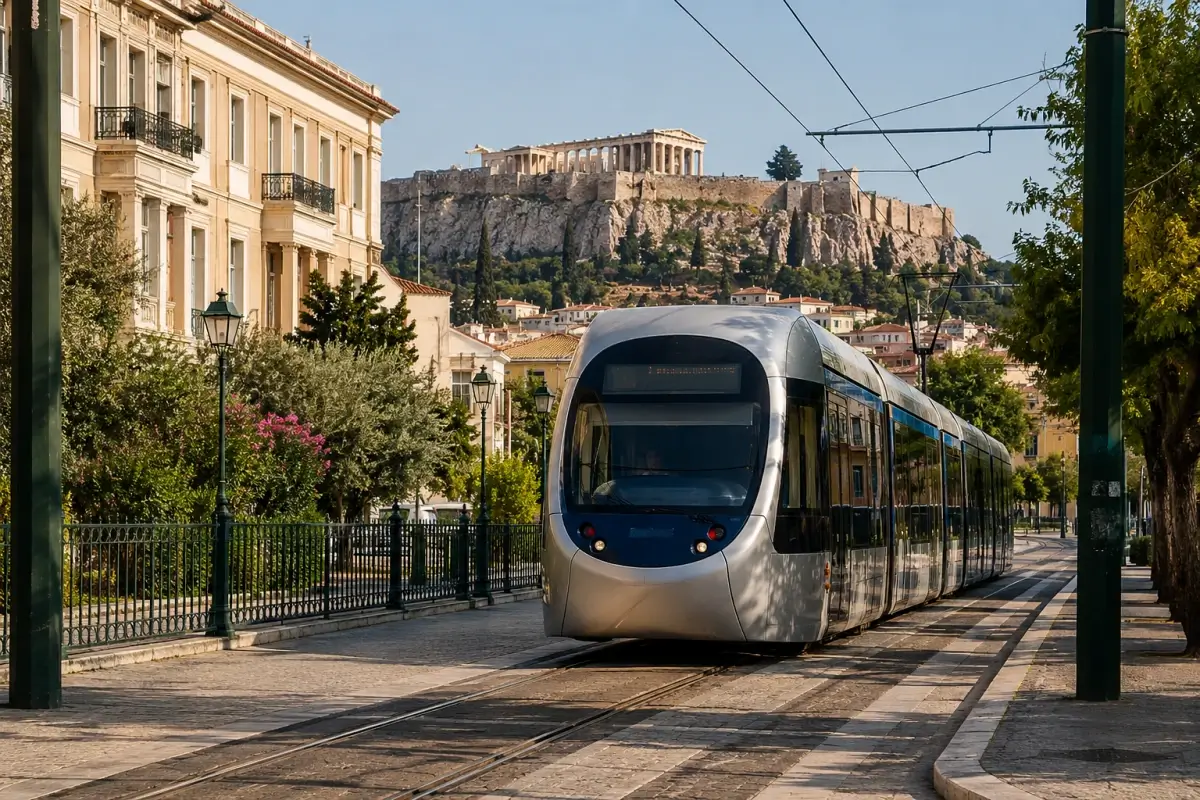
For a central Athens stay, skip the car. The formula is straightforward: walk between the Acropolis, Plaka, Monastiraki, Syntagma, and the surrounding historic core; take the Metro when the distance no longer makes sense on foot; use a taxi when luggage, late hours, or an awkward connection changes the calculation.
Athens is not uniformly easy to cover on foot, and public transport is not uniformly effortless. Stairs, slopes, uneven sidewalks, and pavement clutter can make a short route feel longer than it appears. Even so, most visitors staying centrally will find that a rental car brings traffic and parking problems without improving the sightseeing plan.
Walk central Athens before reaching for transport
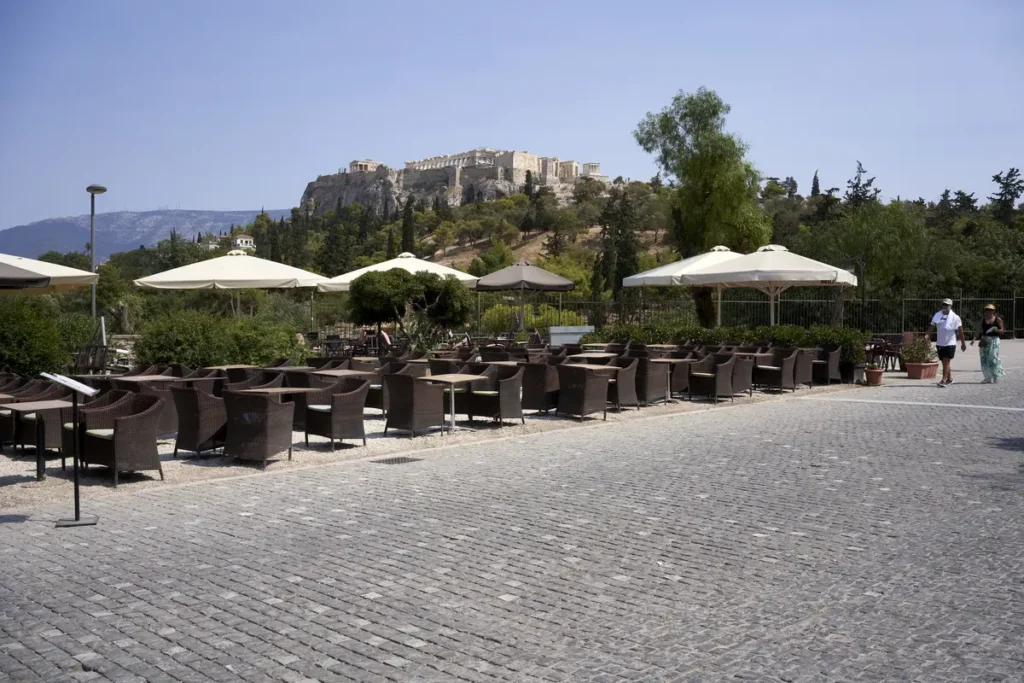
The principal historic sights sit close enough together for walking to be the default. The Acropolis area, Plaka, Monastiraki, Ancient Agora, Syntagma, and the central shopping streets form a compact sightseeing zone, with hotels, restaurants, and museums spread around it. Here, a well-located hotel matters more than a rental car. Start with where to stay in Athens when choosing a base.
Walking works best when the day stays within one neighborhood. It becomes less appealing when the itinerary combines the historic center with a museum farther north, dinner in a distant neighborhood, or a hotel return during the hottest part of the afternoon. In those cases, the Metro saves energy without making the day more complicated.
Map distance is not the whole calculation. Central Athens includes gradients and stairs, while bins, parked scooters, and other obstacles can narrow sidewalks. Rolling luggage makes the pavement a more serious concern. On arrival day or when changing hotels, a taxi is often the sensible option, even when the hotel looks close to a station.
Arriving from Athens airport, Piraeus, or Larissa Station

For a central stay, Athens International Airport has three practical options: Metro Line 3, an airport express bus, or a taxi. Public transport suits a confident daytime arrival with manageable luggage and a hotel near a useful station. For late arrivals, substantial bags, or accommodation with a difficult final walk, take a taxi.
Line 3 links the airport with central Athens and serves Syntagma. It is the clearest rail option when running normally, but schedules and evening works can change. Check the current timetable before relying on it, particularly after late flights. Airport express buses run around the clock and connect the airport with central Athens, Piraeus, and the intercity bus terminal. They are the fallback when the Metro is not operating, although traffic affects journey times.
Airport services have separate fares from regular city transport. Rather than memorizing prices months ahead, confirm current fares and service patterns through OASA or the relevant operator shortly before travel.
Piraeus requires a separate calculation. Ferry passengers can take Line 1, the overground railway between Piraeus and Kifisia, into the center and onward across the network. If bags are heavy or the hotel approach is inconvenient, take a taxi. Port arrivals do not all work alike: Piraeus has different waterfront areas, and the walk from a terminal to a station can matter.
Larissa Station, Athens’s main hub for longer-distance train travel, connects directly to Metro Line 2. From there, the network is straightforward. The deciding factor is usually luggage: use the Metro for a simple central connection, or take a taxi when getting from platform to hotel means too many stairs, changes, or blocks on foot.
Things to know: Airport transport, final trains, and temporary rail works can change. Check the timetable for the precise arrival date and time instead of relying on a general operating-hours summary.
Use the Athens Metro for longer cross-city journeys
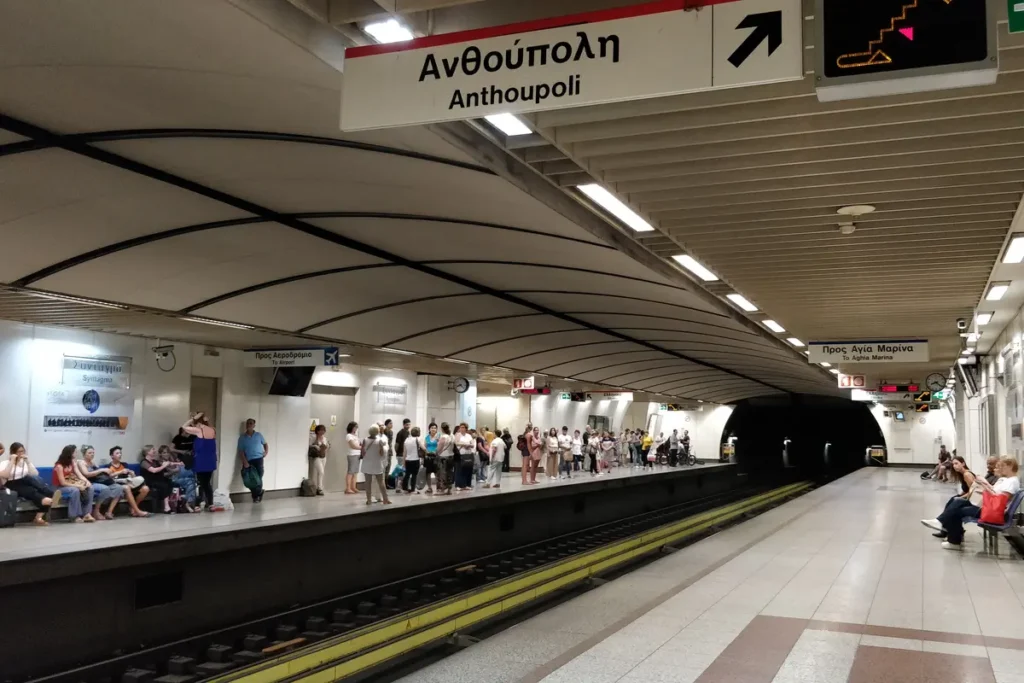
The Metro is the city transport system worth planning around. Its three lines connect with buses, trams, and suburban rail, while avoiding traffic that can slow surface journeys through the center. At peak periods, trains can run every five to six minutes, though waits and operating patterns should always be checked for the specific day.
- Line 1 is the overground line between Piraeus and Kifisia. It meets Lines 2 and 3 at Attiki, Omonia, and Monastiraki, making it useful for ferry connections and journeys through central Athens.
- Line 2 serves key central stops including Acropoli, Syntagma, and Larissa Station. Use it when the Acropolis area and the central rail station belong in the same journey.
- Line 3 serves Syntagma and links central Athens with Athens International Airport. Temporary closures or altered evening service can affect its route, so check before going to the station.
There is no need to ride the Metro constantly. Walk between clustered sights, then take it for a cross-city move, a hotel return, or a journey that would otherwise mean a long stretch through city streets. Acropoli station is useful for the Acropolis and nearby Plaka; Syntagma for the Parliament area and connections; Monastiraki for an interchange near the Agora and historic center.
First-time users should find navigation comparatively easy. Stations, announcements, and ticket machines use English alongside Greek, and the machines have language options. Check the train direction before passing through the gates: the displayed destination is the line’s final station, so knowing the direction prevents an unnecessary reversal.
Ordinary Metro service generally runs from early morning to around midnight, with later Friday service and all-night Saturday service on Lines 2 and 3. Works and special schedules can alter those hours. After dinner or an evening event, the final train matters more than the general operating window.
Keep valuables secure in stations and on crowded trains. Pickpocket awareness is a routine part of city travel, not a reason to avoid the Metro, but luggage and distracted arrivals are obvious times to be more alert.
Choose buses for coverage and the tram for the coast
Buses and trolleybuses cover gaps beyond the Metro. The network reaches far more neighborhoods than three rail lines can, and it can be the right answer for a destination without a convenient station. It is not how we would structure a tightly timed sightseeing day: routes can be harder to interpret, stops difficult to identify, and buses delayed or crowded.
Check OASA’s route planner or live timetable tools before depending on a bus. Real-time displays and onboard stop information can help, but buses remain more dependent on traffic and street conditions than the Metro. For a direct neighborhood journey, they may be the most practical option. For a first cross-town trip with a reservation or timed entry at stake, the Metro is usually cleaner if it reaches the destination.
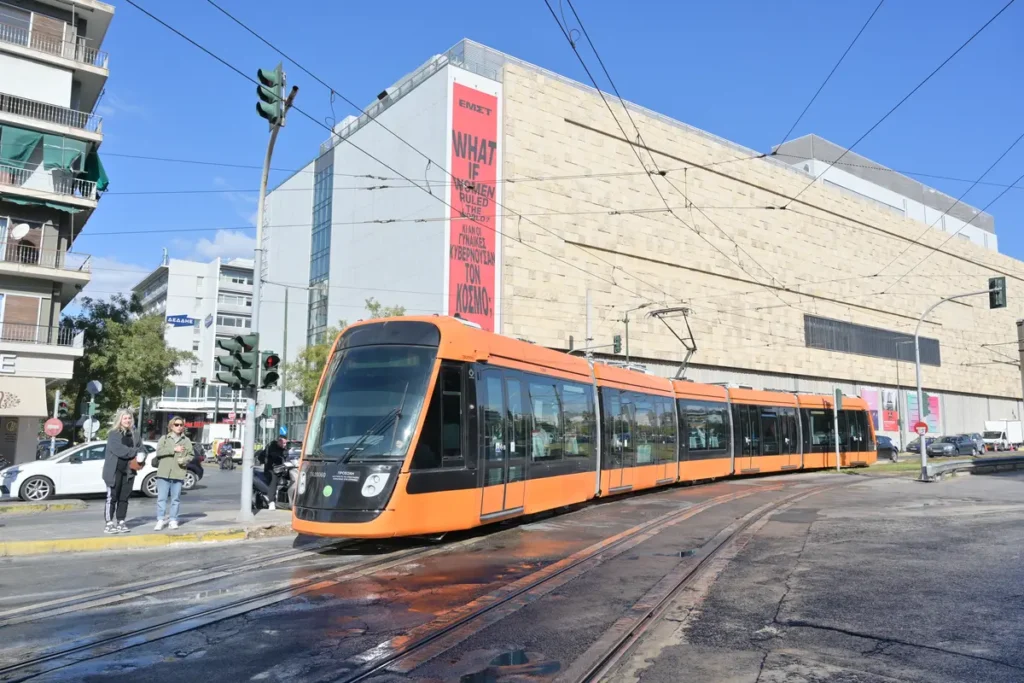
The tram has a narrower purpose. Slower than the Metro, it connects central Athens with Faliro, Piraeus, Voula, and other coastal suburbs. T6 runs between Syntagma and Faliro, while T7 runs between Voula and Piraeus, with both meeting at Pikrodafni. The tram also connects with rail at several points, including Syntagma, Syngrou/Fix, Neos Kosmos, and SEF.
Use it for the coast, not for routine movement between central sights. A journey from Syntagma to the final seaside stops at Voula or Piraeus takes about an hour, making the tram a scenic but unhurried option. For coastal planning, including beaches accessible from the city, see the best beaches in Athens.
Most bus and trolleybus routes run from early morning to around midnight, with selected night services and special Saturday patterns. The tram also runs late, with all-night Saturday service. Neither is a guarantee for a particular route, so check the live schedule before setting out late.
Take a taxi when luggage, late hours, or connections change the calculation

Taxis are the practical exception to the walk-and-Metro rule. Take one when arriving with luggage, traveling after the useful rail window, heading to an address that needs a bus plus a long walk, or facing a chain of connections that adds friction without saving much time.
Street taxis are common in central areas, though finding one is not always seamless. When timing matters, a reputable taxi rank or an app is more controlled. App booking can provide fare visibility and reduce curbside logistical discussion, but traffic, demand, and driver availability still vary.
Uber operates in Athens through licensed taxis, not a conventional private rideshare model. FreeNow also connects passengers with licensed taxi drivers. Both are booking channels, not distinct transport modes with a fundamentally different city-driving experience.
Airport taxi assumptions do not apply to ordinary city trips. Airport journeys may have specific rules and published fixed fares, while regular urban taxi journeys are metered and can include time, distance, baggage, or pickup-related charges. For an ordinary ride, use the app estimate as a guide, confirm the destination, and allow for traffic instead of expecting a fixed journey time.
Buy the right Athens public transport ticket
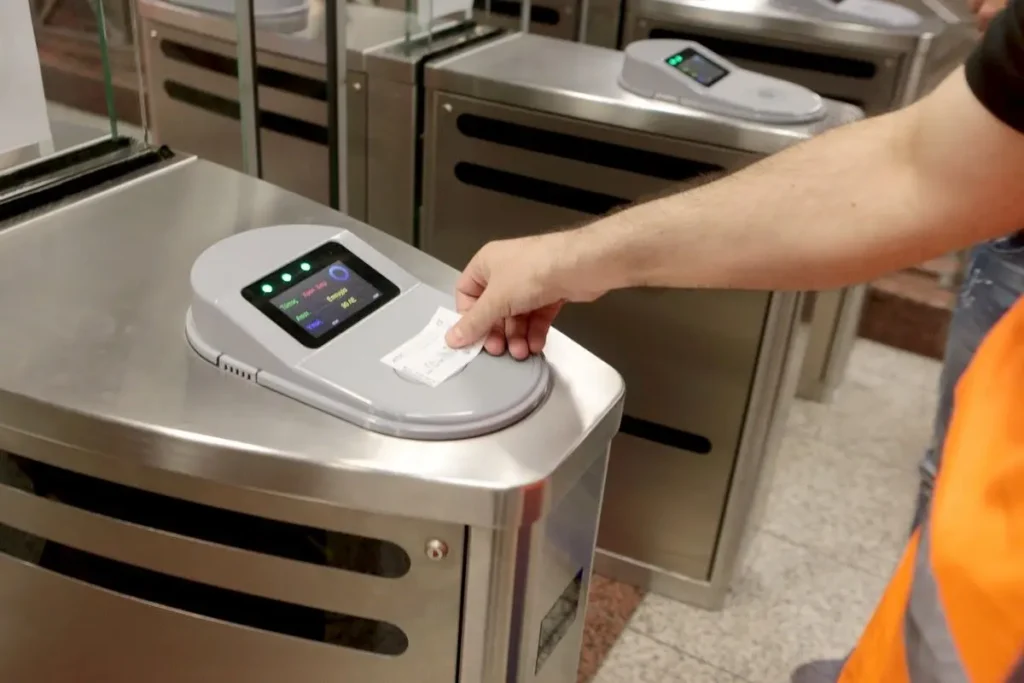
Athens uses an integrated ticket system across the Metro, buses, trolleybuses, and trams. Airport services are separate, so do not assume a standard city ticket covers an airport journey.
Traditional Ath.ena tickets and cards are available at Metro and tram stations. They remain sensible for travelers who need a specific pass or reduced fare. For occasional trips, Tap2Ride permits contactless payment at Metro gates and on buses, trams, and trolleybuses with a Visa or Mastercard, including a supported digital card through Apple Pay or Google Pay.
The essential Tap2Ride rule is to use the same physical card or device for every part of a journey, including transfers. Inspectors verify the exact card or device used to tap. A second card, or a phone version of a card used physically earlier, can be treated as a separate payment method.
| Ticket type | Current reference price | Useful for |
|---|---|---|
| Standard ticket | €1.20 | Up to 90 minutes on regular city transport, excluding airport services |
| Day pass or daily Tap2Ride cap | €4.10 | Heavy use within one day, excluding airport services |
| Five-day ticket | €8.20 | Several days of regular city travel |
| Three-day tourist ticket | €20 | Unlimited city travel plus one airport round trip, under the published terms |
These fares should still be checked before travel, particularly if the trip is months away. Airport Metro and express-bus fares sit outside the standard ticket structure.
Validate a traditional ticket as required and keep it for the journey. Tap2Ride produces no paper receipt, so the card or device used to pay is what inspectors scan.
Do not rent a car for a central Athens stay
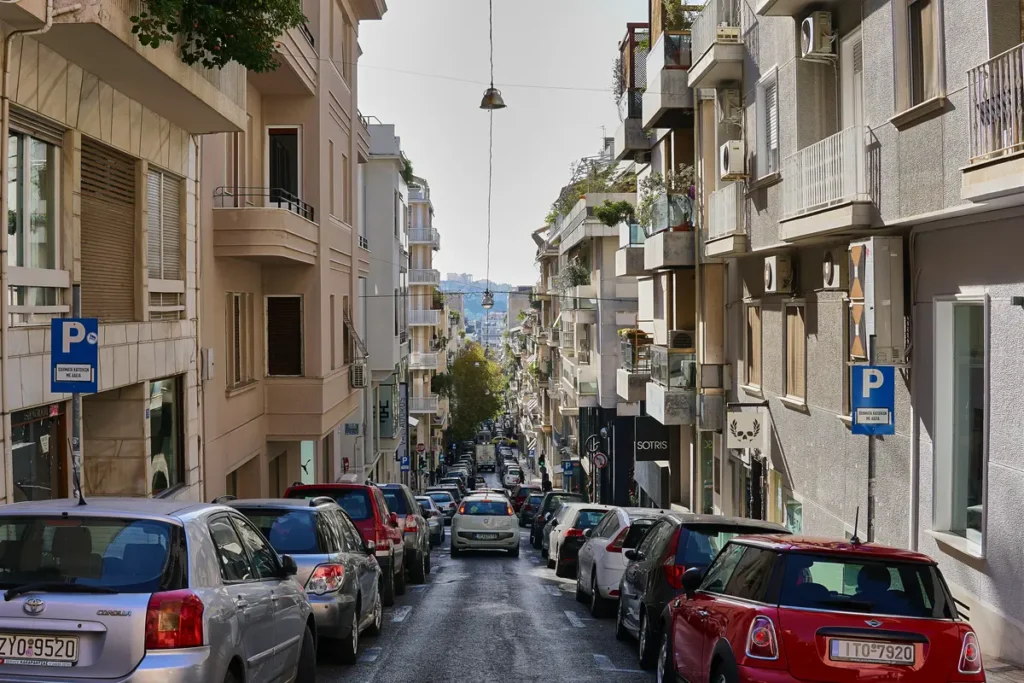
Our answer is firm: do not rent a car for central Athens sightseeing. Heavy traffic, difficult parking, and winding downtown streets erase the supposed convenience. The historic core is best handled on foot, with the Metro covering longer urban journeys.
A car also creates a daily parking problem in neighborhoods where the benefit of staying central is being able to leave the hotel on foot. Having a vehicle does not naturally expand the core itinerary. More often, it replaces a short Metro ride with congestion, a search for a space, and a walk from wherever parking is available.
The exception is a trip extending well beyond Athens, when destinations outside convenient city transport coverage are the real purpose. Rent for that out-of-town portion instead of carrying a car through a central city stay. For Athens itself, no car is the stronger setup.
The Athens transport plan we would actually use
Begin in the historic center on foot. Use the Metro for longer moves, airport rail connections when the timetable works, and travel between central districts that would otherwise drain time and energy. Bring buses in for neighborhood coverage beyond rail stations, but check the route live instead of treating a printed plan as fixed. Save the tram for a coastal day. Take a taxi, or book through Uber Taxi or FreeNow, when luggage, late hours, or a difficult final connection makes public transport the less elegant option.
The honest limitations are operational. Service changes can interrupt a line, the final train can arrive earlier than expected, buses can be crowded or delayed, and sidewalks are not always kind to luggage. Keep valuables secure on busy public transport, especially in stations and trains. Do not plan a late return around a general claim that a mode runs “until midnight”; check the specific service.
OASA is the first place to confirm tickets, timetables, and disruptions. Citymapper or a comparable live route-planning app can make transfers and bus stops easier to decode, though live tools depend on current service information. For a broader sense of the city before choosing a hotel base or daily route, begin with the Athens guide.
Credits for media displayed in this article
- https://commons.wikimedia.org/wiki/File:Thiseio_Square_on_August_19,_2022.jpg
- https://commons.wikimedia.org/wiki/File:Athens_airport_train_station.jpg
- https://commons.wikimedia.org/wiki/File:Syntagma_metro_station,_platform_of_Line_3_(3).jpg
- https://commons.wikimedia.org/wiki/File:Alstom_CItadis_Tram_in_Athens_(2024).jpg
- https://commons.wikimedia.org/wiki/File:Greek_Parliament_House_in_Athens.jpg
- https://www.tovima.com/society/athens-public-transport-enters-a-new-era-with-contactless-payments/
- https://commons.wikimedia.org/wiki/File:View_Voukourestiou_Street_in_the_neighbourhood_of_Kolonaki_and_in_the_distance_the_Acropolis.jpg