For a first visit to Athens, we would book Plaka. It is the simplest base for the Acropolis and the city’s major ancient sites, placing the historic center around you instead of making daily transit planning necessary. Thiseio is the stronger alternative for travelers who want nearly the same sightseeing access with a less intense street scene. For a longer stay shaped by cafés, bakeries, and ordinary neighborhood life, Koukaki makes more sense.
The choice comes down to postcard atmosphere or a calmer version of central Athens. Do not book by neighborhood name alone: hills, cobbled lanes, pedestrian-only streets, major avenues, and late-night activity can alter the experience within a few blocks. For a broader introduction, see our Athens guide.
Where to stay in Athens at a glance
| Area | Best for | Walkability | Atmosphere | Main drawback |
|---|---|---|---|---|
| Plaka | First visits, families, and couples | Excellent for major sights | Historic, pedestrian-friendly, visitor-focused | Crowds, tourist-oriented dining, and small rooms |
| Thiseio | Calmer central stays | Excellent around the Ancient Agora and Monastiraki | Relaxed, residential in parts | Limited hotel supply and uneven terrain |
| Koukaki | Repeat visitors and stays of three nights or more | Strong for the Acropolis Museum, less immediate for Syntagma | Residential, café-led, and less souvenir-focused | More walking to the northern historic center |
| Monastiraki | Short stays, rooftops, shopping, and transport | Excellent | Active and highly central | Street and nightlife noise |
| Syntagma | Transport-led one- or two-night stays | Strong for Plaka and central shopping | Functional, grand-hotel central | Less neighborhood character |
| Psiri | Late dinners, bars, and live music | Excellent | Younger, creative, and nightlife-led | A poor fit for light sleepers |
| Kolonaki | Longer, polished city stays | Good, but less efficient for ancient sights | Elegant, residential, and museum-oriented | Hills and stairs near Lycabettus |
These recommendations weigh sightseeing access, real walking conditions, noise, hills, atmosphere, and the position of an individual hotel. Read more about how we evaluate destinations and stays.
Plaka: the easiest first Athens base
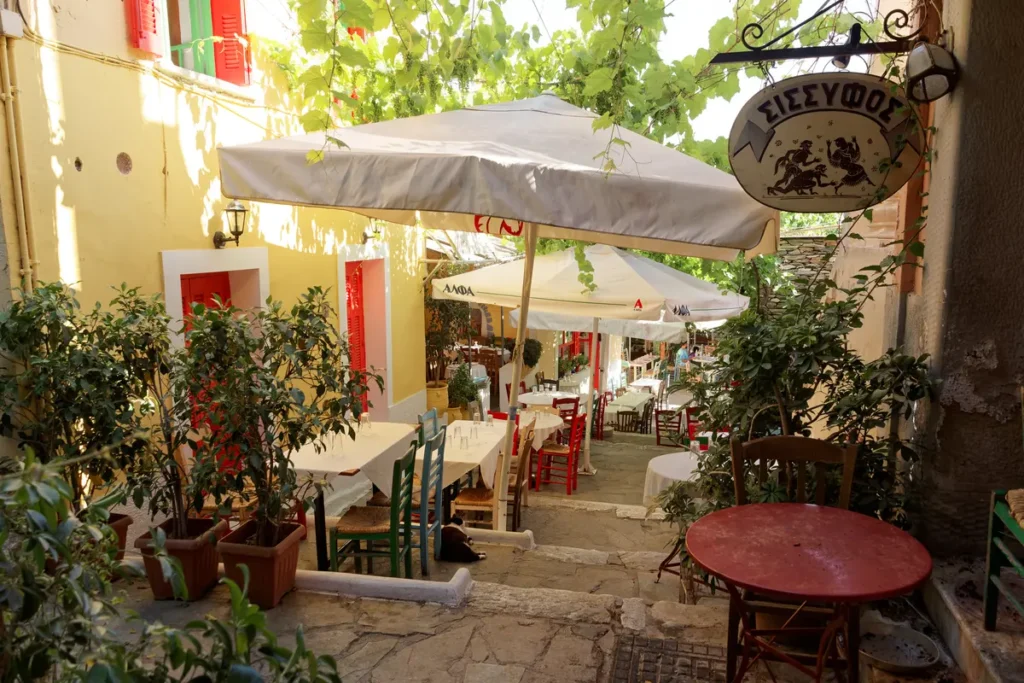
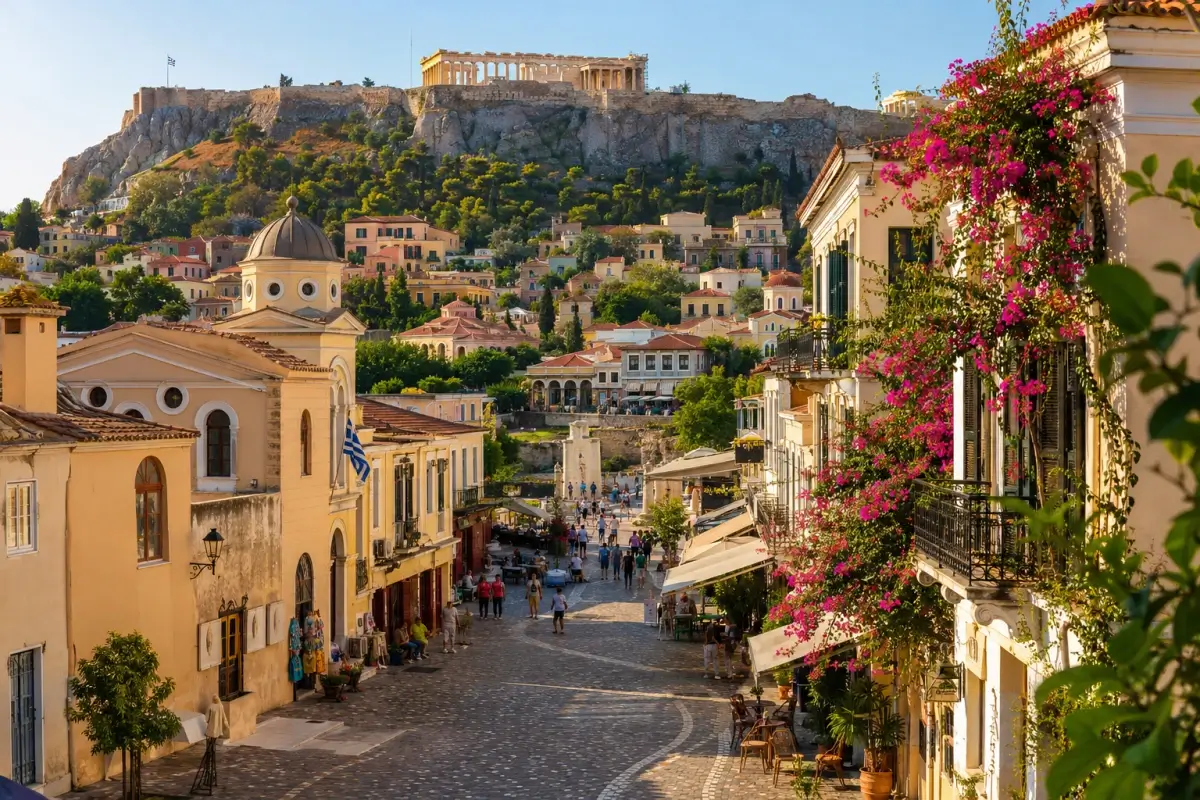
Plaka is the best area in Athens for most first-time visitors. Below the Acropolis, it puts the Acropolis, Ancient Agora, Roman Agora, Acropolis Museum, Syntagma, and Monastiraki within walking reach from much of the neighborhood. Pedestrian lanes, neoclassical buildings, and small squares make the appeal immediate: Athens’s most recognizable historic circuit begins outside the hotel door.
On a two- or three-night trip, that convenience matters more than finding the most local-feeling address. Families can keep meals and sightseeing close together, couples have an atmospheric setting for an evening walk, and short-stay visitors avoid spending valuable time crossing the city. Plaka is where we would place a visitor who wants Athens to feel immediately legible.
Its streets do not all work equally well. Lower Plaka is easier with luggage and for gentler walking. Upper Plaka and Anafiotika, the whitewashed pocket beneath the Acropolis, bring slopes, narrow lanes, and steps. A pedestrian address may also require a short walk from the taxi drop-off. Those details should shape the exact booking, not rule out Plaka.
The compromise is straightforward: Plaka is crowded, some prominent lanes lean heavily toward tourist dining, and rooms can be modest for the rate. It is also less convincing for travelers who want late bars outside the door. Consider Electra Palace for a classic Plaka location with a rooftop pool, Ava Hotel & Suites for larger suites with kitchenettes near the Acropolis Museum, A77 Suites for boutique accommodation, or Phaedra for a simple central base. For a property-led decision, see the best hotels in Athens.
Thiseio: central sightseeing without the full tourist crush
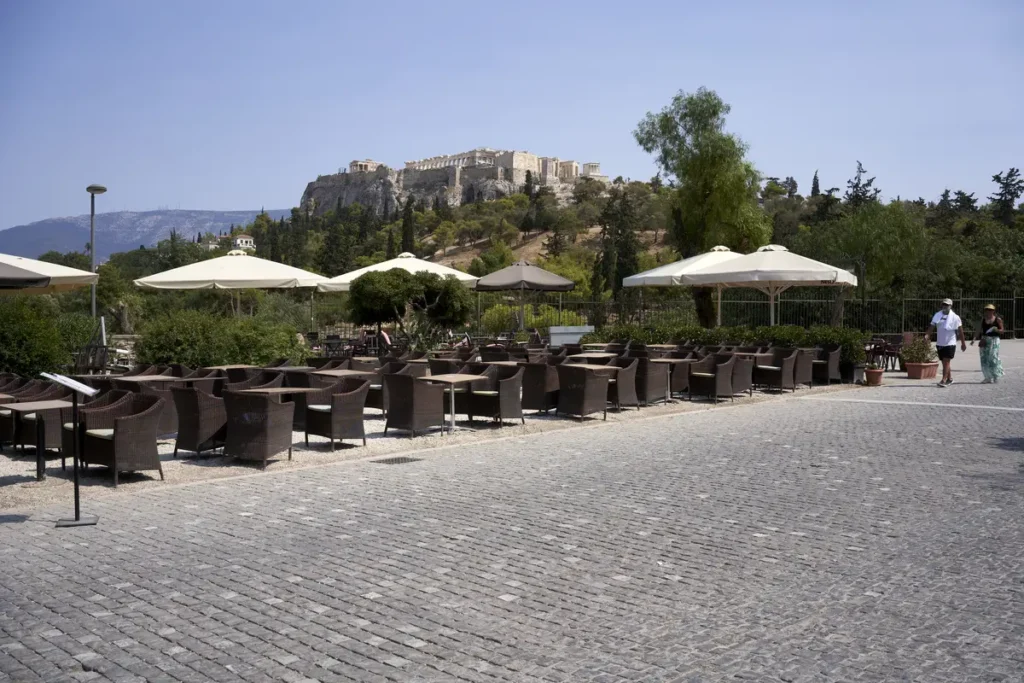
For a first-timer who wants to remain central without having Plaka’s intensity frame every day, Thiseio is our alternative. West of Monastiraki and beside the Ancient Agora, it keeps major sites close while shifting the feel toward pedestrian routes, restaurants, and more residential streets.
The Ancient Agora and Temple of Hephaestus are especially close, while Monastiraki, Plaka, and Psiri remain easy to reach on foot. Metro access adds practical value without becoming the main reason to stay. It suits couples, repeat visitors, and short-stay travelers who want a less visitor-dominated base without giving up the historic center.
Do not mistake Thiseio for uniformly quiet, flat, or free of visitors. Pedestrian corridors near major sights draw crowds, and access changes as the neighborhood rises toward nearby hills. The more residential western and southern stretches can feel calmer, but the immediate street still matters. Hotel supply is relatively limited, so Thiseio works best when a preferred property is available, not when endless choice is the priority.
Hotel Thissio is a compact option associated with Acropolis-facing balconies. Acropolis Vision sits near the Ancient Agora and a metro station, while Greece U Around Suites suits travelers who prefer serviced apartments with kitchens. Thiseio does not remove Athens’s crowds entirely, but it gives a central stay more breathing room.
Koukaki: the best balance of local life and the Acropolis
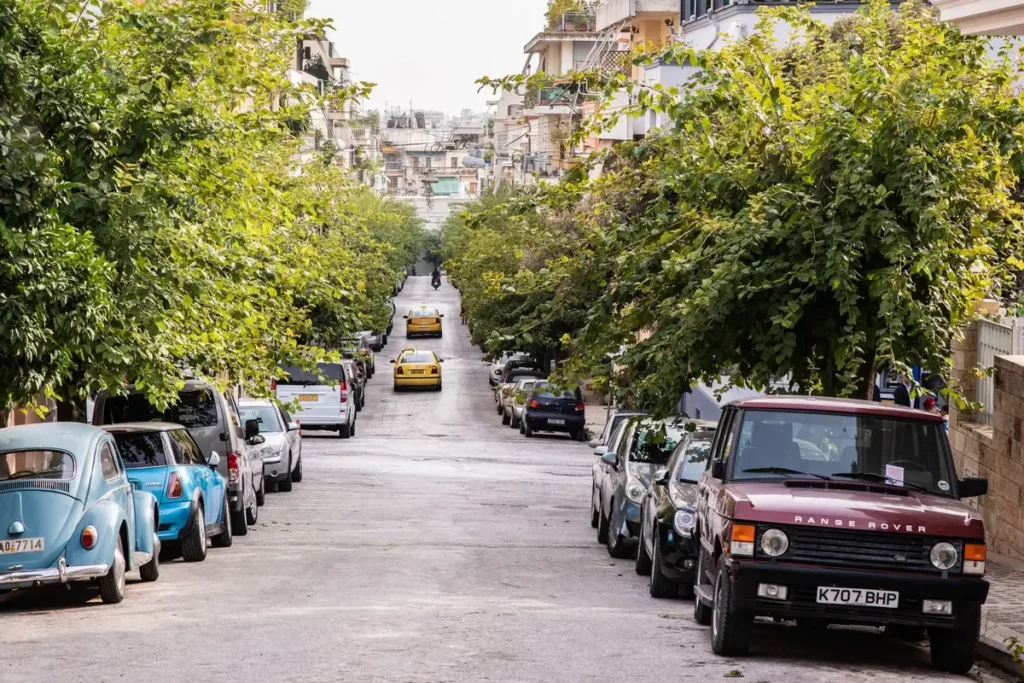
Koukaki suits returning visitors, families staying longer, and anyone who wants Athens to feel less like a sightseeing district after dinner. South and southeast of the Acropolis, it remains close to the Acropolis Museum and major monuments while feeling more residential than Plaka or Monastiraki.
The appeal is its daily rhythm: cafés, bakeries, casual restaurants, and streets that function as a neighborhood instead of a continuous strip of souvenir shops. The walk to the Acropolis Museum is straightforward, and the historic center remains accessible on foot. Monastiraki and Syntagma, however, are less immediate than from Plaka, especially after a full day of walking.
This is the best balance of local life and centrality, though it will not suit every itinerary. Visitors with one night who want rooftop bars, shopping, and a major metro hub nearby should book Monastiraki or Syntagma. Some quieter Koukaki streets can feel subdued in the evening, and luxury hotel choice is narrower than in the historic core.
Divani Palace Acropolis and Herodion Hotel are established options near the Acropolis Museum area, while Hotel Syngrou Fix is a practical hotel option in Koukaki. For three or more nights, we would choose Koukaki over Plaka unless historic atmosphere is the central reason for coming.
Monastiraki: the most connected, energetic central base
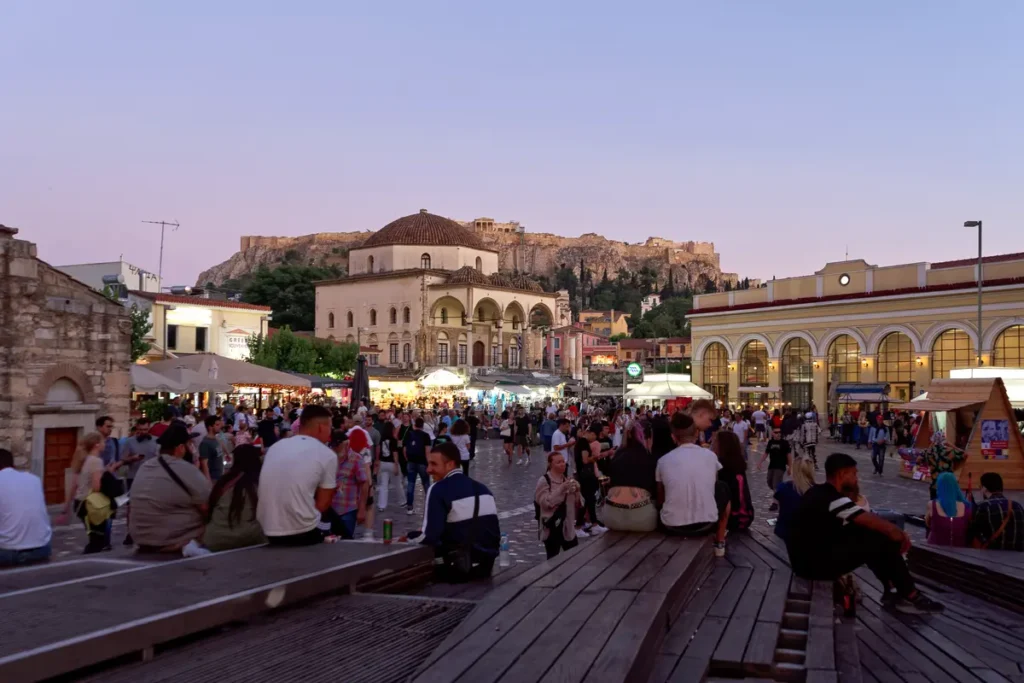
Monastiraki is for travelers who want Athens at full volume. Between Plaka, Psiri, Thiseio, and the Ancient Agora, it is one of the most efficient bases for central sightseeing, shopping, rooftop bars, and late evenings. Its position is difficult to fault for a short city break.
It is also among the more useful transport choices in the center. Metro links make airport and Piraeus connections practical, while the surrounding streets keep much of a first itinerary walkable. The Athens transportation guide explains the context in more detail.
The weakness is just as clear. Public spaces are busy, and the experience can change sharply between a side street and an address near the square, a rooftop venue, or a late bar. Light sleepers should check the exact street, recent guest comments, room orientation, and whether rooms face a courtyard or an active road. A neighborhood label is not enough here.
A for Athens is the natural pointer for travelers prioritizing the square and rooftop setting; Attalos Hotel is another central choice with a rooftop Acropolis view. Choose Monastiraki for momentum and convenience, not stillness.
Psiri: the nightlife-first choice, not the sleep-first one
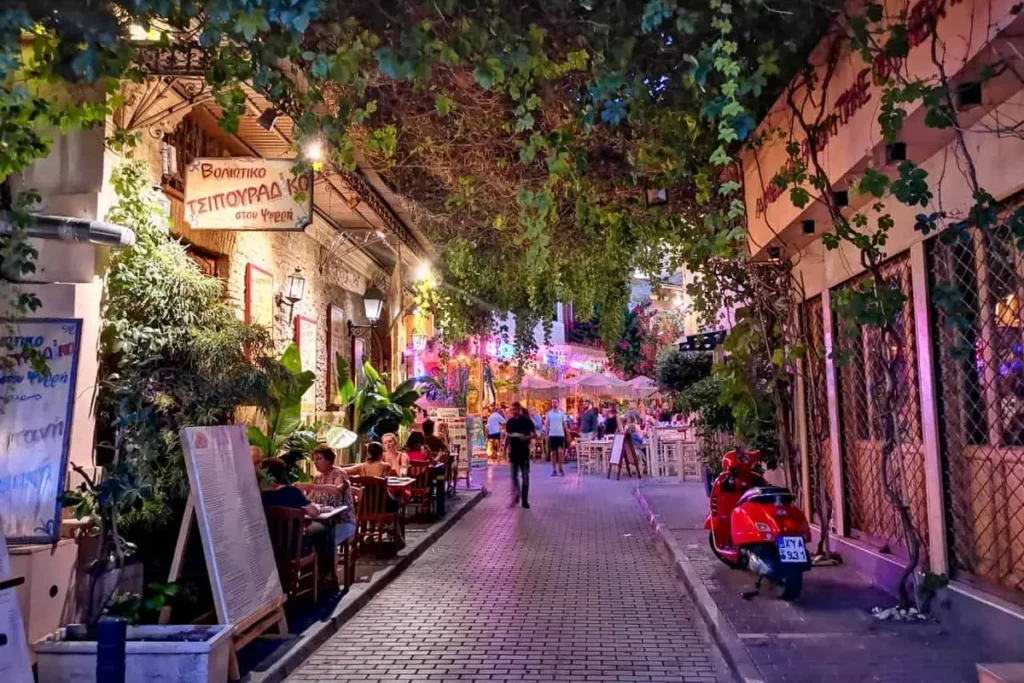
Psiri suits travelers whose Athens plans include late dinners, bars, live music, and a younger creative scene. It remains close to Monastiraki and the historic sights, so nightlife does not come at the expense of walkability.
It is not simply a less expensive substitute for Plaka, nor is it the polished choice for a family break. Late activity is both its appeal and its risk. The exact block matters, as does the character of the accommodation itself. Travelers sensitive to noise should read recent reviews closely and not assume a central street will settle early.
We would book Psiri only when evenings out are a meaningful part of the trip. For a similarly central position with stronger transport logic, move toward Monastiraki. Koukaki is the better call for a calmer base close to the Acropolis.
Syntagma: the practical short-stay and transport base
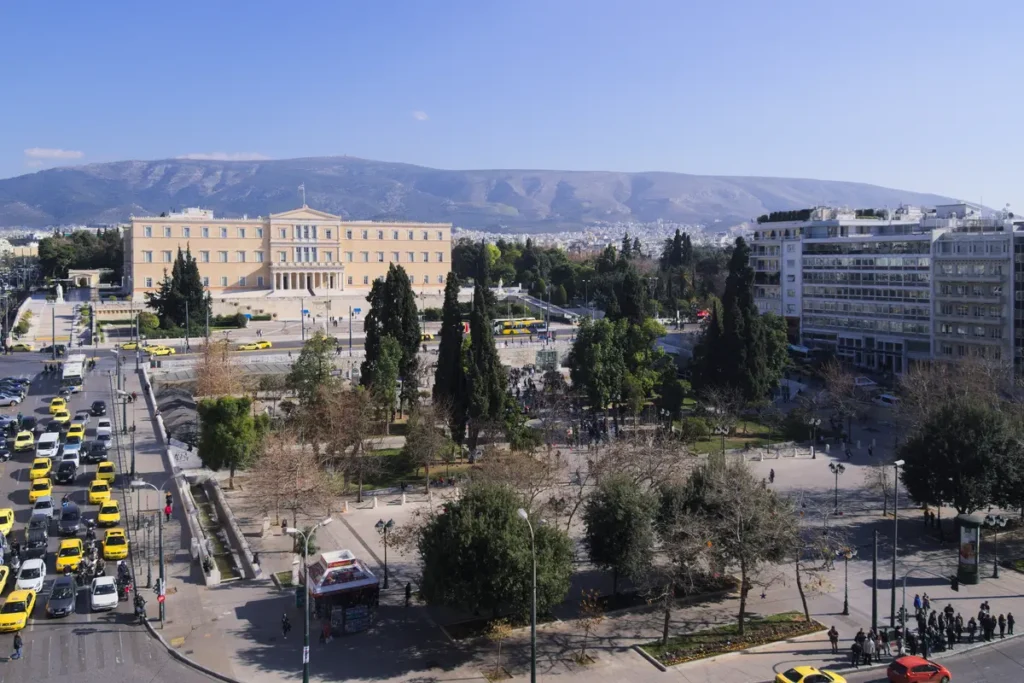
Syntagma is Athens at its most functional. It works well for one- or two-night stays and travelers who prioritize direct transport access over Plaka’s intimate lanes. The National Garden, Ermou shopping street, and Plaka are close, but the neighborhood is more about position than old-city atmosphere.
Airport bus and metro connections center on Syntagma Square, making it a strong choice for travelers arriving or departing on a schedule. It also works for visitors who expect to use taxis, prefer a more conventional hotel format, or want easy access to central shopping and museums.
Major streets can be busy, and room position matters on the avenues around the square. Syntagma feels more formal and less intimate than Plaka, Thiseio, or Koukaki. Grande Bretagne and King George are the classic luxury names on the square; InnAthens sits beside the National Garden, and The Social Athens Hotel is close to Syntagma Square. The deciding question is whether transport and hotel style matter more than neighborhood character.
Kolonaki: the polished, hillier choice for longer stays
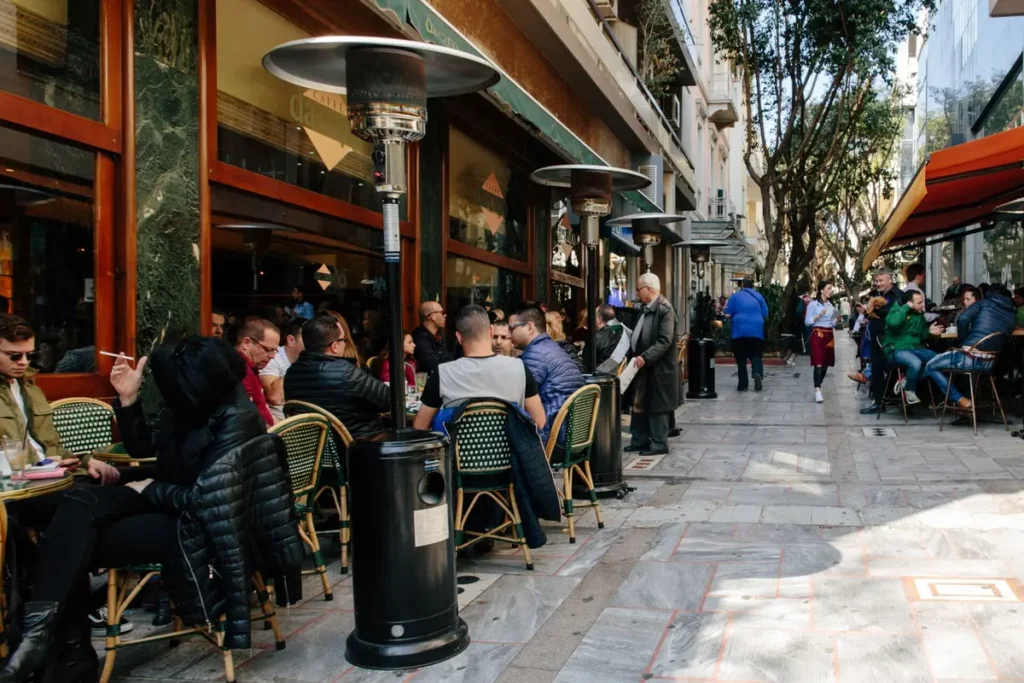
Kolonaki is the refined choice for travelers drawn to museums, boutiques, cafés, restaurants, and a more residential city address. Northeast of Plaka, on the lower slopes of Lycabettus Hill, it is near the center without forming part of the ancient-sightseeing circuit in the way Plaka, Thiseio, and Koukaki do.
We would place an affluent traveler staying three to five nights, a museum-focused visitor, or a family that values a calmer daily setting over proximity to the Acropolis here. The Museum of Cycladic Art, Byzantine Museum, Benaki Museum, National Gallery, and other cultural institutions are close by, with the National Garden to the south.
Kolonaki generally skews more upscale, but hotel category alone should not determine the choice. Terrain is the practical issue. Streets closer to Lycabettus can be steep, and some routes involve stairs, making the area less suitable for travelers with mobility concerns or those who want to walk repeatedly to the ancient sites without considering elevation.
The Modernist Athens is near the Evangelismos metro area, Oniro City is a boutique option in Kolonaki, and COCO-MAT Hotel Athens is another useful address to consider. For a first visit centered on ancient Athens, we would still choose Plaka or Thiseio. Kolonaki makes its case through the rest of the city.
Considered, but not the strongest central bases
The Athens Riviera is a resort and beach decision, not the best base for efficient city sightseeing. Search separately for the right waterfront hotel instead of treating it as a substitute for the historic center.
Piraeus makes sense for a very early ferry, a late ferry arrival, or a port-led overnight. For most visitors, it is weaker than central Athens as a sightseeing base. The same logic applies to Athens Airport: stay there for a tight connection or very early flight, not for a normal Athens stay.
Exarcheia is a viable repeat-visitor choice with cafés, bookstores, cultural institutions, and a lively local character, though it aligns less consistently with first-time sightseeing than the areas above. Mets and Petralona can work for travelers seeking a local feel, but neither materially improves on Koukaki or Thiseio for the central-versus-residential decision.
Credits for media displayed in this article
- https://commons.wikimedia.org/wiki/File:Restaurants_on_Mnisikleous_Street_in_Athens,_20240601_0917_0009.jpg
- https://commons.wikimedia.org/wiki/File:Thiseio_Square_on_August_19,_2022.jpg
- https://www.greeka.com/attica/athens/neighbourhoods/koukaki/
- https://commons.wikimedia.org/wiki/File:Monastiraki_Square,_Athens,_20240531_2052_9991.jpg
- https://worldonabudget.de/stadtteile-athen-unterkunft/
- https://commons.wikimedia.org/wiki/File:%CE%A0%CE%BB%CE%B1%CF%84%CE%B5%CE%AF%CE%B1_%CE%A3%CF%85%CE%BD%CF%84%CE%AC%CE%B3%CE%BC%CE%B1%CF%84%CE%BF%CF%82_6386.jpg
- https://www.lifo.gr/now/athens/i-anoixi-erhetai-prota-sto-kolonaki