Greece is at its best when a trip has a point of view. Ancient Athens, one serious mainland detour, and an island chosen for a particular landscape or activity will usually yield more than a frantic sequence of ferry arrivals. The famous places earn their place, but not always in the form most visitors pursue.
For first-time visitors, build around Athens, then choose either the mainland’s archaeological and mountain settings or one island with enough depth to justify staying put. Summer brings real pressure: heat on exposed sites, crowded viewpoints, and boat connections that can turn an ambitious plan into transit. When to visit Greece should shape the final balance as much as personal interest.
These picks weigh historical substance, landscape, local culture, and the amount of trip time each experience actually merits. Read more about how Calanova evaluates travel experiences, then use this guide as a starting point for a more focused Greece trip.
See the Acropolis as part of Athens’ ancient city, not a standalone photo stop
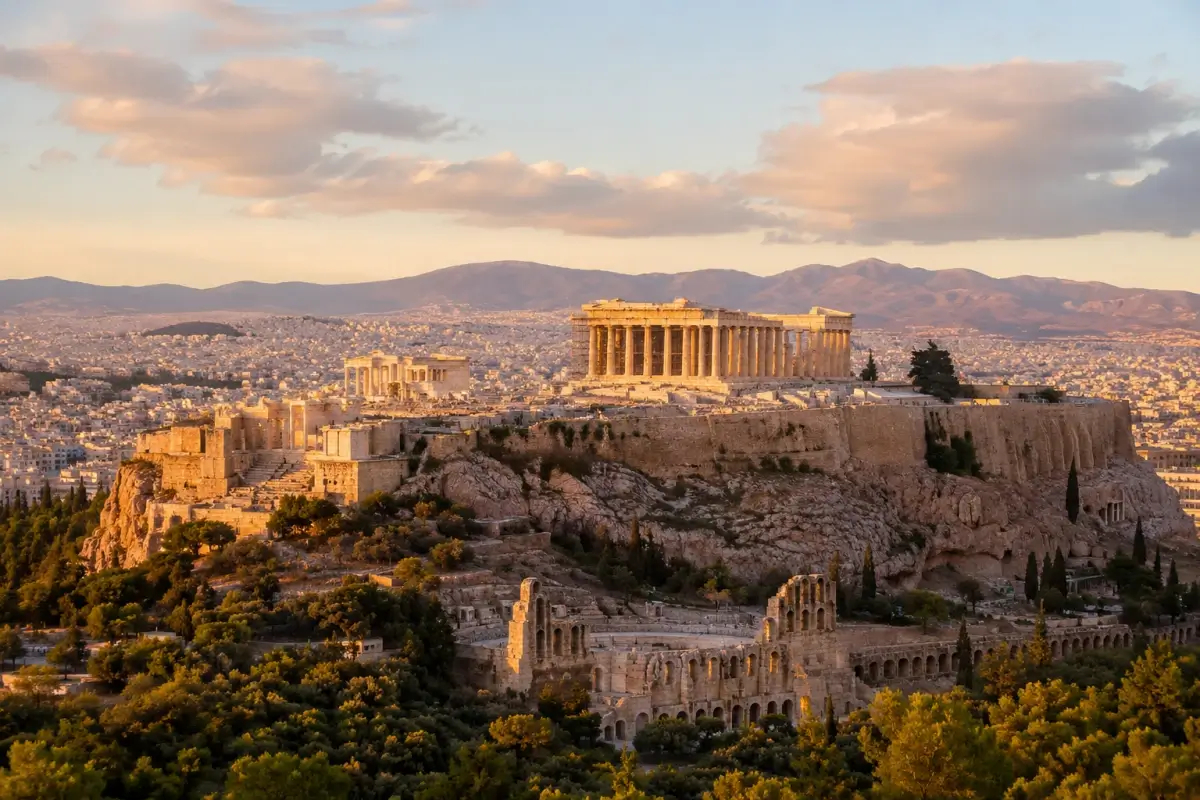
The Acropolis is Greece’s essential first stop, but the Parthenon should not be treated as a quick climb, a photograph, and an exit. The hill is an ancient citadel dating to the fifth century B.C., with the Parthenon as its defining monument. Its significance becomes clearer within the wider city of Athens.
Pair the Acropolis with the Acropolis Museum, then continue through the Ancient Agora and Plaka. At the foot of the Acropolis, the museum holds important ancient statues and other material connected to the site. The Agora provides the ruined civic setting the hill alone cannot, while Plaka’s narrow cobbled lanes create a useful transition from ancient Athens to the present city.
A guide is most useful for travelers who want the mythology, architecture, and political history to cohere. Independent visitors can still have a strong day by giving the museum proper time instead of rushing downhill after the Parthenon. The practical constraints are the exposed ascent and summer heat. Go early, use timed entry if current ticketing requires it, and confirm access rules before committing to a particular hour.
Things to know: The Acropolis, museum, Agora, and Plaka work best as one connected stretch of Athens. Give the museum enough time to do more than provide air conditioning after the hill.
Climb among Meteora’s monasteries for Greece’s most unusual landscape-and-history pairing
Meteora is the mainland detour we would make for travelers seeking something classical Greece cannot provide. Towering rock formations rise above the surrounding valley, with monasteries built on their summits. Six monasteries remain in operation, making this more than a landscape stop or a collection of distant views.
The appeal lies in the relationship between geology, architecture, and living religious practice. A local guide can add useful context on the monasteries and their frescoes, though the scale of the setting is the central reason to come. Meteora suits visitors with enough time to stay nearby or make a purposeful mainland diversion. It does not suit an itinerary trying to squeeze it between Athens and a faraway island.
Stairs and elevated terrain are part of the visit. Opening days, dress requirements, and access conditions can differ by monastery, so check current details before departure. Do not arrive with a loose plan and assume every door will be open.
Visit Delphi for ancient history in a mountain setting
Delphi earns the journey from Athens for travelers who care about the story as much as the ruins. In antiquity, visitors came to the Temple of Apollo to consult the Pythia, the oracle whose advice was sought by rulers and city-states. Today, the sanctuary’s position above a broad valley gives the site a sense of occasion that a city-center archaeological stop rarely has.
Approach it as a substantial excursion, not an add-on to a morning in Athens. An older Rick Steves account describes the drive from Athens as roughly three hours, but confirm current transport options and timings for the travel dates. The archaeological site is outdoors, uneven underfoot, and exposed to the sun. Its museum is an important part of the visit, particularly for anyone seeking more than the setting and the Temple of Apollo.
Choose Delphi over a generic sightseeing day trip when ancient religion, mythology, and mountain scenery are the draw. Visitors interested only in rapidly collecting ruins may find the journey disproportionate to the time spent at the sanctuary itself.
Choose Santorini for volcanic landscapes and caldera views, not only the sunset crowd
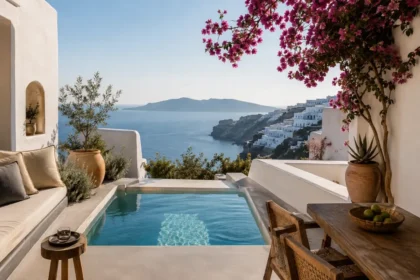
Santorini remains worth including, but for the right reasons. Its strongest case is volcanic geography: clifftop villages above the caldera, black volcanic sand, Red Beach, and the ancient site of Akrotiri. Oia’s whitewashed buildings and sea views belong in the picture, but should not become the entire island.
Akrotiri gives Santorini historical weight, while the volcanic beaches explain why its coast differs from a standard Greek beach holiday. Travelers who want time outdoors can also consider the island’s walking routes, subject to current conditions. Steep streets and exposed paths are a practical part of the island, especially in warm weather.
The Oia sunset is worth one evening, but the castle-area scrum during peak periods is not compulsory. Choose another caldera viewpoint, or make the evening about dinner with a west-facing view. A less obvious setting preserves the changing light without making the crowd the event.
Things to know: Santorini’s boat outings, beach time, and outdoor walking are seasonal and weather-dependent. Confirm current operating conditions before booking, particularly if those activities are the reason for choosing the island.
Take the Delos trip from Mykonos for the islands’ richest archaeological detour
Mykonos makes the most sense for travelers drawn to nightlife, beach-club culture, Cycladic streets, or a polished resort atmosphere. For everyone else, Delos is the reason Mykonos can justify a place on a Greece itinerary. The nearby island contains the ruins of a substantial ancient city, including temples, markets, an amphitheater, and mosaic-decorated houses.
Delos was an important religious center and port during the first millennium B.C., and Greek mythology identifies it as the birthplace of Apollo. It has the density that makes an archaeological visit feel distinct from an hour spent looking at scattered stones. Go with a guide, or at least choose an excursion with strong interpretation. The ruins reward explanation far more than a generic sailing trip.
Boat tours and ferries connect Mykonos with Delos, but operating days, sea conditions, site access, and inclusions can change. Check those details before booking. A sailing excursion with a swim stop can be enjoyable, but it does not substitute for time on the archaeological island.
For travelers considering a sea-based Greece trip, compare the rhythm of independent island time with Greece cruises before deciding how much sightseeing flexibility matters.
Swim and explore Balos Lagoon’s contrasting Cretan coast
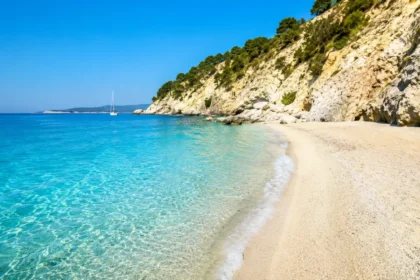
Balos Lagoon is one of Crete’s major beach landscapes, known for pale sand, a panoramic setting, and clear blue-green water. It is a high-payoff choice for travelers willing to give it the time and logistics it requires. The coastal formation matters as much as the swim.
Crete is Greece’s largest island, and that scale matters. Balos belongs in a stay based in the western part of the island, not an impulsive day trip from a distant resort area. Boat access is commonly used, while land approaches are also possible. Check routes, facilities, access rules, and sea conditions close to travel.
Do not expect an empty shore or a permanently pink-sand scene. Conditions vary, as they do at Crete’s Elafonissi Beach, where the amount of visible pink sand changes with season and conditions. Choose Balos for the full landscape, not a social-media promise that may not appear as expected.
Travelers building an island stay around swimming instead of archaeological sites should also see the best beaches in Greece.
Walk the Samaria Gorge when the landscape matters more than a relaxed beach day
The Samaria Gorge is for fit travelers who want a full outdoor day in Crete. The established route takes hikers through a rocky gorge with trees, steep cliff faces, and a narrow passage. It is a serious alternative to beach time, not a brief scenic detour for every itinerary.
The long gorge walk requires proper footwear, tolerance for uneven terrain, and attention to heat and daylight. It is not the only hiking option in the area, so travelers seeking a shorter outing should consider alternatives instead of attempting the full route without preparation. For those who genuinely want the physical effort and changing terrain, the larger hike is the stronger experience.
Season and weather can affect opening status. Arrange return logistics before setting out, and verify the official status of the route on the day. We would not recommend this as a casual family activity or as the day after a late night in a beach town.
Things to know: Treat Samaria Gorge as the day’s main commitment. Check current access, weather, footwear needs, and the return journey before leaving your base.
Eat Greece through a shared meze meal or a focused local food tour
Greek food deserves the same attention as the monuments. A shared meal of small plates is one of the clearest ways to understand the country’s dining culture, particularly through vegetables, cheeses, olive oil, seafood, grains, sauces, pastries, wine, and coffee. Do not chase a single signature dish. Order with enough breadth to show how regional produce and shared dining work together.
In Athens, a food tour early in a stay can provide useful orientation. Private tours can combine sweet and savory tastings, drinks, market stops, and neighborhood context. The format suits travelers who want guidance on local specialties and a faster introduction to the city. Those who dislike scheduled tastings should skip the formal tour and choose tavern meals independently.
Make room for Greek coffee as well as food. Cold coffee drinks are common in contemporary daily life, while traditional Greek coffee remains a useful choice for travelers seeking the older ritual. Keep the meal unhurried enough to share several dishes. Ordering one isolated main course each misses much of the point.
What to skip
Mykonos, unless the island’s specific draws appeal. Do not add it simply because it is famous. Its nightlife, beach clubs, white Cycladic lanes, and the Delos excursion can justify the stop. Without one of those interests, another island or a longer stay in Crete will usually give a short trip more substance.
Oia castle at sunset during peak crowd periods. Santorini’s evening light is worth seeking, but not as a compulsory shoulder-to-shoulder event. Choose a quieter caldera viewpoint, a west-facing meal, or a different part of the island.
Several distant islands in seven days. Ferry travel has a place in Greece, but transfers can consume time that should go to Athens, a mainland site, or a deeper island stay. One island paired with Athens is usually the more intelligent first trip.
Seven days is enough for a focused Greece trip
Seven days can support Athens plus one island, or Athens plus one mainland pairing such as Delphi or Meteora. It is not enough for several distant islands alongside serious mainland sightseeing without making much of the trip about transit.
For a day-by-day route shaped around arrival point, season, and priorities, see the Greece itinerary guide.