A first trip to Greece is not the time to sweep through as many islands as possible. This eight-day route uses three bases, each with a clear role: Mykonos for its social energy and Delos, Santorini for the caldera, and Athens for a historical finish.
The route is three nights in Mykonos, three in Santorini, and two in Athens. It keeps hotel changes low and treats ferry and flight days as travel days, not disguised sightseeing days. A three-night island stay generally delivers two proper days and two partial ones once check-in, checkout, port transfers, waiting, luggage, and the crossing are accounted for.
This is Calanova’s compact first-timer route, not a claim that eight days is the only right length for Greece. We favor fewer bases, realistic transfer days, and enough slack for each stop to feel like a stay rather than a connection. Read more about how we evaluate travel recommendations.
Base yourself near Mykonos Town for walkable evenings; choose Fira or Imerovigli for access to Santorini’s caldera villages; and stay in Plaka, Monastiraki, or Syntagma in Athens. These are practical base suggestions, not hotel recommendations. To narrow the accommodation decision, see the best hotels in Greece.
Your Greece Itinerary at a glance
| Day | Base | The priority |
|---|---|---|
| 1 | Mykonos | Arrive, settle in, and walk Mykonos Town |
| 2 | Mykonos | Choose a beach day or the island’s social side |
| 3 | Mykonos | Delos excursion |
| 4 | Santorini | Transfer, then an easy caldera evening |
| 5 | Santorini | Caldera walk and sunset |
| 6 | Santorini | Volcano, wine, or beach day |
| 7 | Athens | Return to Athens and stay local |
| 8 | Athens | The Acropolis and one companion site |
Choose flights and ferries around actual travel dates, not a generic schedule. Seasonal routes, departure times, and weather disruption can reshape transfer days. Pack lightly enough to manage ramps, stairs, and luggage without relying on help from ferry staff.
Day 1: arrive in Mykonos and keep the evening easy
Start in Mykonos, reached by flight or ferry according to the most workable connection from Athens or your arrival point. Check in near Mykonos Town, unpack, and leave the day for travel.
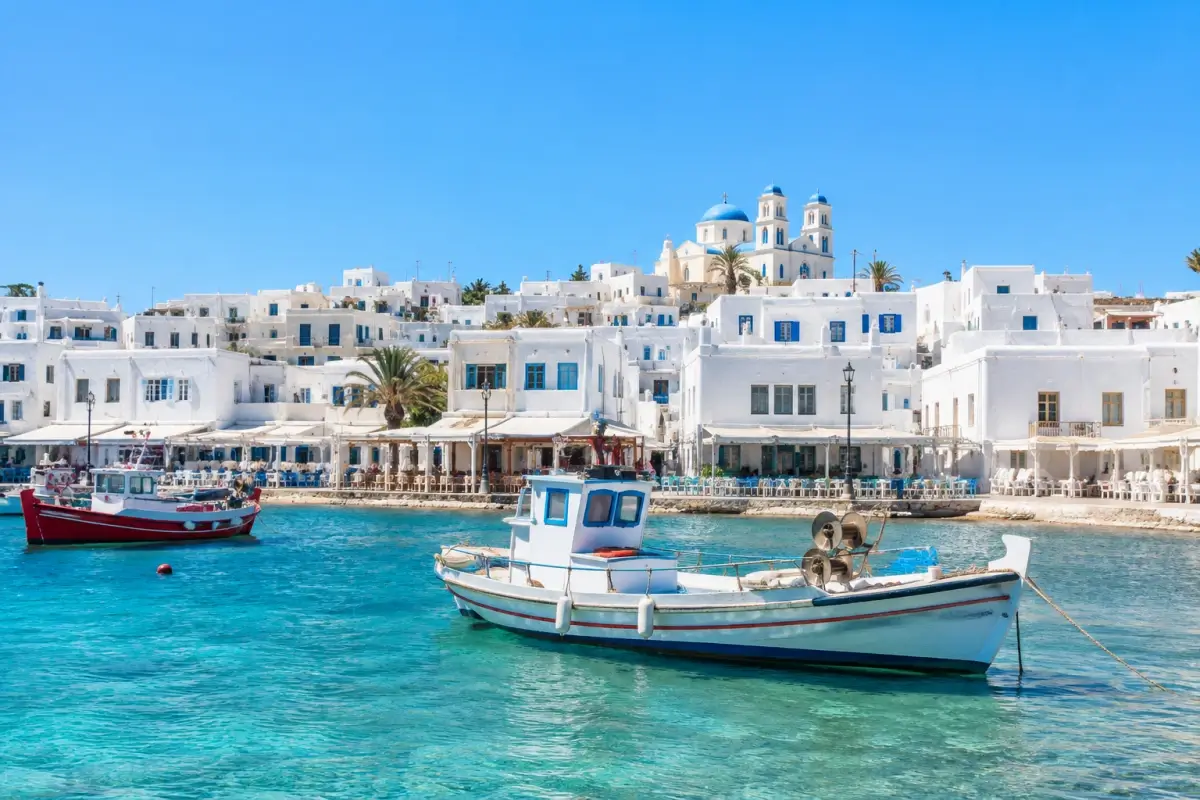
If energy allows, walk through Chora, the compact old town, toward Little Venice and the Kato Mili windmills. The streets, waterfront, and windmills sit close enough together to combine without turning arrival into an endurance test. Little Venice is a logical stop for a drink or dinner, though there is no reason to make the evening late simply because Mykonos is known for nightlife.
Skip the beach club and island circuit. Mykonos will still be there tomorrow, and three nights should not mean compressing its best parts into the first few hours.
Day 2: choose Mykonos beaches or its social side
Mykonos works best as a choice between two moods. Trying to spend a full day at the beach, shop in town, watch the sunset, and commit to a long night out is the mistake. Pick the version that suits the trip.
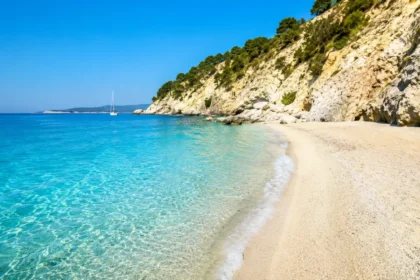
For a slower island day: go to one beach or beach-club area on the southern coast and stay there. Southern beaches tend to be more sheltered from northerly wind than those on the island’s north side. Swim, have a long lunch, and leave the rest of the day unplanned. The best beaches in Greece may help if beach time is the trip’s larger priority.
For Mykonos at its most social: stay around Mykonos Town. Spend the daytime on Matoyianni Street and in the lanes behind it, then return to the waterfront later for drinks or nightlife. Keeping the day geographically coherent avoids moving between beach and town merely to satisfy an itinerary.
A quad bike or scooter can make independent exploration possible, but it adds a practical decision a short stay may not need. Roads, conditions, licensing, and insurance remain personal responsibilities. Buses or arranged transfers are cleaner for travelers who do not want driving to become part of the holiday.
Day 3: make Delos the planned excursion
Delos provides the historical counterweight to Mykonos’s beach clubs and nightlife. Make it the stay’s one planned excursion, either by boat or on a guided trip from Mykonos. The archaeological island is a UNESCO World Heritage site associated with Apollo and was an important religious center and port during the first millennium BC.
Do not add an island-wide driving loop afterward. A Delos visit brings enough structure to one day, particularly with boat logistics and time outside in the heat. Some excursions include a swimming stop at Rhenia, but that depends on the tour rather than being a fixed part of this itinerary.
Return to Mykonos Town for an unfussy evening: quieter back lanes, dinner nearby, and an early finish. Check excursion availability and archaeological-site access for the travel season before building the day around it. For a wider sense of what belongs on a Greece trip, see the best things to do in Greece.
Day 4: ferry to Santorini, then let the caldera set the pace
Move south to Santorini today. Use a date-specific ferry schedule, allow time to reach the port, and expect luggage handling to be part of the process. The crossing may be the day’s central commitment, not a small interruption between activities.
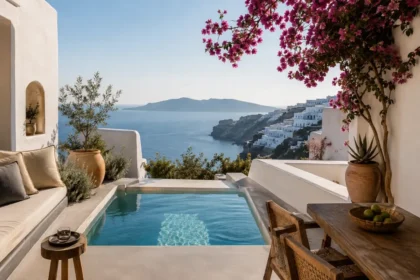
On arrival, go directly to a base in Fira or Imerovigli. Fira is the more practical hub for local transport; Imerovigli is a quieter caldera village between Fira and Oia. Either keeps Santorini’s defining scenery close without another hotel move.
The evening needs only a local caldera walk and dinner. Santorini’s core experience is the view from its cliff-edge villages, not a list of attractions to complete before sunset. Save Oia for a day with enough time to experience it without checking the clock.
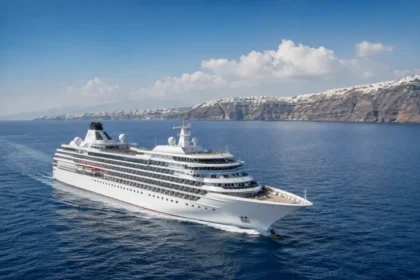
Travelers who prefer time on the water can browse Greece cruise options, though a cruise is not necessary for this island-to-capital route.
Day 5: walk the caldera villages before sunset crowds
Give Santorini its clearest full day. The sequence from Fira through Firostefani and Imerovigli to Oia follows the caldera northward and makes the island’s geography legible. The full Fira-to-Oia route is roughly 10 kilometers, with volcanic terrain, stairs, uneven surfaces, heat, and exposed stretches that can make it more demanding than the distance suggests.
Start before the middle of the day and stop when the walk stops being enjoyable. The aim is the caldera experience, not finishing a route for its own sake. Travelers who do not want the full walk can take buses between villages or follow a shorter sequence around Fira and Imerovigli before continuing to Oia later.
Oia is the classic sunset choice and comes with expected crowds. Imerovigli is a better alternative for those who value a less congested end to the day and do not need the standard Oia photograph. Neither requires a guaranteed restaurant reservation or a specific viewing point to justify the evening.
After sunset, stop. Do not turn the final hours into another cross-island transfer or late-night agenda.
Day 6: choose Santorini’s volcano, wine, or beach side
Santorini deserves one unscripted day, but it still needs a direction. Choose one of these three versions and leave the others for a future return.
Choose a caldera boat excursion for volcanic sites such as Nea Kameni, if relevant tours are operating. This suits travelers who want to understand the landscape that created the caldera, not only view it from above. Swimming stops and hot springs may be included on some excursions, but conditions and inclusions differ by operator.
Choose a winery-focused inland day if the trip needs a slower counterpoint to the caldera walk. Santorini’s volcanic setting and wine culture make sensible use of an extra day, especially for travelers who would prefer not to spend another full stretch on foot or at sea. Confirm tastings and transportation before committing, particularly outside peak season.
Choose Kamari or Perissa for a beach day. Santorini has dark-sand swimming beaches, but it is not the island to prioritize when beaches are the central reason for coming to Greece. The caldera is why Santorini earns three nights; beach time is the optional release valve.
Leave the evening open. Pool time, a long dinner, or a second walk in the home village makes better use of it than adding another village simply because it appears on a map. Seasonal heat and crowds can materially change the day, so consult the best time to visit Greece before locking in tours.
Day 7: return to Athens and keep the capital light
Return to Athens by a date-specific flight or ferry connection. Allow time for airport or port transfers, check-in, and the possibility that weather affects the journey. Finishing in Athens provides a buffer before the international flight home instead of placing a ferry or domestic connection directly before departure.
Stay central, ideally in Plaka, Monastiraki, or Syntagma. If the connection arrives early, walk around Plaka or Monastiraki. If it arrives late, have dinner near the hotel and make it a rest evening. Athens should not become a full sightseeing day unless the transportation schedule actually gives it one.
For a broader view of the country beyond this route, visit the Greece guide. This itinerary is a first-trip arc, not an attempt to represent every part of Greece.
Day 8: give Athens its historical core, then stop
Use Athens for a focused historical finish. Begin with the Acropolis, then choose one companion site: the Acropolis Museum for context around the hilltop monuments, or the Ancient Agora for another dimension of the ancient city. Trying to add every major ruin, museum, and viewpoint in one day weakens all of them.
The Acropolis includes more than the Parthenon, including the Propylaia, Erechtheion, and Temple of Athena Nike. Give it the time it needs, then keep the rest of the day close to the historic center. Plaka suits an unhurried final walk, while Monastiraki keeps the evening central and easy.
Major attractions can be especially busy in summer, so check current ticket arrangements and reserve in advance where appropriate. Finish early if the trip has already been full. Athens works best here as a conclusion, not a final attempt to catch up on everything left undone.
How to adapt the route for seven, 10, or 14 days
Seven days: Keep the same three bases, but remove Delos or cut Mykonos by one night. Do not solve the shorter timeframe by adding an island. A workable version is two nights in Mykonos, three in Santorini, and two in Athens, with Mykonos becoming largely an arrival evening and one full-day choice between beach time and Delos.
Ten days: Add time before adding places. The strongest extension is four nights in Mykonos, four in Santorini, and two in Athens. Use the added island time for an unscheduled day instead of more organized excursions. A Mykonos beach afternoon or a free caldera day in Santorini is more useful than another hotel checkout.
Fourteen days: Choose between a slower Cyclades trip and a different mainland journey. For the island version, add days to the existing bases and introduce a quieter island only after checking the ferry sequence for exact dates. For a mainland-focused alternative, Athens, Hydra, Delphi, Nafplio, and selected Peloponnese stops form a coherent route. A fuller road trip can extend through Olympia, Kardamyli, Monemvasia, Mycenae, and Epidavros, which is exactly why the mainland deserves its own sequence rather than being squeezed beside two islands.
Do not combine a full Peloponnese loop with both Mykonos and Santorini in 14 days unless the trip has substantially more room for transfers. It can look comprehensive on paper while sacrificing the unplanned hours that make Greece feel less like a transit exercise.
Beach-focused travelers who do not care about nightlife can replace Mykonos with a quieter island while keeping Santorini and Athens. History-focused travelers should direct the extra week toward Delphi, Nafplio, and the Peloponnese. The core decision is not which destination is objectively best. It is whether the trip is an island holiday, a historical mainland journey, or an unconvincing version of both.